Rechercher dans ce blog

Thursday, December 29, 2022

10 Times This Year the Webb Telescope Blew Astronomers Away With Stunning New Images of Our Universe - SciTechDaily

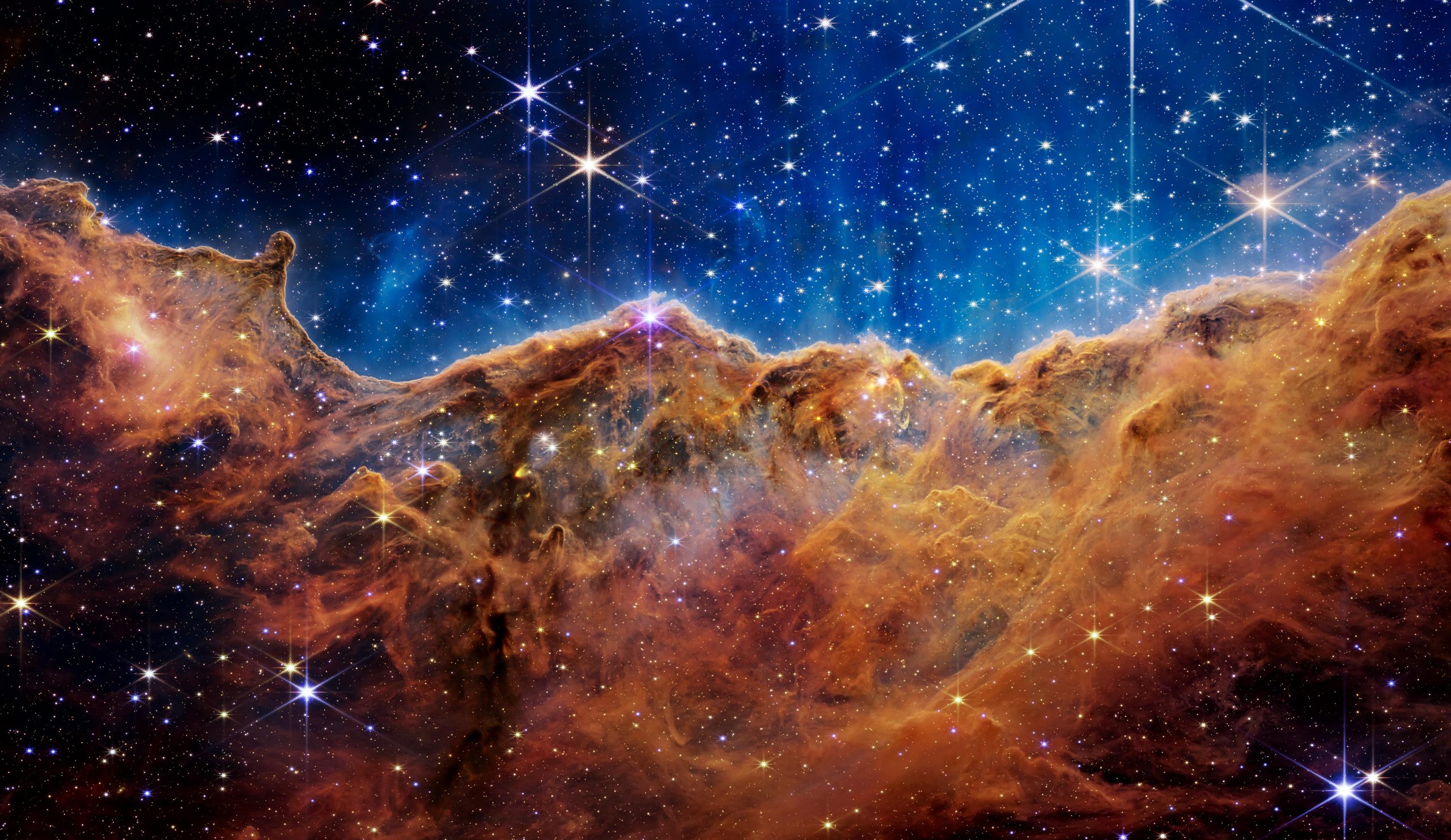
“Cosmic Cliffs” in the Carina Nebula (Webb NIRCam Image)

What looks much like craggy mountains on a moonlit evening is actually the edge of a nearby, young, star-forming region NGC 3324 in the Carina Nebula. Captured in infrared light by the Near-Infrared Camera (NIRCam) on NASA’s James Webb Space Telescope, this image reveals previously obscured areas of star birth. Credit: NASA, ESA, CSA, STScI

It is no exaggeration to say the James Webb Space Telescope (JWST) represents a new era for modern astronomy.

Launched on December 25 last year and fully operational since July, the telescope offers glimpses of the universe that were inaccessible to us before. Like the Hubble Space Telescope, the JWST is in space, so it can take pictures with stunning detail free from the distortions of Earth’s atmosphere.

However, while Hubble is in orbit around Earth at an altitude of 335 miles (540 km), the JWST is 1 million miles (1.5 million kilometers) distant, far beyond the Moon. From this position, away from the interference of our planet’s reflected heat, it can collect light from across the universe far into the infrared portion of the electromagnetic spectrum.

This ability, when combined with the JWST’s larger mirror, state-of-the-art detectors, and many other technological advances, allows astronomers to look back to the universe’s earliest epochs.

As the universe expands, it stretches the wavelength of light traveling toward us, making more distant objects appear redder. At great enough distances, the light from a galaxy is shifted entirely out of the visible part of the electromagnetic spectrum to the infrared. The JWST is able to probe such sources of light right back to the earliest times, nearly 14 billion years ago.

The Hubble telescope continues to be a great scientific instrument and can see at optical wavelengths where the JWST cannot. But the Webb telescope can see much further into the infrared with greater sensitivity and sharpness.

Let’s have a look at ten images that have demonstrated the staggering power of this new window to the universe.

1. Mirror alignment complete
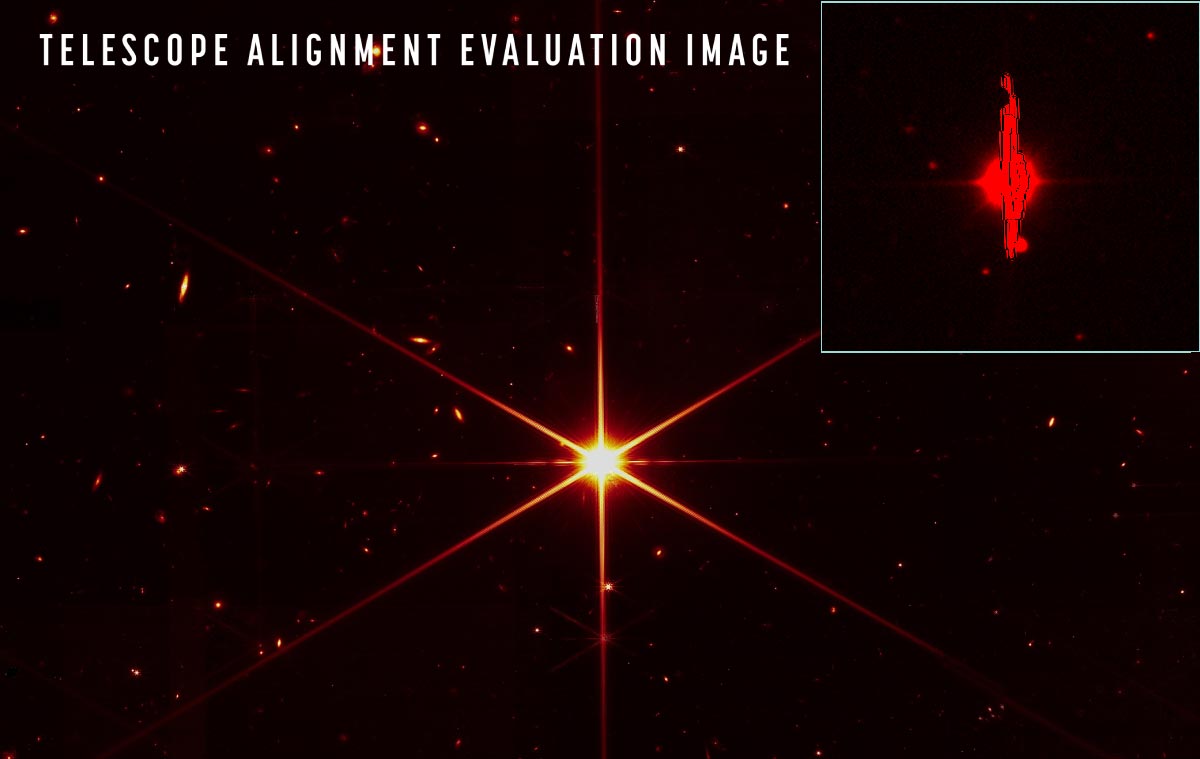
JWST Alignment Evaluation Image

Left: The first publicly released alignment image from the JWST. Astronomers jumped on this image to compare it to previous images of the same part of sky like that on the right from the Dark Energy Camera on Earth. Credit: NASA/STScI/LegacySurvey/C. Jacobs

Despite years of testing on the ground, an observatory as complex as the JWST required extensive configuration and testing once deployed in the cold and dark of space.

One of the biggest tasks was getting the 18 hexagonal mirror segments unfolded and aligned to within a fraction of a wavelength of light. In March, NASA released the first image (centered on a star) from the fully aligned mirror. Although it was just a calibration image, astronomers immediately compared it to existing images of that patch of sky – with considerable excitement.

2. Spitzer vs MIRI
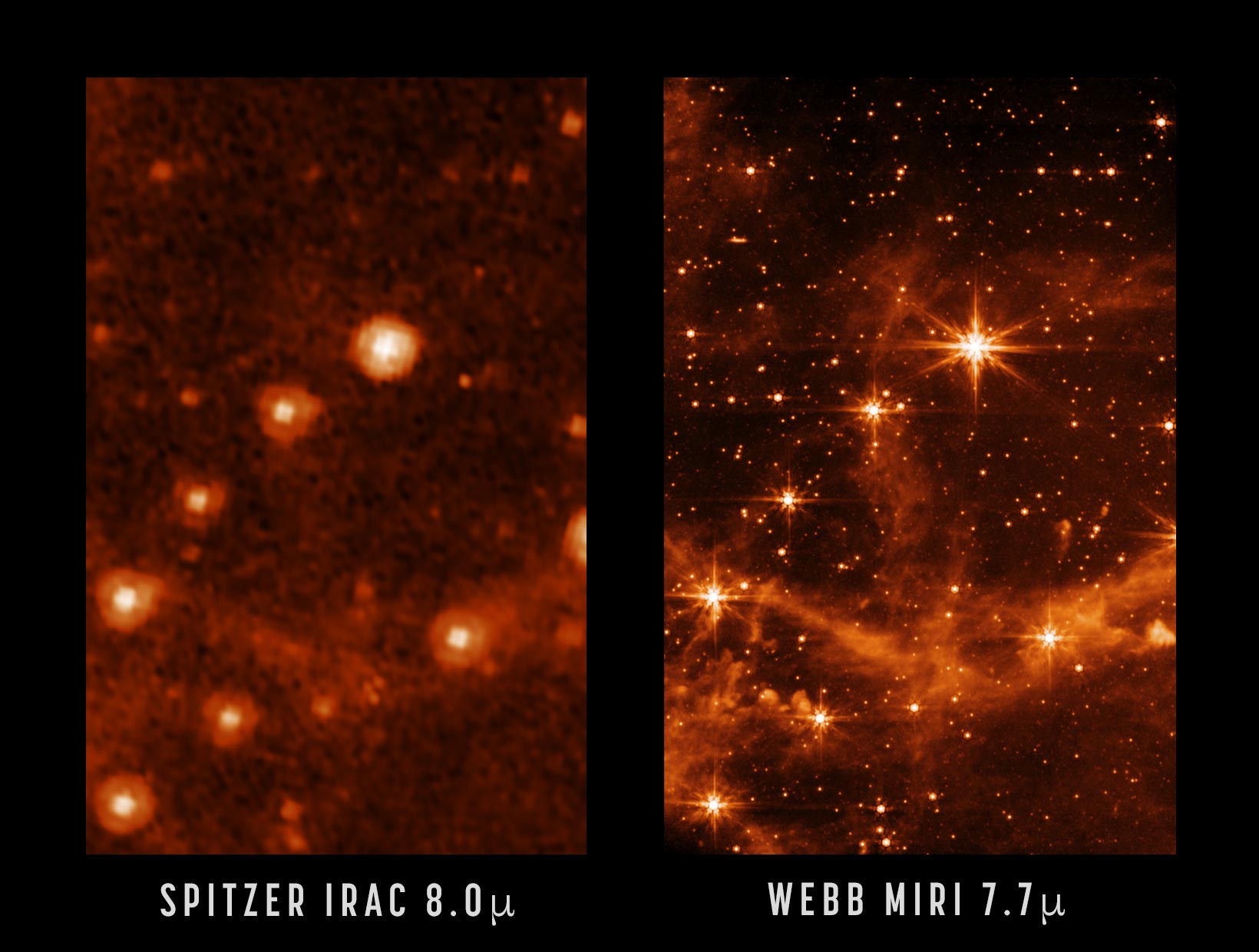
Webb MIRI and Spitzer Comparison Image

This image shows a portion of the ‘Pillars of Creation’ in the infrared (see below); on the left taken with the Spitzer Space Telescope, and JWST on the right. The contrast in depth and resolution is dramatic. Credit: NASA/JPL-Caltech (left), NASA/ESA/CSA/STScI (right)

This early image, taken while all the cameras were being focused, clearly demonstrates the step change in data quality that JWST brings over its predecessors.

On the left is an image from the Spitzer telescope, a space-based infrared observatory with an 85 cm mirror; the right, the same field from JWST’s mid-infrared MIRI camera and 6.5 m mirror. The resolution and ability to detect much fainter sources are on show here, with hundreds of galaxies visible that were lost in the noise of the Spitzer image. This is what a bigger mirror situated out in the deepest, coldest dark can do.

3. The first galaxy cluster image
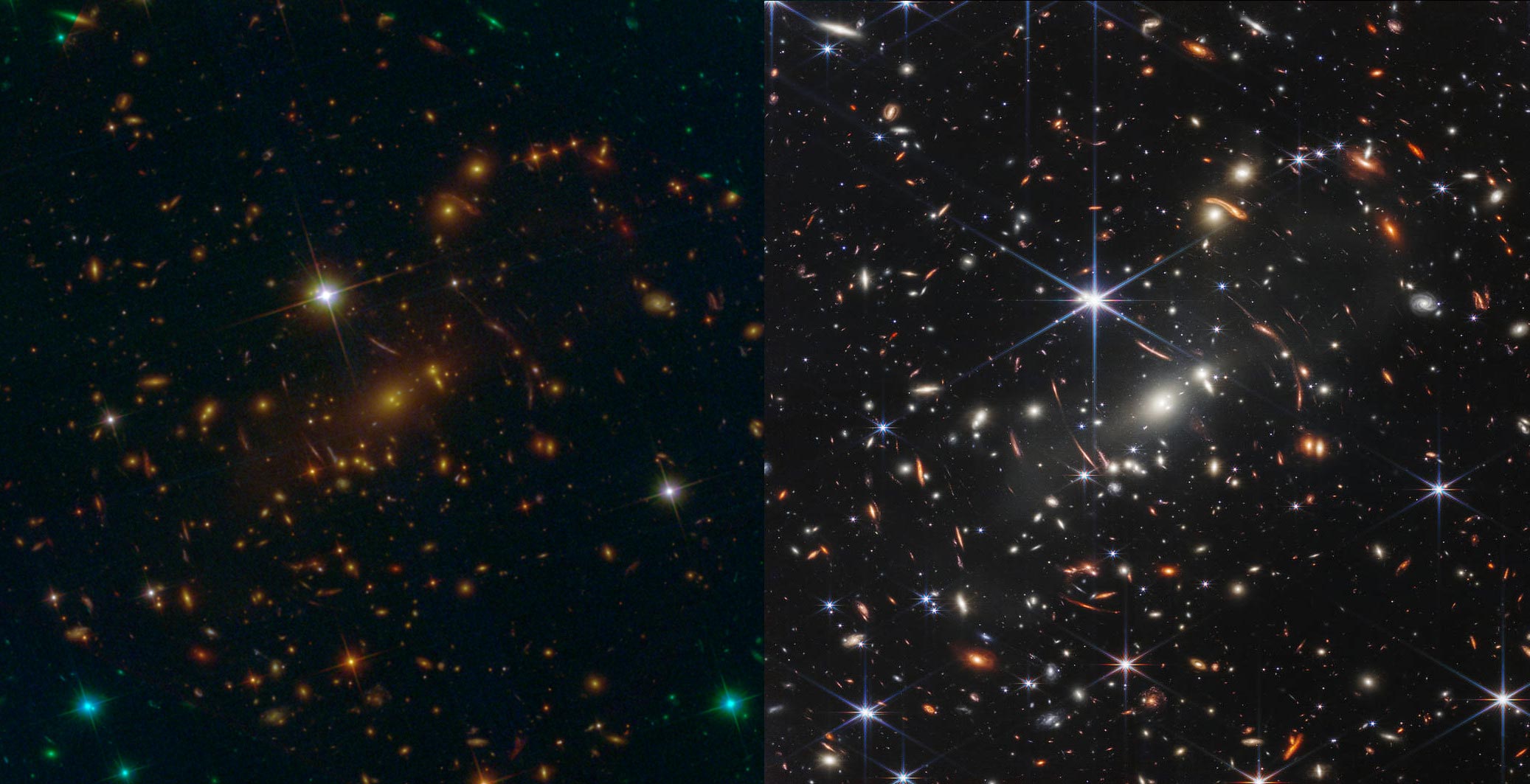
SMACS 0723 Galaxy Cluster Hubble Webb Comparison

SMACS 0723 galaxy cluster – from Hubble on the left, and JWST on the right. Hundreds more galaxies are visible in JWST’s infrared image. Credit: NASA/STSci

The galaxy cluster with the prosaic name of SMACS J0723.3–7327 was a good choice for the first color images released to the public from the JWST.

The field is crowded with galaxies of all shapes and colors. The combined mass of this enormous galaxy cluster, over 4 billion light years away, bends space in such a way that light from distant sources in the background is stretched and magnified, an effect known as gravitational lensing.

These distorted background galaxies can be clearly seen as lines and arcs throughout this image. The field is already spectacular in Hubble images (left), but the JWST near-infrared image (right) reveals a wealth of extra detail, including hundreds of distant galaxies too faint or too red to be detected by its predecessor.

4. Stephan’s Quintet

Stephan’s Quintet Hubble and Webb

Hubble (left) and JWST (right) images of the group of galaxies known as ‘Stephan’s Quintet’. The inset shows a zoom-in on a distant background galaxy. Credit: NASA/STScI

These images depict a spectacular group of galaxies known as Stephan’s Quintet, a group that has long been of interest to astronomers studying the way colliding galaxies interact with one another gravitationally.

On the left we see the Hubble view, and the right the JWST mid-infrared view. The inset shows the power of the new telescope, with a zoom in on a small background galaxy. In the Hubble image we see some bright star-forming regions, but only with the JWST does the full structure of this and surrounding galaxies reveal itself.

5. The Pillars of Creation
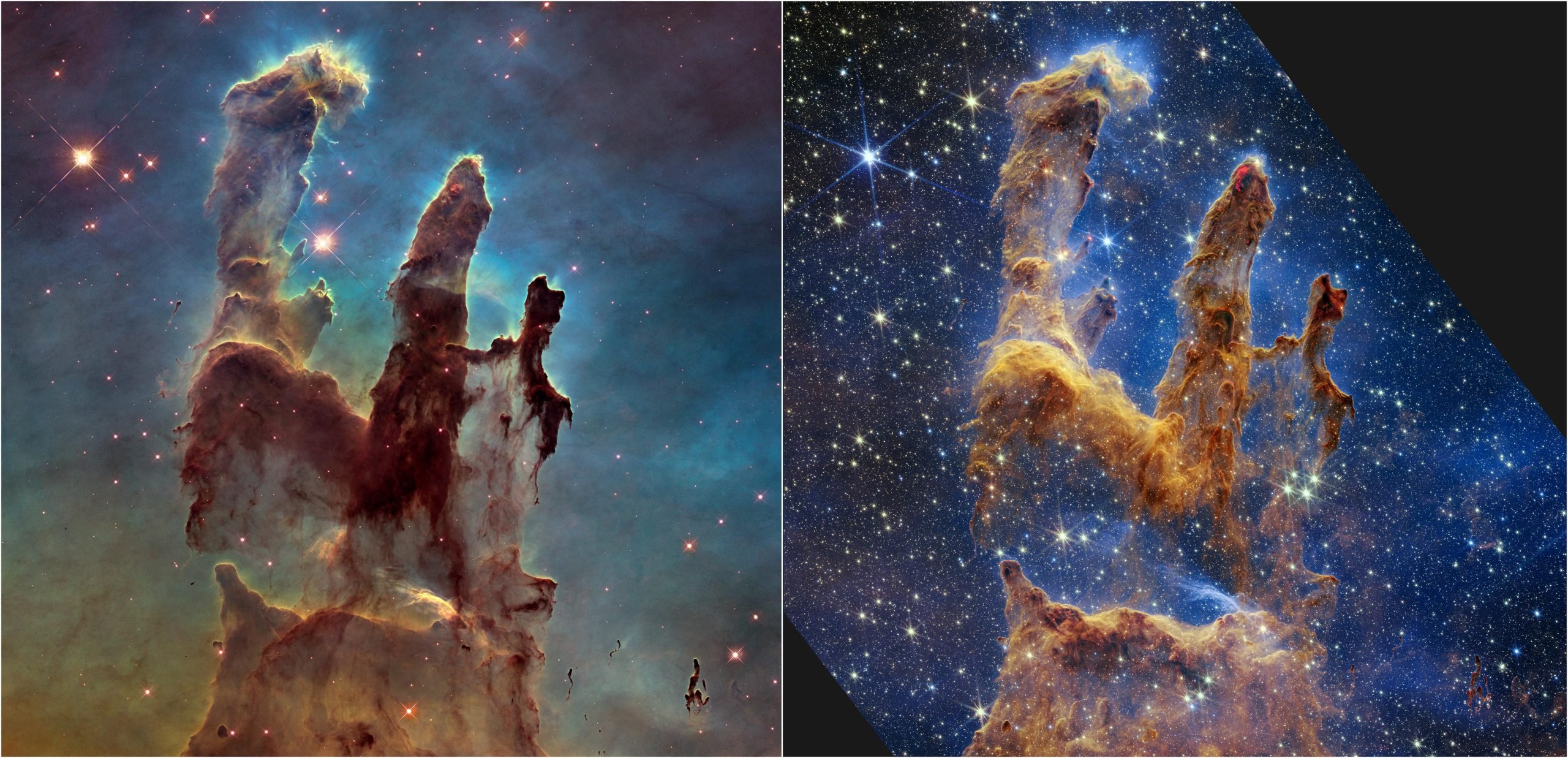
Pillars of Creation (Hubble and Webb Images)

The ‘Pillars of Creation’, a star-forming region of our galaxy, as captured by Hubble (left) and JWST (right). Credit: NASA, ESA, CSA, STScI; Joseph DePasquale (STScI), Anton M. Koekemoer (STScI), Alyssa Pagan (STScI).

The so-called Pillars of Creation is one of the most famous images in all of astronomy, taken by Hubble in 1995. It demonstrated the extraordinary reach of a space-based telescope.

It depicts a star-forming region in the Eagle Nebula, where interstellar gas and dust provide the backdrop to a stellar nursery teeming with new stars. The image on the right, taken with the JWST’s near-infrared camera (NIRCam), demonstrates a further advantage of infrared astronomy: the ability to peer through the shroud of dust and see what lies within and behind.

6. The ‘Hourglass’ Protostar
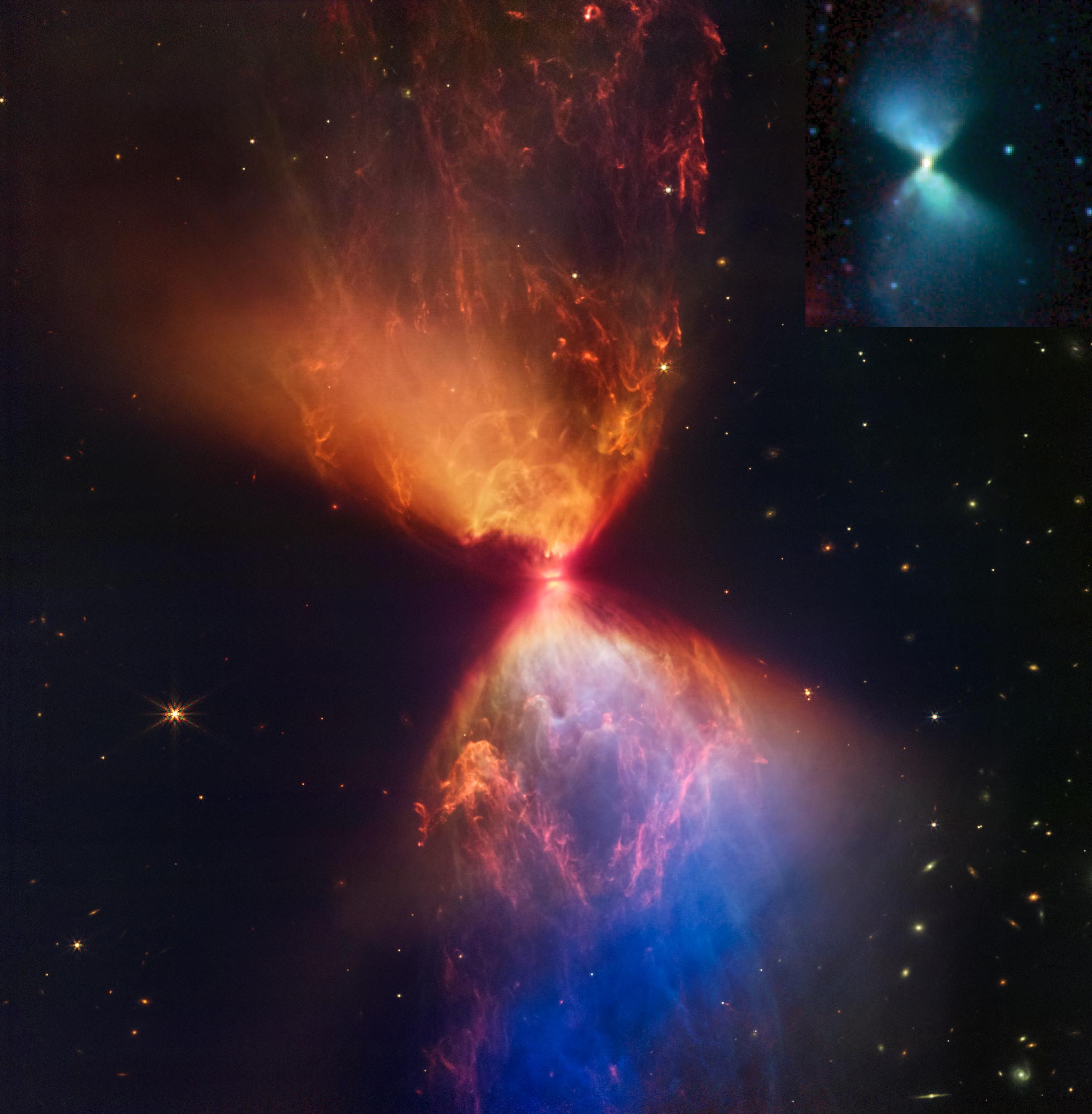
Webb Hourglass Protostar

The ‘hourglass protostar’, a star still in the process of accreting enough gas to begin fusing hydrogen. Inset: A much lower resolution view from Spitzer. Credit: NASA/STScI/JPL-Caltech/A. Tobin

This image depicts another act of galactic creation within the Milky Way. This hourglass-shaped structure is a cloud of dust and gas surrounding a star in the act of formation – a protostar called L1527.

Only visible in the infrared, an “accretion disk” of material falling in (the black band in the center) will eventually enable the protostar to gather enough mass to start fusing hydrogen, and a new star will be born.

In the meantime, light from the still-forming star illuminates the gas above and below the disk, making the hourglass shape. Our previous view of this came from Spitzer; the amount of detail is once again an enormous leap ahead.

7. Jupiter in infrared
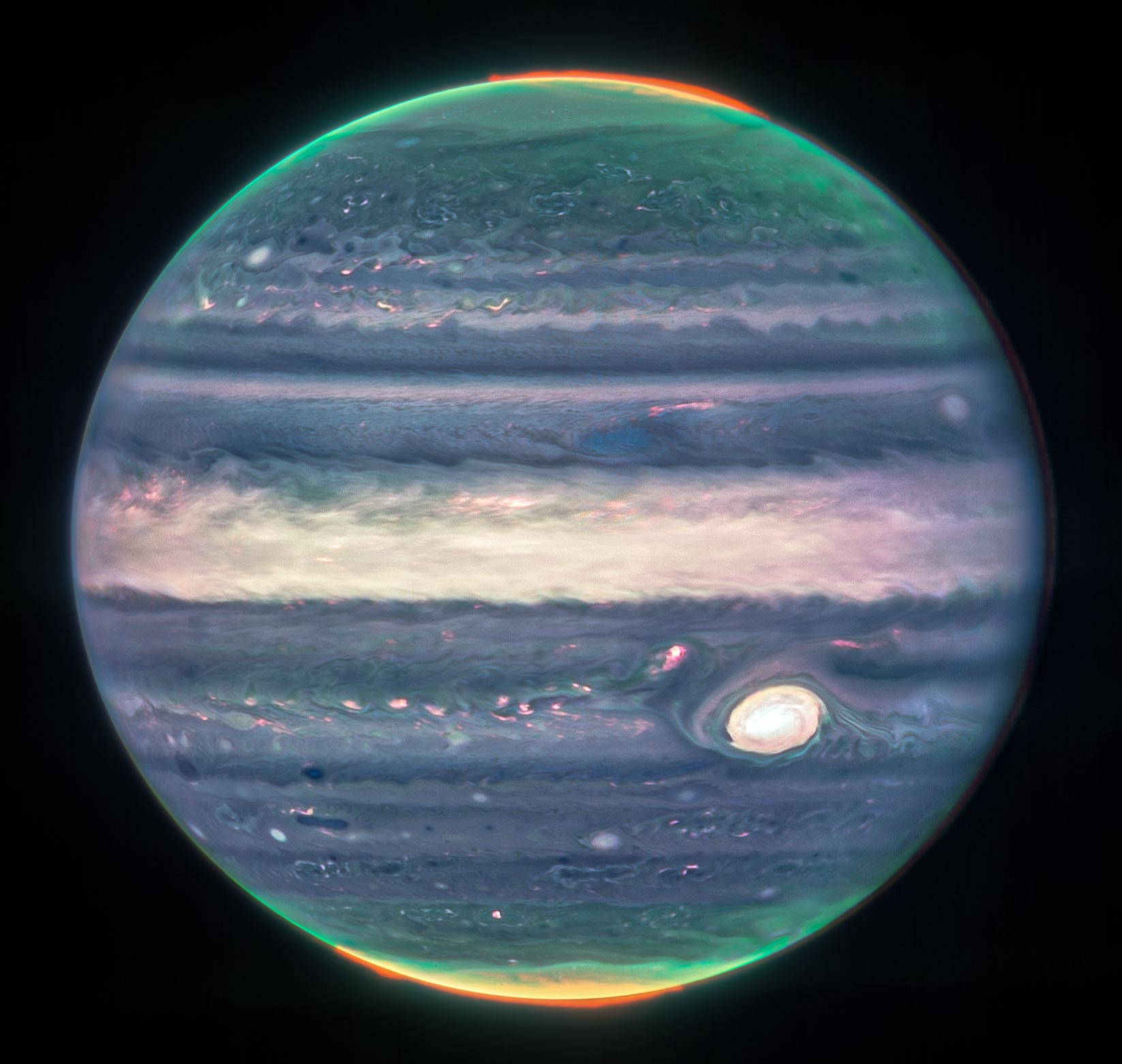
Webb NIRCam Composite Jupiter Three Filters

An infrared view of Jupiter from the JWST. Note the auroral glow at the poles; this is caused by the interaction of charged particles from the sun with Jupiter’s magnetic field. Credit: NASA, ESA, CSA, Jupiter ERS Team; image processing by Judy Schmidt.

The Webb telescope’s mission includes imaging the most distant galaxies from the beginning of the universe, but it can look a little closer to home as well.

Although JWST cannot look at Earth or the inner Solar System planets – as it must always face away from the Sun – it can look outward at the more distant parts of our Solar System. This near-infrared image of Jupiter is a beautiful example, as we gaze deep into the structure of the gas giant’s clouds and storms. The glow of auroras at both the northern and southern poles is haunting.

This image was extremely difficult to achieve due to the fast motion of Jupiter across the sky relative to the stars and because of its fast rotation. The success proved the Webb telescope’s ability to track difficult astronomical targets extremely well.

8. The Phantom Galaxy
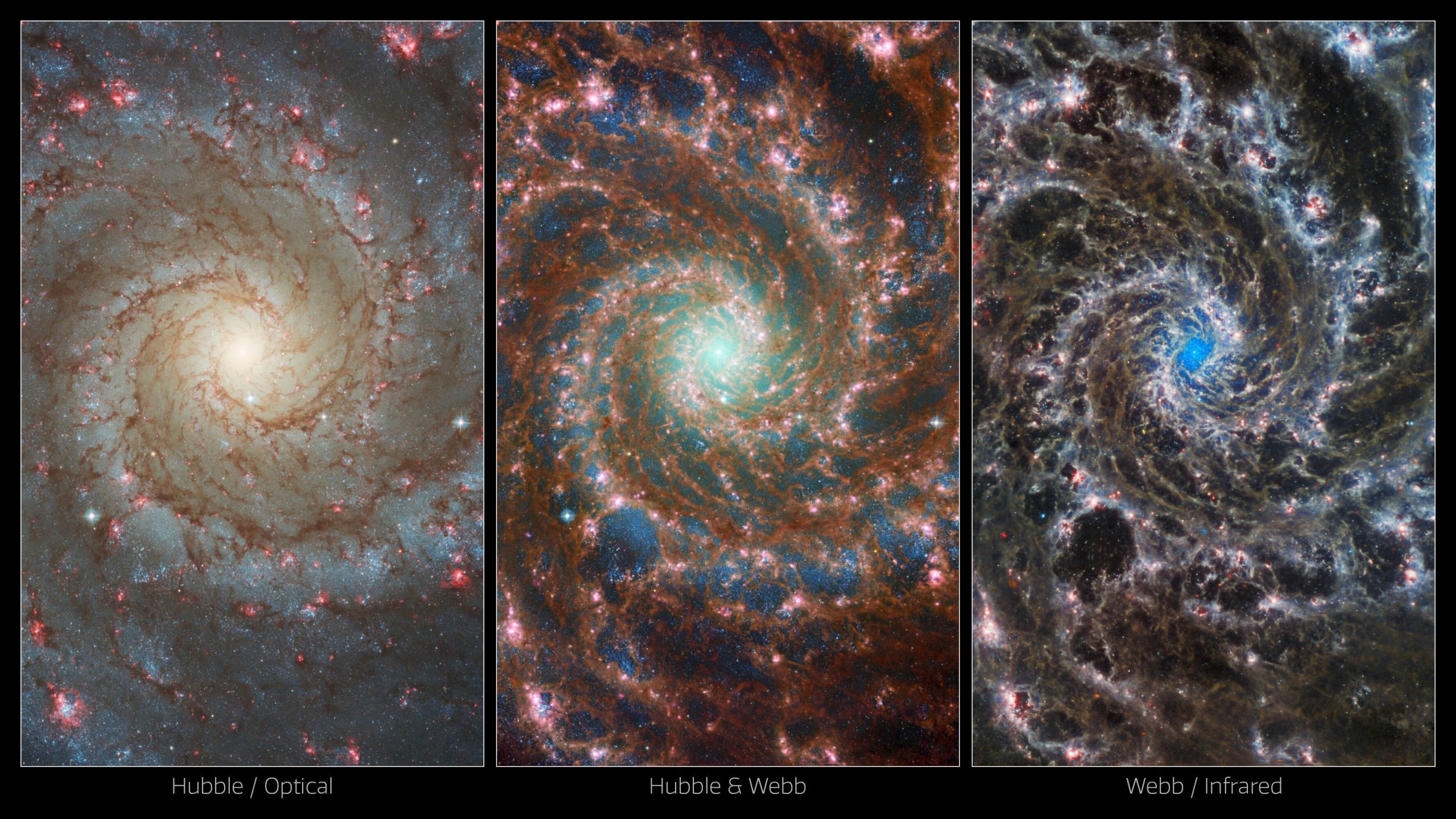
Multi Observatory Views of M74

Hubble visible light (left), JWST infrared (right), and combined (middle) images of the ‘Phantom Galaxy’ M74. The ability to combine visible light information about stars with infrared images of gas and dust allow us to probe such galaxies in exquisite detail. Credit: ESA/Webb, NASA & CSA, J. Lee and the PHANGS-JWST Team; ESA/Hubble & NASA, R. Chandar Acknowledgement: J. Schmidt

These images of the so-called Phantom Galaxy or M74 reveal the power of JWST not only as the latest and greatest of astronomical instruments, but as a valuable complement to other great tools. The middle panel here combines visible light from Hubble with infrared from Webb, allowing us to see how starlight (via Hubble) and gas and dust (via JWST) together shape this remarkable galaxy.

Much JWST science is designed to be combined with Hubble’s optical views and other imaging to leverage this principle.

9. A super-distant galaxy

Webb Galaxy Universe 350 Million Year Old

A ‘zoom in’ on a galaxy from one of the universe’s earliest epochs, when the universe was only about 300 million years old (the small red source visible in the centre of the right panel). Galaxies at this distance are impossible to detect in visible light as their emitted radiation has been ‘redshifted’ far into the infrared. Credit: NASA/STScI/C. Jacobs

Although this galaxy – the small, red blob in the right image – is not among the most spectacularly picturesque our universe has to offer, it is just as interesting scientifically.

This snapshot is from when the universe was a mere 350 million years old, making this among the very first galaxies ever to have formed. Understanding the details of how such galaxies grow and merge to create galaxies like our own Milky Way 13 billion years later is a key question, and one with many remaining mysteries, making discoveries like this highly sought after.

It is also a view only the JWST can achieve. Astronomers did not know quite what to expect; an image of this galaxy taken with Hubble would appear blank, as the light of the galaxy is stretched far into the infrared by the expansion of the universe.

10. This giant mosaic of Abell 2744
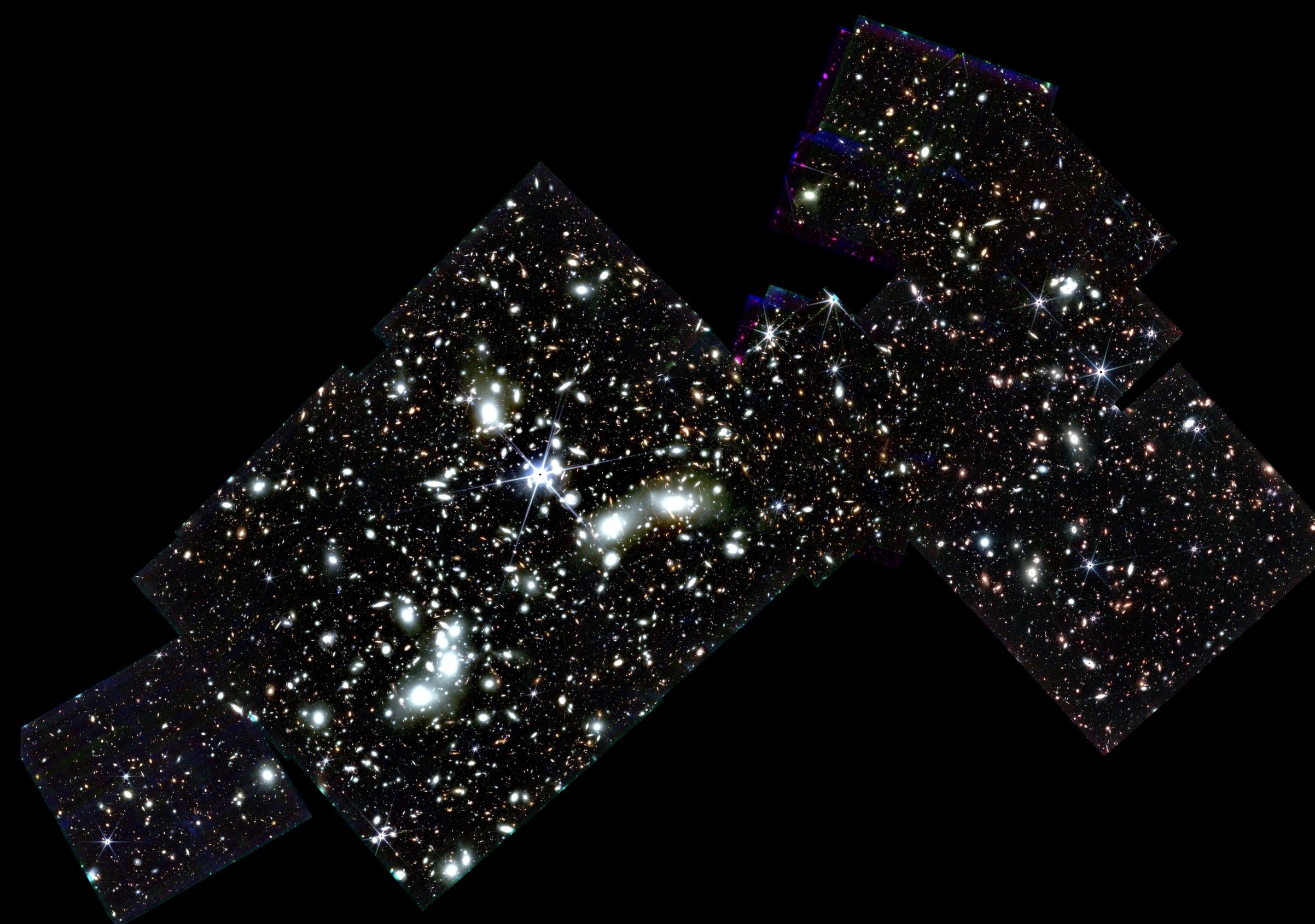
Webb Galaxy Cluster Abell 2744

An image of the galaxy cluster Abell 2744 created by combining many different JWST exposures. In this tiny part of the sky (a fraction of a full Moon) almost every one of the thousands of objects shown is a distant galaxy. Credit: Lukas Furtak (Ben-Gurion University of the Negev) from images from the GLASS/UNCOVER teams

This image is a mosaic (many individual images stitched together) centered on the giant Abell 2744 galaxy cluster, colloquially known as “Pandora’s Cluster.” The sheer number and variety of sources that the JWST can detect is mind-boggling; with the exception of a handful of foreground stars, every spot of light represents an entire galaxy.

In a patch of dark sky no larger than a fraction of the full Moon there are umpteen thousands of galaxies, really bringing home the sheer scale of the universe we inhabit. Professional and amateur astronomers alike can spend hours scouring this image for oddities and mysteries.

Over the coming years, JWST’s ability to look so deep and far back into the universe will allow us to answer many questions about how we came to be. Just as exciting are the discoveries and questions we can not yet foresee. When you peel back the veil of time as only this new telescope can, these unknown unknowns are certain to be fascinating.

Written by:

  • Colin Jacobs – Postdoctoral Researcher in Astrophysics, Swinburne University of Technology
  • Karl Glazebrook – ARC Laureate Fellow & Distinguished Professor, Centre for Astrophysics & Supercomputing, Swinburne University of Technology

This article was first published in The Conversation.The Conversation

Adblock test (Why?)

Article From & Read More ( 10 Times This Year the Webb Telescope Blew Astronomers Away With Stunning New Images of Our Universe - SciTechDaily )
https://ift.tt/GQ2cSqM
Science
Wednesday, December 28, 2022

Every planet in the solar system to be visible in rare "planet parade" Wednesday - CBS News

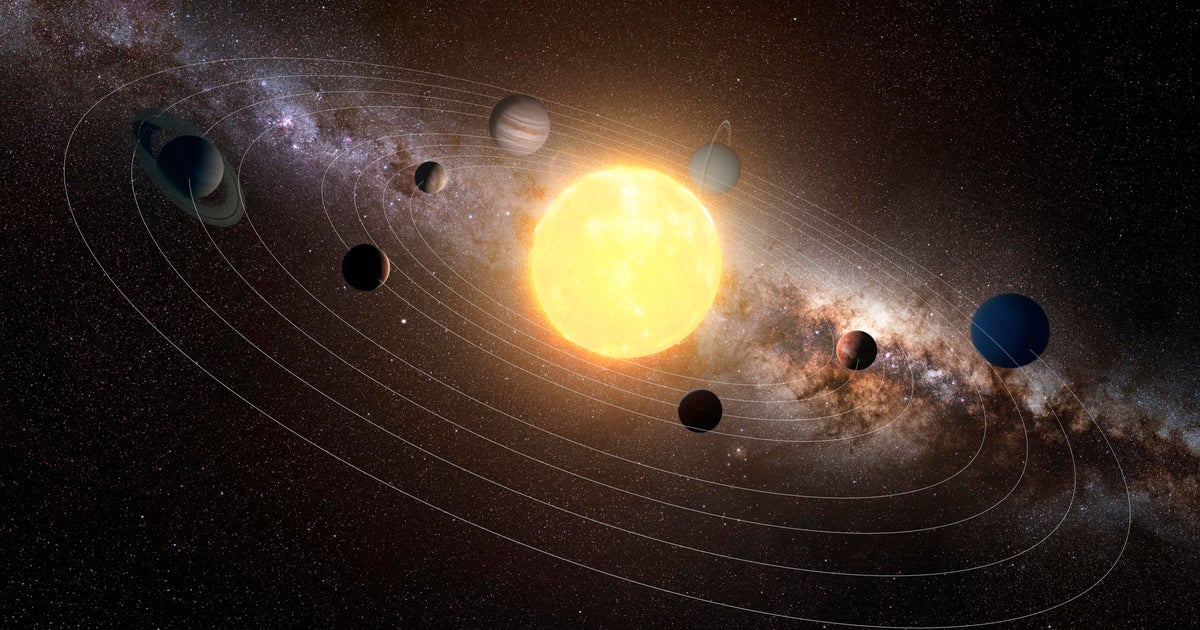
The planets of the solar system will be lined up in the sky Wednesday night in an astronomical phenomenon, visible from Earth, known as a "planet parade."  

The phenomenon, which was also visible Tuesday night, gives skywatchers a good view of Mercury, Venus, Mars, Jupiter and Saturn with the naked eye. With a pair of binoculars or a telescope, Uranus and Neptune can also be seen.

The planet parade is not an extremely rare occurrence — it tends to happen at least every couple of years. In fact, the eight-planet alignment last happened in June.

In order to see the phenomenon, it is recommended you look south after sunset. From east to west, the planets will appear in this order: Mars, Uranus, Jupiter, Neptune, Saturn, Mercury, Venus. 

"People should look southward about 30 to 45 minutes after sunset to catch Mercury and Venus before they're too close to the horizon to observe," said Vahé Peroomian, a professor of astronomy and physics at the University of Southern California. "Jupiter, Saturn and Mars will be visible once it gets dark, from southeast to east."

Planets can appear together in the same part of the sky during their orbits around the sun, Peroomian told CBS News.

"Mercury completes one orbit in 88 days, and Venus in 225 days. The outer planets move a lot slower: Jupiter takes 12 years to orbit the Sun, Saturn takes 29," he said. "So, as long as Jupiter and Saturn are visible, which happens unless they're on opposite sides of the Sun from our point of view, then the remaining planets will eventually line up." 

It is a bigger feat for Neptune and Uranus to also be visible at the same time as they take 165 years and 84 years, respectively, to orbit the sun.

Both planets "spend considerable time on opposite sides of the Sun from our vantage point," Peroomian said.

On Wednesday night, Uranus and Neptune are relatively close together, but because Uranus moves around the Sun twice as fast as Neptune, the planets will move further away from one another, he said.

As a result, "it won't be possible to see both planets in the night sky at the same time for several decades," Peroomian added.  

Adblock test (Why?)

Article From & Read More ( Every planet in the solar system to be visible in rare "planet parade" Wednesday - CBS News )
https://ift.tt/cY5lpNE
Science

SpaceX begins launching Starlink second generation constellation - NASASpaceFlight.com - NASASpaceflight.com

SpaceX begins launching Starlink second generation constellation - NASASpaceFlight.com

Adblock test (Why?)

Article From & Read More ( SpaceX begins launching Starlink second generation constellation - NASASpaceFlight.com - NASASpaceflight.com )
https://ift.tt/PnrLR06
Science

An Asteroid Is Passing Earth Today, so Scientists Are Shooting It With Radio Waves - Gizmodo

The HAARP facility’s antenna array includes 180 antennas spread across 33 acres.
Photo: HAARP

A group of researchers is attempting to bounce radio signals off a 500-foot-wide asteroid during its close flyby of Earth on Tuesday.

The High Frequency Active Auroral Research Program (HAARP) is aiming its antennas at asteroid 2010 XC15, a space rock that’s categorized as a near-Earth potentially hazardous asteroid. The effort is a test run to to prepare for a larger object, known as Apophis, that will have a close encounter with our planet in 2029.

“What’s new and what we are trying to do is probe asteroid interiors with long wavelength radars and radio telescopes from the ground,” Mark Haynes, lead investigator on the project and a radar systems engineer at NASA’s Jet Propulsion Laboratory in Southern California, said in a statement. “Longer wavelengths can penetrate the interior of an object much better than the radio wavelengths used for communication.”

HAARP is a research facility in Gakona, Alaska (one that’s been the subject of plenty of conspiracy theories). It’s made up of 180 high-frequency antennas, each standing at 72 feet tall and stretched across 33 acres. The facility transmits radio beams toward the ionosphere, the ionized part of the atmosphere that’s located about 50 to 400 miles (80 to 600 kilometers) above Earth’s surface. HAARP sends radio signals to the ionosphere and waits to see how they return, in an effort to measure the disturbances caused by the Sun, among other things.

The facility launched a science campaign in October with 13 experiments, including one that involved bouncing signals off the Moon. At the time, HAARP researchers were considering sending a radio signal to an asteroid to investigate the interior of the rocky body.

During today’s experiment, the HAARP antennas in Alaska will transmit the radio signals to the asteroid, and then scientists will check if the reflected signals arrive at antenna arrays at the University of New Mexico Long Wavelength Array and California’s Owens Valley Radio Observatory Long Wavelength Array.

HAARP will transmit a continually chirping signal at slightly above and below 9.6 megahertz; the chirp will repeat at two-second intervals. At its closest approach on December 27, the asteroid will be twice as far as the Moon is from Earth.

Tuesday’s experiment is to prepare for an upcoming encounter with an asteroid in 2029. That potentially hazardous asteroid, formally known as 99942 Apophis, is around 1,210 feet (370 meters) wide, and it will come to within 20,000 miles (32,000 kilometers) of Earth on April 13, 2029. The near-Earth object was thought to pose a slight risk to Earth in 2068, but NASA ruled that out.

Still, HAARP wants to probe the asteroid to prepare for potential risks in the future from space rocks. “The more time there is before a potential impact, the more options there are to try to deflect it,” Haynes said.

In September, NASA’s DART spacecraft smacked into a small asteroid and successfully altered its orbit. Such a strategy could be one way to divert a space rock that threatens Earth.

Today’s test shows the potential of using long wavelength radio signals to probe the interiors of asteroids. “If we can get the ground-based systems up and running, then that will give us a lot of chances to try to do interior sensing of these objects,” Haynes said.

More: A Powerful Recoil Effect Magnified NASA’s Asteroid Deflection Experiment

Adblock test (Why?)

Article From & Read More ( An Asteroid Is Passing Earth Today, so Scientists Are Shooting It With Radio Waves - Gizmodo )
https://ift.tt/1sjac0J
Science

Tuesday, December 27, 2022

2022's unforgettable moments in space exploration - CNN

Sign up for CNN’s Wonder Theory science newsletter. Explore the universe with news on fascinating discoveries, scientific advancements and more.

CNN  — 

This year, humankind glimpsed the universe in ways that were never before possible, and space missions took unprecedented leaps forward in unraveling the mysteries of the cosmos.

We witnessed the first mission to the International Space Station funded entirely by space tourists. A new space-based internet service played a key role in the war in Ukraine. And there were historic launches of spacecraft and technology by NASA and its international partners that could one day be used to land humans on Mars.

“There is no doubt that 2022 was out of this world,” NASA Administrator Bill Nelson said in a statement. “2022 will go down in the history books as one of the most accomplished years across all of NASA’s missions.”

Here are some of the unforgettable space discoveries and moments from 2022.

Artemis I moon mission launches

After years of preparation, NASA finally got its latest lunar exploration program off the ground with an uncrewed test flight that carried anastronaut-worthy spacecraft around the moon.

The mission was chock-full of huge moments. The rocket that got the mission off the ground, the Space Launch System or SLS, became the most powerful rocket ever to reach orbit — boasting 15% more thrust than the Saturn V rockets behind the Apollo program.

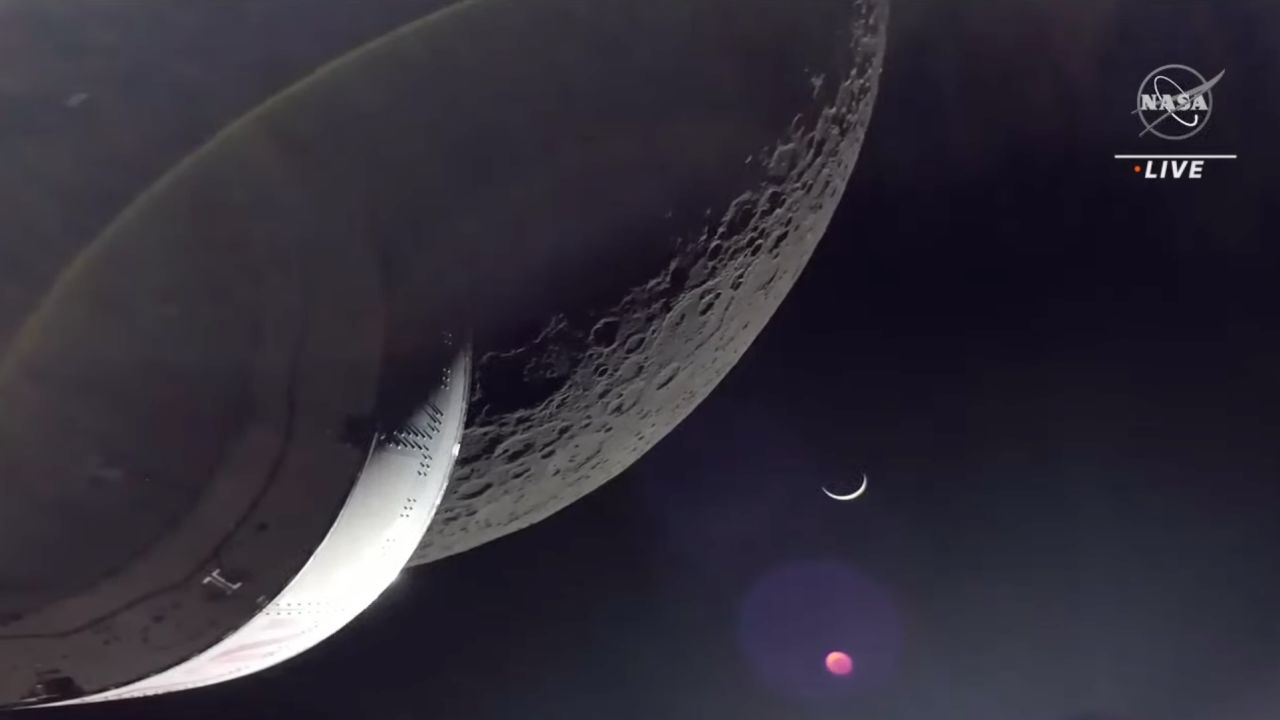
Upon reaching space, the Orion capsule, which flew empty save for a few test mannequins, captured stunning images of the Earth and moon. And Orion’s orbital path swung farther out beyond the far side of the moon than any spacecraft designed to carry humans has traveled before.

NASA's Orion spacecraft captures an image of the "Earth rise" as it emerges from the far side of the moon.

The trial run has paved the way for future Artemis missions, with the aim of returning humans to the lunar surface before mapping out a pathway for the first human spaceflight to Mars.

Webb telescope reveals the invisible universe

In partnership with international space agencies, NASA not only made strides in its human exploration program, but it also notched steps forward in scientific endeavors. After decades of anticipation, the James Webb Space Telescope finally began observing the universe in July.

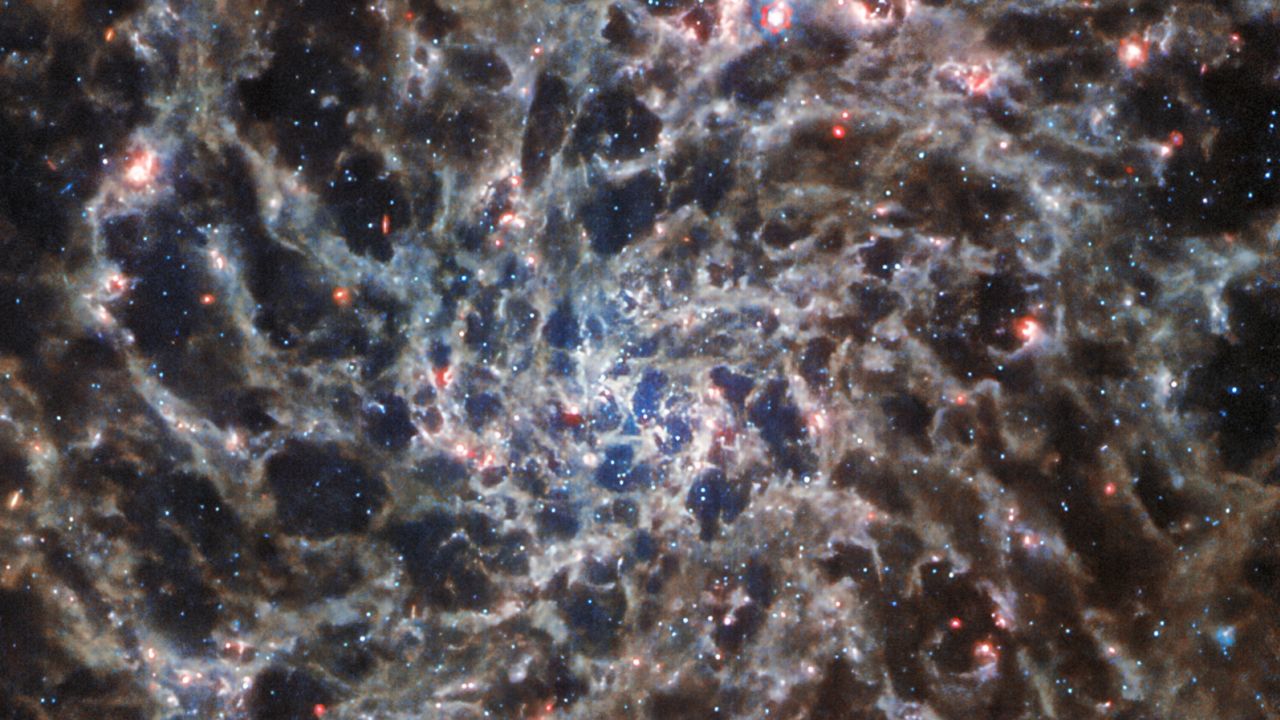
The James Webb Space Telescope captured this image of the spiral galaxy IC 5332.

Since then, the world’s most powerful space observatory has turned its gaze on planets, stars and galaxies in infrared light, which is invisible to the human eye.

The telescope has spied unseen aspects of the universe and previously hidden features, including the most distant galaxies ever observed. Webb has also shared new perspectives on some of astronomy’s favorite cosmic features and captured them in a new light, such as the Pillars of Creation.

The telescope’s images have already gone beyond what astronomers expected — and the best news: Webb is just getting started.

Observing astronomical wonders for the first time

The Webb telescope, however, wasn’t the only space observatory expanding our understanding of deep space. The Hubble Space Telescope spied the most distant single star ever observed, faintly shining 28 billion light-years away. The star existed just 900 million years after the big bang created the universe, and its light has traveled nearly 13 billion years to reach Earth.

Astronomers nicknamed the star Earendel, derived from an Old English word that means “morning star” or “rising light.”

Meanwhile, astronomers used the Event Horizon Telescope to capture an image of the supermassive black hole at the center of our galaxy for the first time. This first direct observation confirmed the presence of the black hole, known as Sagittarius A*, as the beating heart of the Milky Way.

While black holes don’t emit light, the shadow of the cosmic object was surrounded by a bright ring — light bent by the gravity of the black hole.

Shifting an asteroid’s trajectory in space

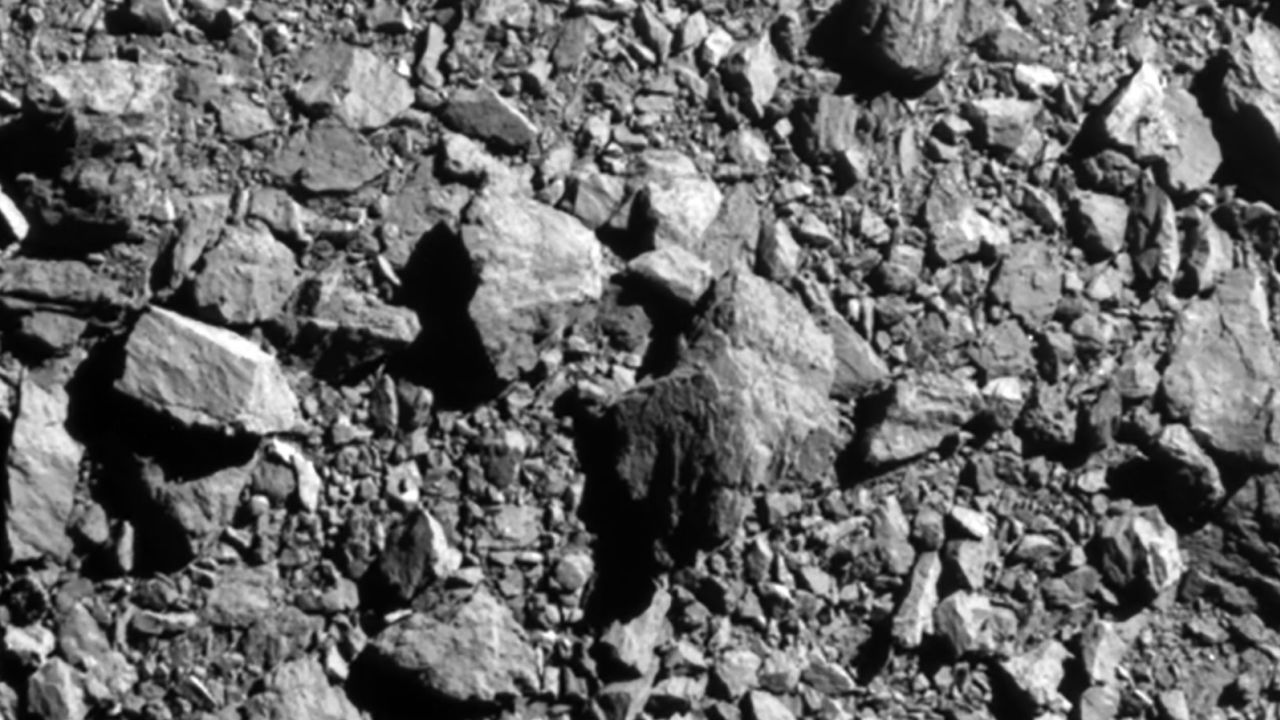
In late September, NASA successfully completed the first test mission for planetary defense. The space agency slammed a spacecraft into Dimorphos, a small asteroid that orbits a larger space rock named Didymos — and yes, the collision was intentional. The Double Asteroid Redirection Test, or DART, was a full-scale demonstration of deflection technology.

The rocky surface of Dimorphos was the last thing DART saw before crashing into the asteroid.

Neither Dimorphos nor Didymos poses a threat to Earth, but the system was a perfect target to test a technique that may one day be used to protect the planet from an asteroid strike.

The DART mission marked the first time humanity intentionally changed the motion of a celestial object in space. The spacecraft altered the moonlet asteroid’s orbit by 32 minutes.

NASA announces plans to study UFOs

And that’s not all 2022 offered when it came to the study of unusual objects in the skies. In June, NASA announced it would delve into the mysteries surrounding unidentified aerial phenomena, more popularly known as unidentified flying objects or UFOs. The space agency later selected a team of experts across numerous disciplines — including astrobiology, data science, oceanography, genetics, policy and planetary science — for the task.

Officials at NASA aren’t suggesting aliens may be responsible for such phenomena. The goal is merely to take a serious look at the as-yet-unexplained — but much publicly debated — topic of UAPs and how they might be studied through a scientific lens.

“Without access to an extensive set of data, it is nearly impossible to verify or explain any observation, thus the focus of the study is to inform NASA what possible data could be collected in the future to scientifically discern the nature of UAP,” according to a NASA news release.

Milestones on Mars

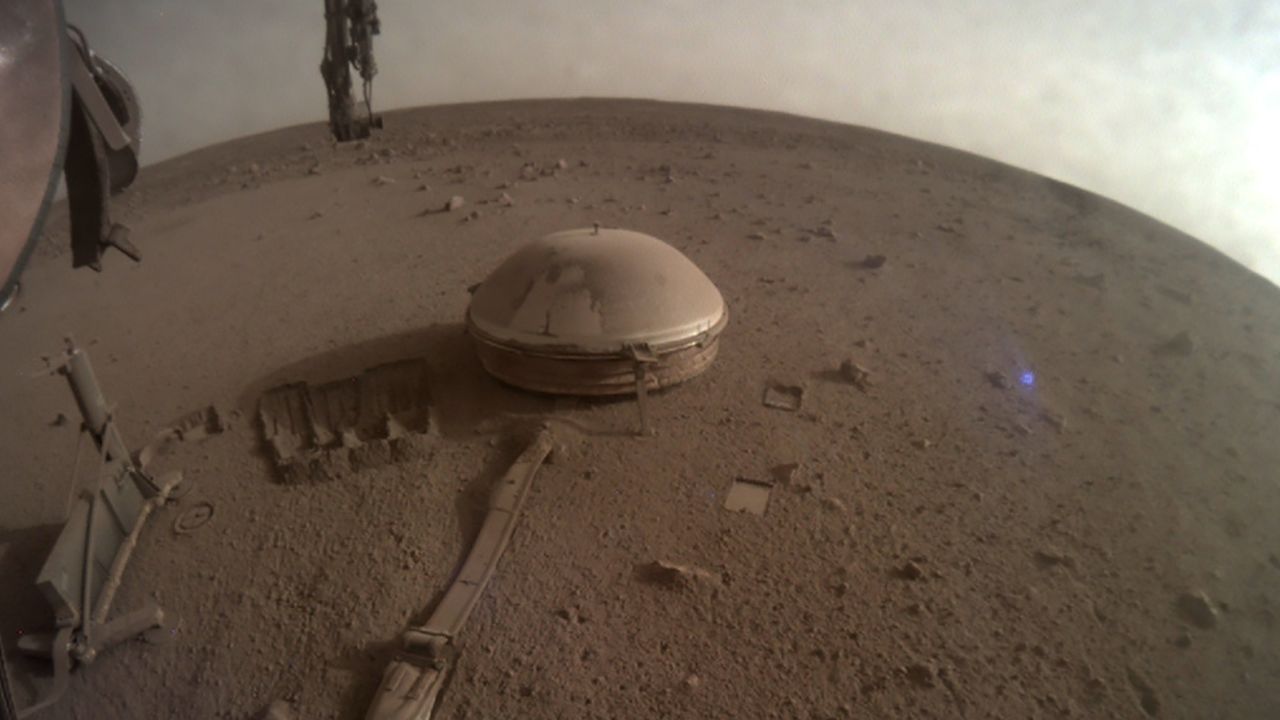
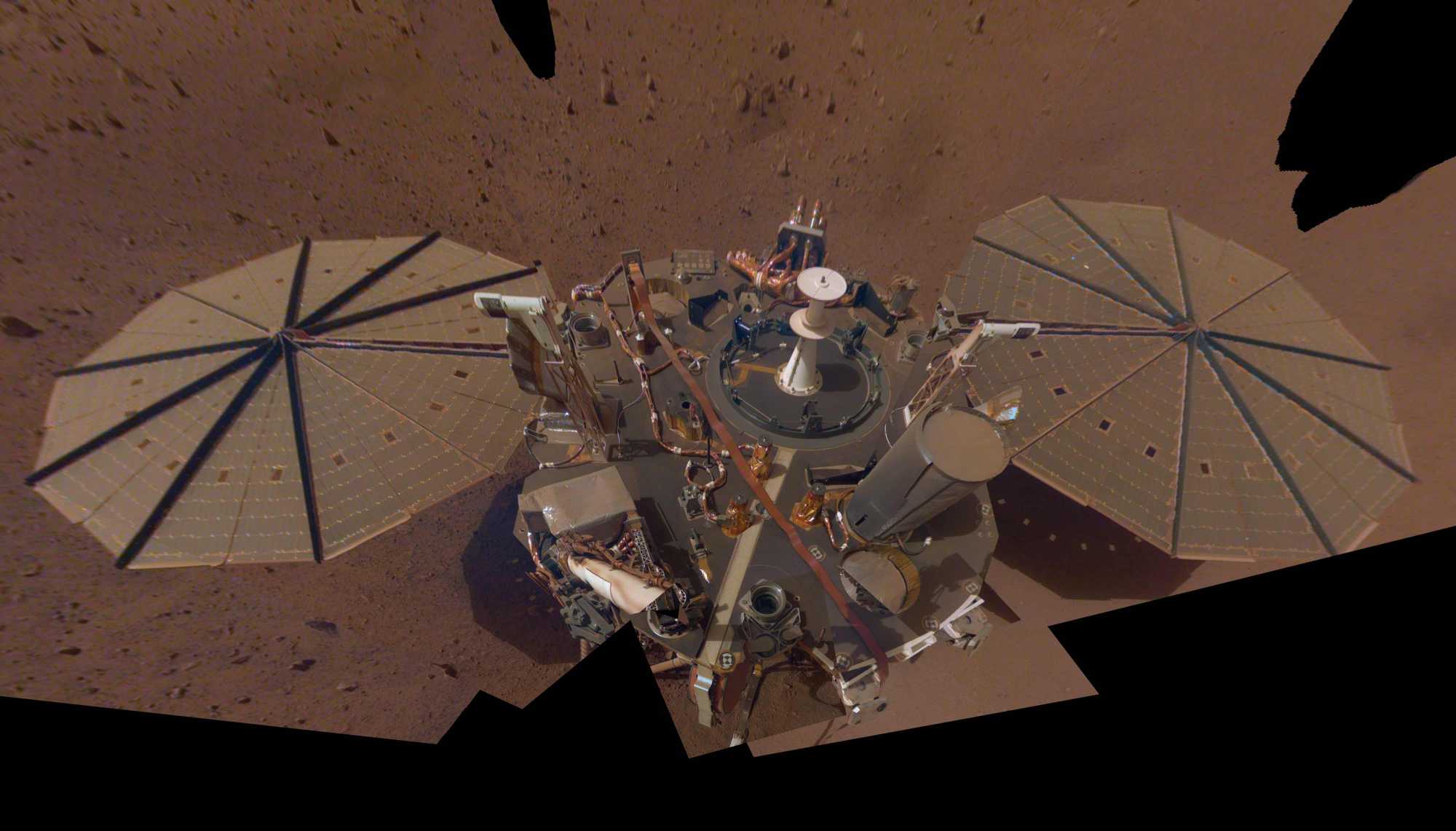
Meanwhile on the red planet, the InSight lander’s mission came to an end due to a surplus of dust on its solar panels (and no whirlwinds to vacuum them clean), but the stationary spacecraft made history in 2022. InSight detected the largest quake on Mars and captured the sounds of space rocks slamming into the planet — which created craters that revealed treasure troves of subsurface ice.

The NASA InSight lander acquired this image of the area in front of the spacecraft on Mars on December 11.

As InSight winds down, the Perseverance rover’s sidekick has continued to take to the Martian skies, above and beyond its original five-flight mission. The Ingenuity helicopter broke its own altitude record and has aced 37 flights on the red planet since April 2021. The little chopper has acted as an aerial scout for Perseverance, which collected an incredible diversity of Martian rock and sediment samples.

Now, the rover is setting up a depot of samples that will be stored on the Martian surface. The samples will be retrieved and returned to Earth in 2033 via the ambitious Mars Sample Return program, which will send a lander and a duo of retrieval helicopters to the red planet later this decade.

Interstellar meteor visits our cosmic neighborhood

Speaking of space rocks, a rare specimen traveled to Earth in 2014. But scientists just put its puzzle pieces together this year, and the discovery was announced in a US Space Command document.

The first known interstellar meteor to hit Earth crash-landed along the northeast coast of Papua New Guinea in January 2014.

Interstellar meteors are space rocks originating from outside our solar system, such as ʻOumuamua, the first known interstellar object in our solar system that was detected in 2017.

Debris from Space Shuttle Challenger disaster discovered

To be sure, NASA has seen many successes this year but also faced reminders of tragedy and disaster. Investigators set off in March to search suspected shipwreck sites in the Bermuda Triangle, a swath of the northern Atlantic Ocean said to be the site of dozens of shipwrecks and plane crashes, for a TV docuseries. But the crew stumbled upon something unexpected at another site off Florida’s east coast: a 20-foot-long (6-meter-long) piece of debris from the Space Shuttle Challenger, which broke apart shortly after takeoff in 1986 and killed all seven crew members aboard.

Divers discovered a lost piece of the Space Shuttle Challenger while scouring the ocean floor off Florida's east coast.

It was the first debris to be discovered since pieces from the shuttle washed ashore in 1996.

“This discovery gives us an opportunity to pause once again, to uplift the legacies of the seven pioneers we lost, and to reflect on how this tragedy changed us,” Nelson, the NASA administrator, said in a statement. “At NASA, the core value of safety is — and must forever remain — our top priority, especially as our missions explore more of the cosmos than ever before.”

Nascent satellite system provides internet to war-torn Ukraine

As Russia launched its invasion in February and some areas of Ukraine lost internet access, a space-based internet system that barely existed a few years ago began to provide crucial connectivity.

Elon Musk’s SpaceX designed and launched the system, called Starlink. It makes use of thousands of small satellites orbiting a few hundred miles above Earth. The satellites work in tandem to blanket the globe in internet connectivity, and all that’s needed to get online is an easy-to-use Starlink satellite dish.

Musk and SpaceX sent thousands of those dishes to Ukraine. Though a funding controversy later ensued, the use of Starlink in the Eastern European country was hailed as a game changer in strategic communication for its military, allowing Ukraine to fight effectively, even as the ongoing war disrupted cellular phone and internet networks.

First all-private mission to the space station

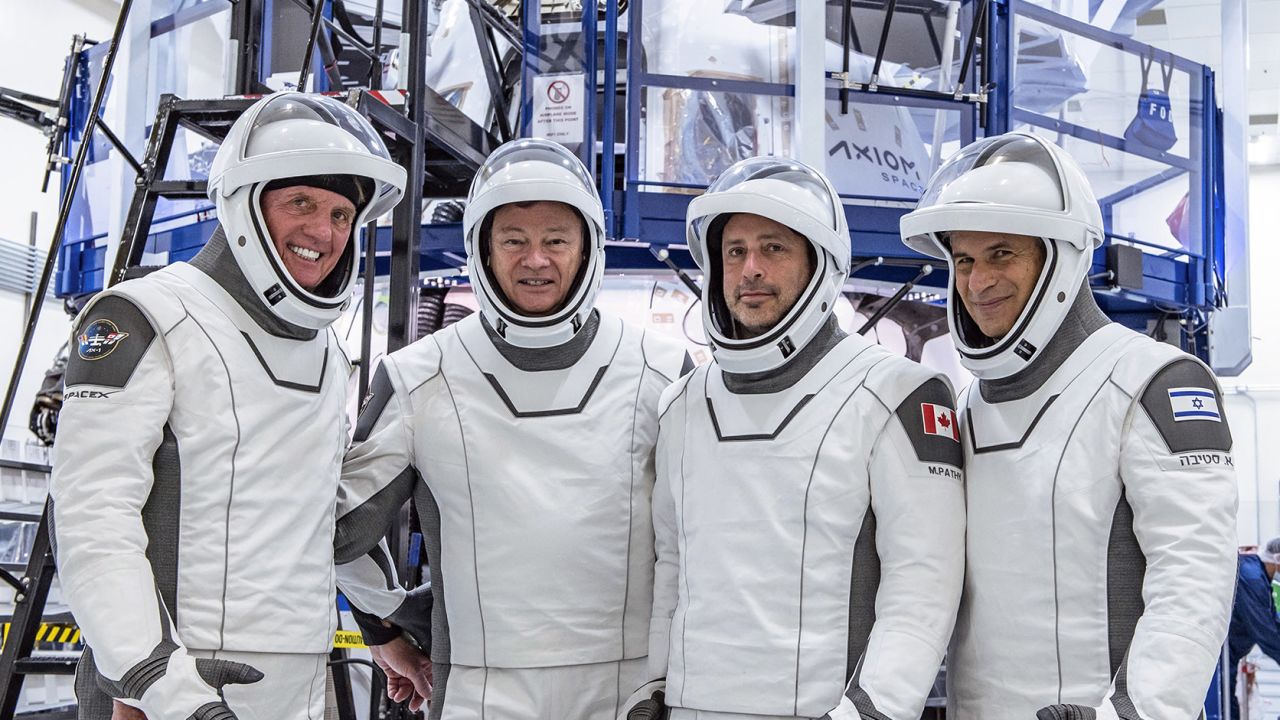
Starlink, however, is one small part of SpaceX’s booming business. The company routinely launches not only satellites but also astronauts into space on NASA’s behalf. And this year, SpaceX even flew a few wealthy thrill-seekers to the International Space Station on a mission brokered by Axiom. The event marked the first space station mission that was fully paid for by paying customers and included only private citizens.

The AX-1 crew is shown (from left): Larry Connor, Michael López-Alegría, Mark Pathy, Michael López-Alegría and Eytan Stibbe.

There were four crew members. Michael López-Alegría, a former NASA astronaut-turned-Axiom employee, was mission commander. And the three paying customers were Israeli businessman Eytan Stibbe, Canadian investor Mark Pathy and Ohio-based real estate magnate Larry Connor.

The mission, called AX-1, launched on April 8 and was originally billed as a 10-day trip. Delays, however, extended the mission by about a week.

Allowing private missions to the space station is part of NASA’s plan for more commercial activity in low-Earth orbit as it turns its focus to exploring deep space.

CNN’s Alex Marquardt contributed to this report.

Adblock test (Why?)

Article From & Read More ( 2022's unforgettable moments in space exploration - CNN )
https://ift.tt/ruXCetl
Science

Monday, December 26, 2022

6 Best space photos that Shocked the world in 2022 - HT Tech

6 Best space photos that Shocked the world in 2022

By: HT TECH
| Updated on: Dec 24 2022, 18:22 IST
Moon
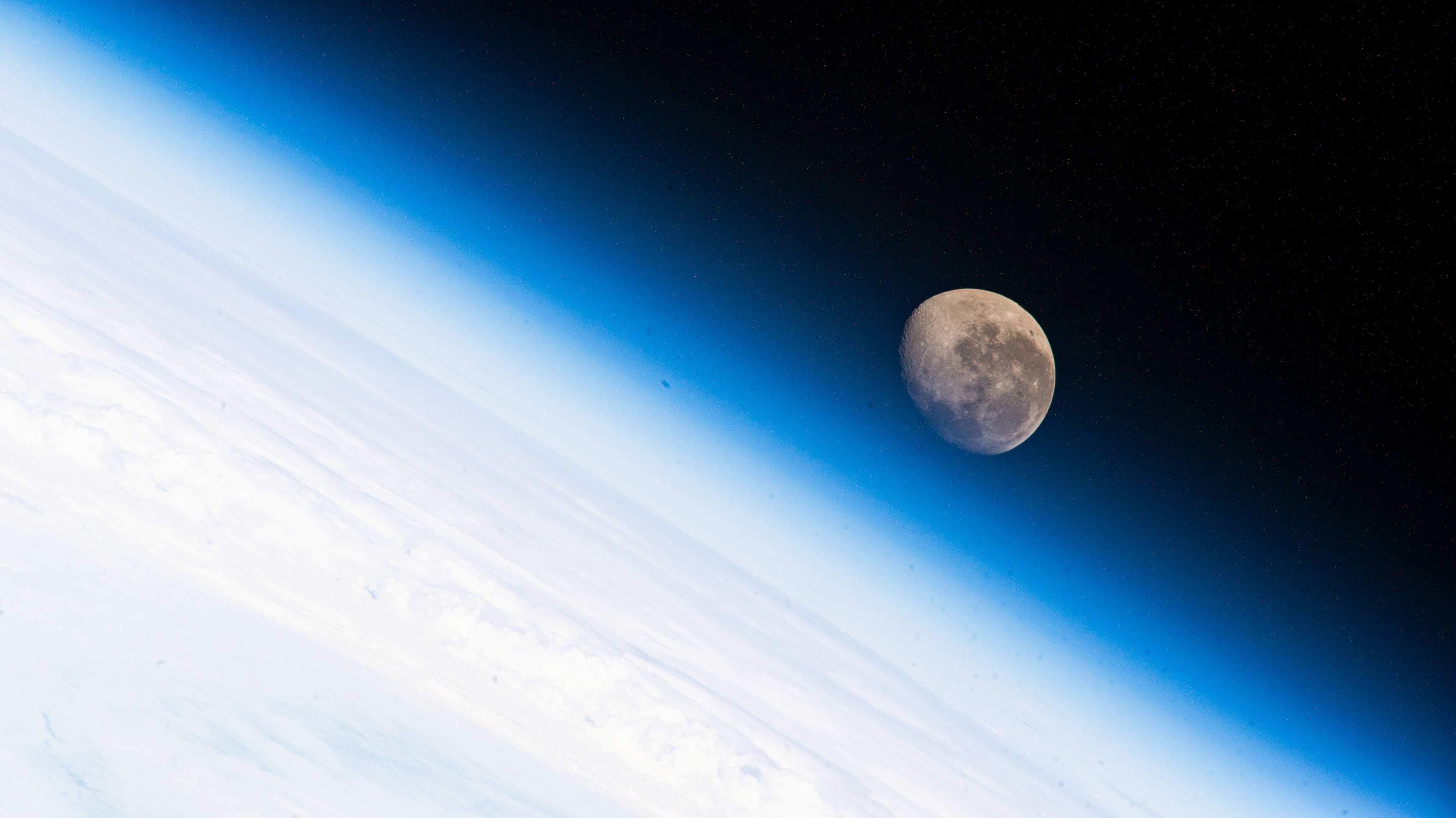
With plenty of space missions taking place in 2022, one of the images that stands out from the rest was this picture of the Moon above the horizon of the Earth taken from the the International Space Station some 408 km up in the sky.  (NASA)
1/6 With plenty of space missions taking place in 2022, one of the images that stands out from the rest was this picture of the Moon above the horizon of the Earth taken from the the International Space Station some 408 km up in the sky.  (NASA)
Jupiter
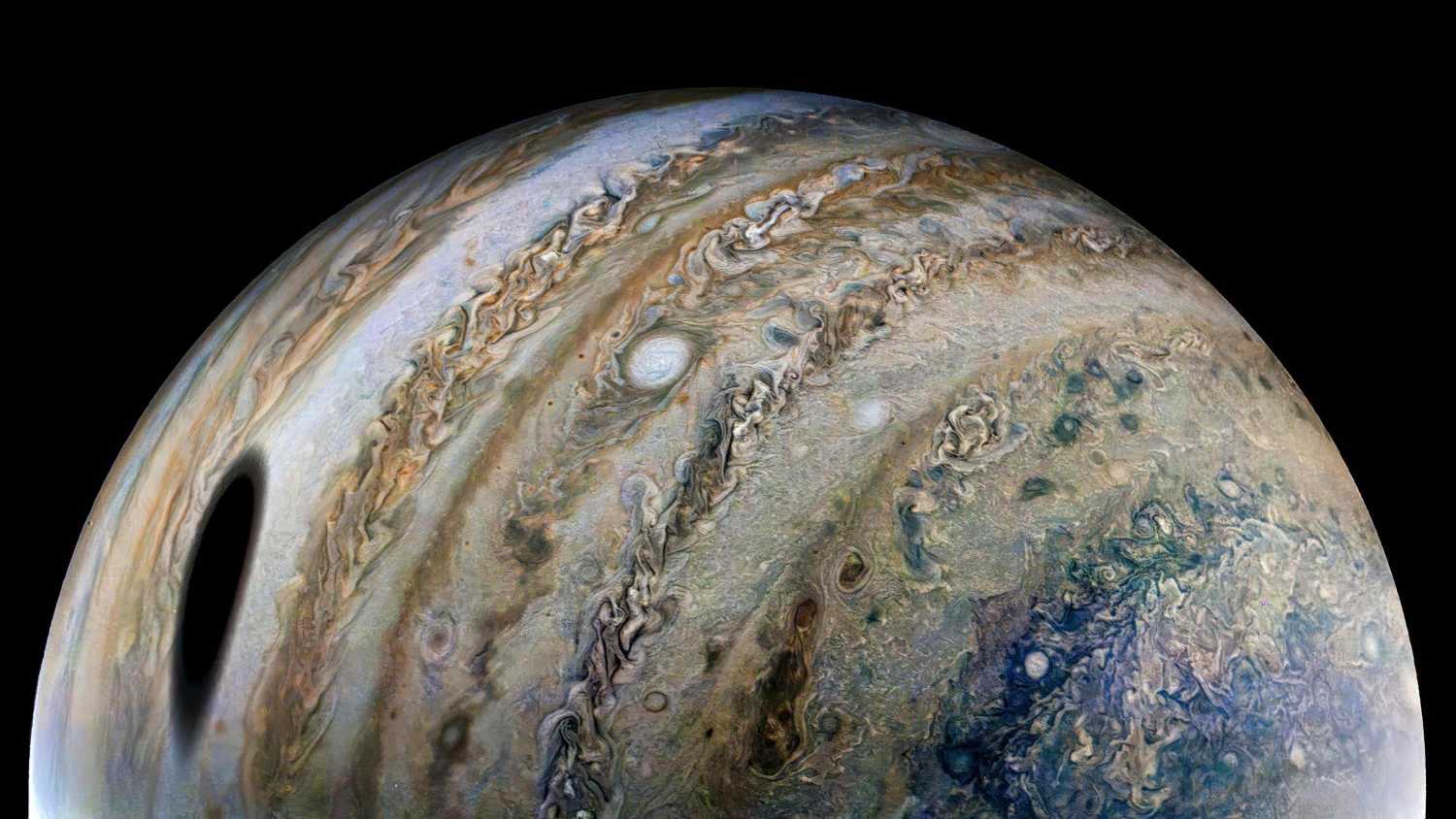
The NASA Juno spacecraft, which is orbiting Jupiter, is equipped with a visible-light camera called JunoCam. It took this spectacular image of the giant planet as Ganymede,  one of Jupiter's four largest moons, cast a shadow on the planet. (NASA Juno)
Jupiter
2/6 The NASA Juno spacecraft, which is orbiting Jupiter, is equipped with a visible-light camera called JunoCam. It took this spectacular image of the giant planet as Ganymede,  one of Jupiter's four largest moons, cast a shadow on the planet. (NASA Juno)
Sun
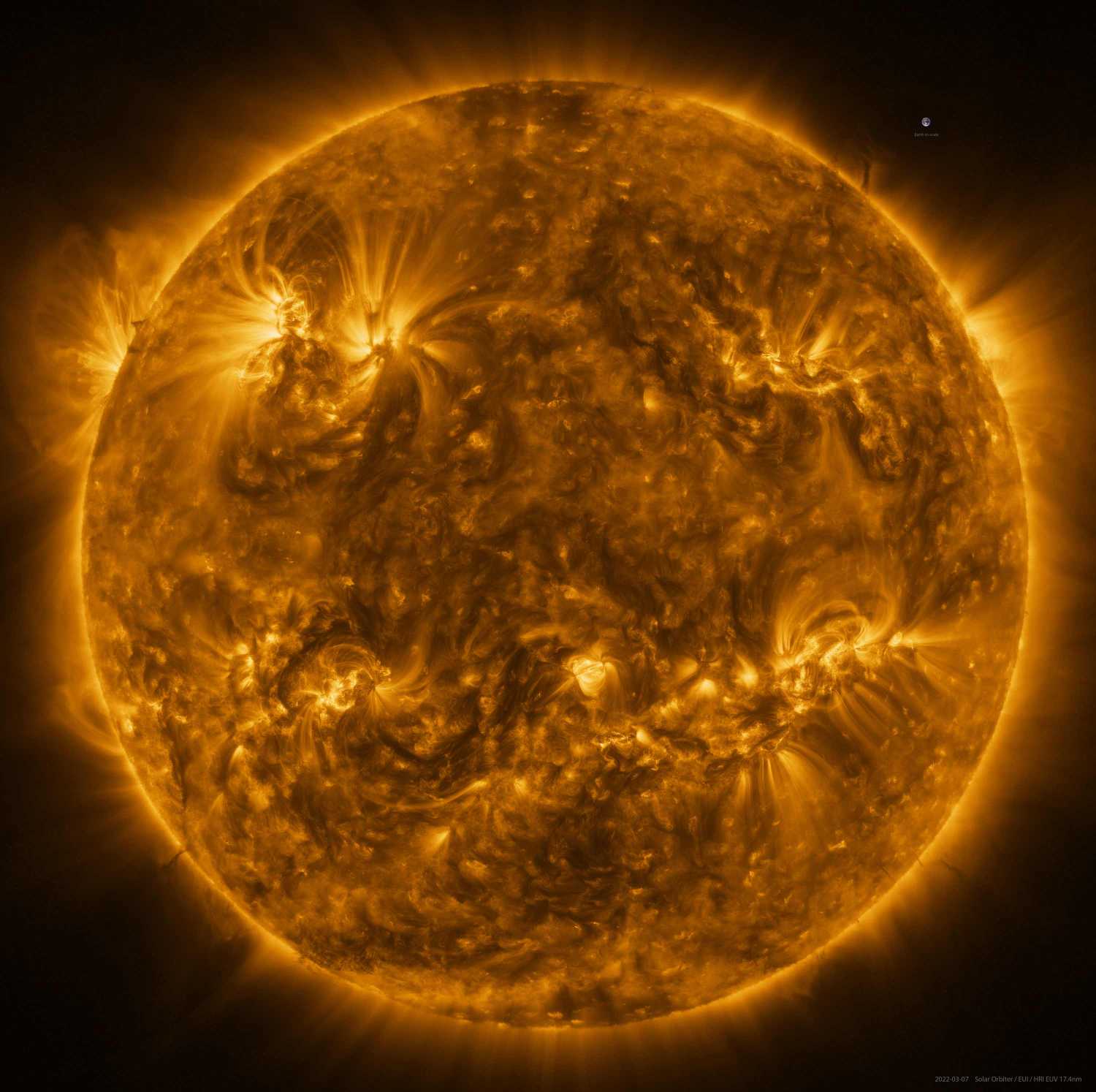
The NASA Solar Orbiter was also not behind in action as it captured never-seen-before details in the Sun’s atmosphere. The image was taken in extreme ultraviolet spectrum to highlight the solar activity.   (NASA Solar Orbiter)
Sun
3/6 The NASA Solar Orbiter was also not behind in action as it captured never-seen-before details in the Sun’s atmosphere. The image was taken in extreme ultraviolet spectrum to highlight the solar activity.   (NASA Solar Orbiter)
Insight Lander
On April 24, the recently retired NASA InSight lander took its last selfie. This image has now become iconic given the love from netizens the NASA lander has received.   (NASA)
Insight Lander
4/6 On April 24, the recently retired NASA InSight lander took its last selfie. This image has now become iconic given the love from netizens the NASA lander has received.   (NASA)
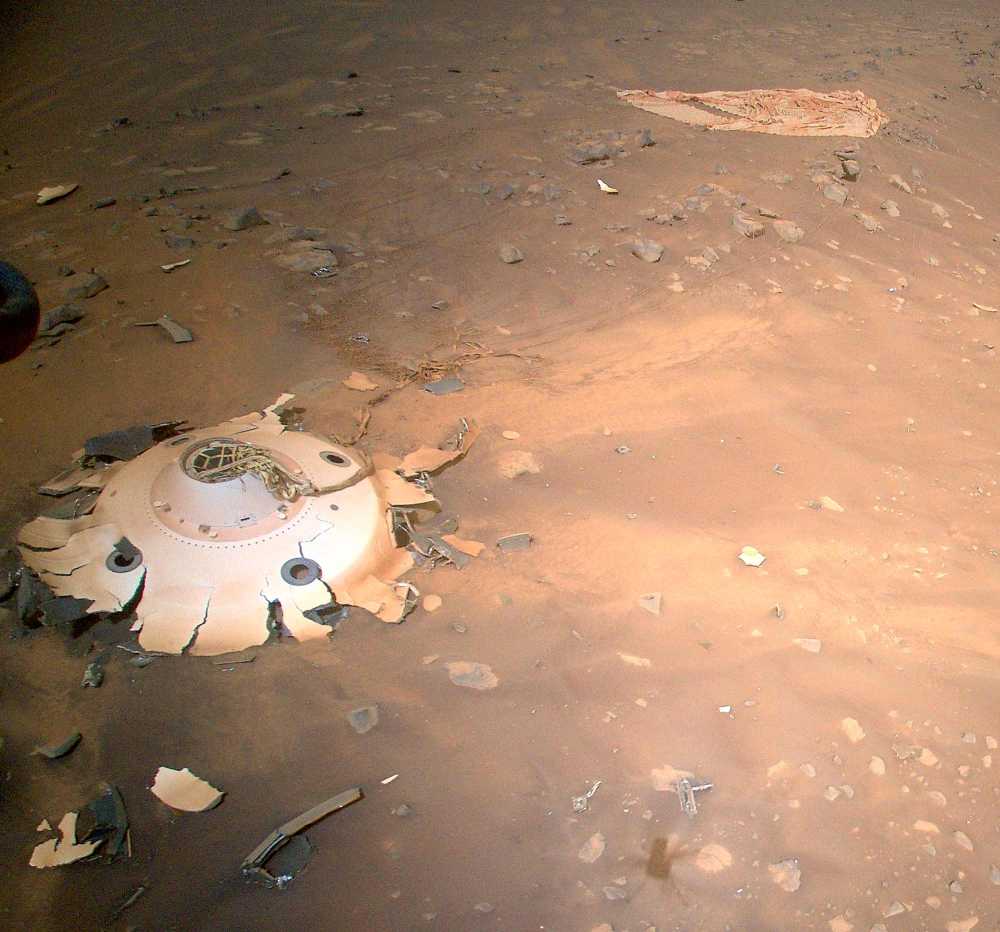
Perseverance
Another image from NASA’s Mars exploration is the debris from the gear that helped land the Perseverance rover on Mars. The image was taken by the space helicopter, Ingenuity.  (NASA Ingenuity)
Perseverance
5/6 Another image from NASA’s Mars exploration is the debris from the gear that helped land the Perseverance rover on Mars. The image was taken by the space helicopter, Ingenuity.  (NASA Ingenuity)
DART
This image was taken just moments before NASA Double Asteroid Redirection Test (DART) spacecraft struck the Dimorphos asteroid, marking the moment when for the first time, humanity would physically move a celestial object. (Reuters)
DART
6/6 This image was taken just moments before NASA Double Asteroid Redirection Test (DART) spacecraft struck the Dimorphos asteroid, marking the moment when for the first time, humanity would physically move a celestial object. (Reuters)

First Published Date: 24 Dec, 15:12 IST

Adblock test (Why?)

Article From & Read More ( 6 Best space photos that Shocked the world in 2022 - HT Tech )
https://ift.tt/EZXjVNS
Science

Search

Featured Post

Two meteor showers will peak tonight. How to watch the Southern Delta Aquariids and the Alpha Capricornids. - Yahoo

[unable to retrieve full-text content] Two meteor showers will peak tonight. How to watch the Southern Delta Aquariids and the Alpha Caprico...

Postingan Populer