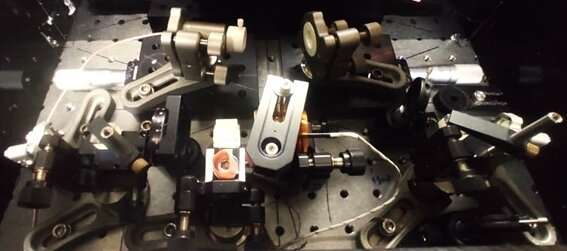
The optical parametric oscillator (OPO) used in the study. Credit: Alvaro Montaña Guerrero
Scientists are increasingly studying quantum entanglement, which occurs when two or more systems are created or interact in such a manner that the quantum states of some cannot be described independently of the quantum states of the others. The systems are correlated, even when they are separated by a large distance. The significant potential for applications in encryption, communications and quantum computing spurs research. The difficulty is that when the systems interact with their surroundings, they almost immediately become disentangled.
In the latest study by the Laboratory for Coherent Manipulation of Atoms and Light (LMCAL) at the University of São Paulo's Physics Institute (IF-USP) in Brazil, the researchers succeeded in developing a light source that produced two entangled light beams. Their work is published in Physical Review Letters.
"This light source was an optical parametric oscillator, or OPO, which is typically made up of a non-linear optical response crystal between two mirrors forming an optical cavity. When a bright green beam shines on the apparatus, the crystal-mirror dynamics produces two light beams with quantum correlations," said physicist Hans Marin Florez, last author of the article.
The problem is that light emitted by crystal-based OPOs cannot interact with other systems of interest in the context of quantum information, such as cold atoms, ions or chips, since its wavelength is not the same as those of the systems in question. "Our group showed in previous work that atoms themselves could be used as a medium instead of a crystal. We therefore produced the first OPO based on rubidium atoms, in which two beams were intensely quantum-correlated, and obtained a source that could interact with other systems with the potential to serve as quantum memory, such as cold atoms," Florez said.
However, this was not sufficient to show the beams were entangled. In addition to the intensity, the beams' phases, which have to do with light wave synchronization, also needed to display quantum correlations. "That's precisely what we achieved in the new study reported in Physical Review Letters," he said.
"We repeated the same experiment but added new detection steps that enabled us to measure the quantum correlations in the amplitudes and phases of the fields generated. As a result, we were able to show they were entangled. Furthermore, the detection technique enabled us to observe that the entanglement structure was richer than would typically be characterized. Instead of two adjacent bands of the spectrum being entangled, what we had actually produced was a system comprising four entangled spectral bands."
In this case, the amplitudes and phases of the waves were entangled. This is fundamental in many protocols to process and transmit quantum-coded information. Besides these possible applications, this kind of light source could also be used in metrology. "Quantum correlations of intensity result in a considerable reduction of intensity fluctuations, which can enhance the sensitivity of optical sensors," Florez said. "Imagine a party where everyone is talking and you can't hear someone on the other side of the room. If the noise decreases sufficiently, if everyone stops talking, you can hear what someone says from a good distance away."
Enhancing the sensitivity of atomic magnetometers used to measure the alpha waves emitted by the human brain is one of the potential applications, he added.
The article also notes an additional advantage of rubidium OPOs over crystal OPOs. "Crystal OPOs have to have mirrors that keep the light inside the cavity for longer, so that the interaction produces quantum correlated beams, whereas the use of an atomic medium in which the two beams are produced more efficiently than with crystals avoids the need for mirrors to imprison the light for such a long time," Florez said.
Before his group conducted this study, other groups had tried to make OPOs with atoms but failed to demonstrate quantum correlations in the light beams produced. The new experiment showed there was no intrinsic limit in the system to prevent this from happening. "We discovered that the temperature of the atoms is key to observation of quantum correlations. Apparently, the other studies used higher temperatures that prevented the researchers from observing correlations," he said.
More information: A. Montaña Guerrero et al, Continuous Variable Entanglement in an Optical Parametric Oscillator Based on a Nondegenerate Four Wave Mixing Process in Hot Alkali Atoms, Physical Review Letters (2022). DOI: 10.1103/PhysRevLett.129.163601
Citation: Researchers develop a light source that produces two entangled light beams (2023, January 3) retrieved 4 January 2023 from https://ift.tt/q45Ookd
This document is subject to copyright. Apart from any fair dealing for the purpose of private study or research, no part may be reproduced without the written permission. The content is provided for information purposes only.
Walter Cunningham, a retired NASA astronaut and pilot of the first crewed flight in the space agency’s famed Apollo program, died early Tuesday morning at the age of 90, NASA said.
Cunningham was one of the earliest members of NASA’s human spaceflight program as a member of its third astronaut class, joining the space agency in 1963. He was selected to pilot Apollo 7, the first crewed mission of the NASA program that went on to land humans on the moon for the first time.
“We would like to express our immense pride in the life that he lived, and our deep gratitude for the man that he was — a patriot, an explorer, pilot, astronaut, husband, brother, and father,” the Cunningham family noted in a statement shared by NASA. “The world has lost another true hero, and we will miss him dearly.”
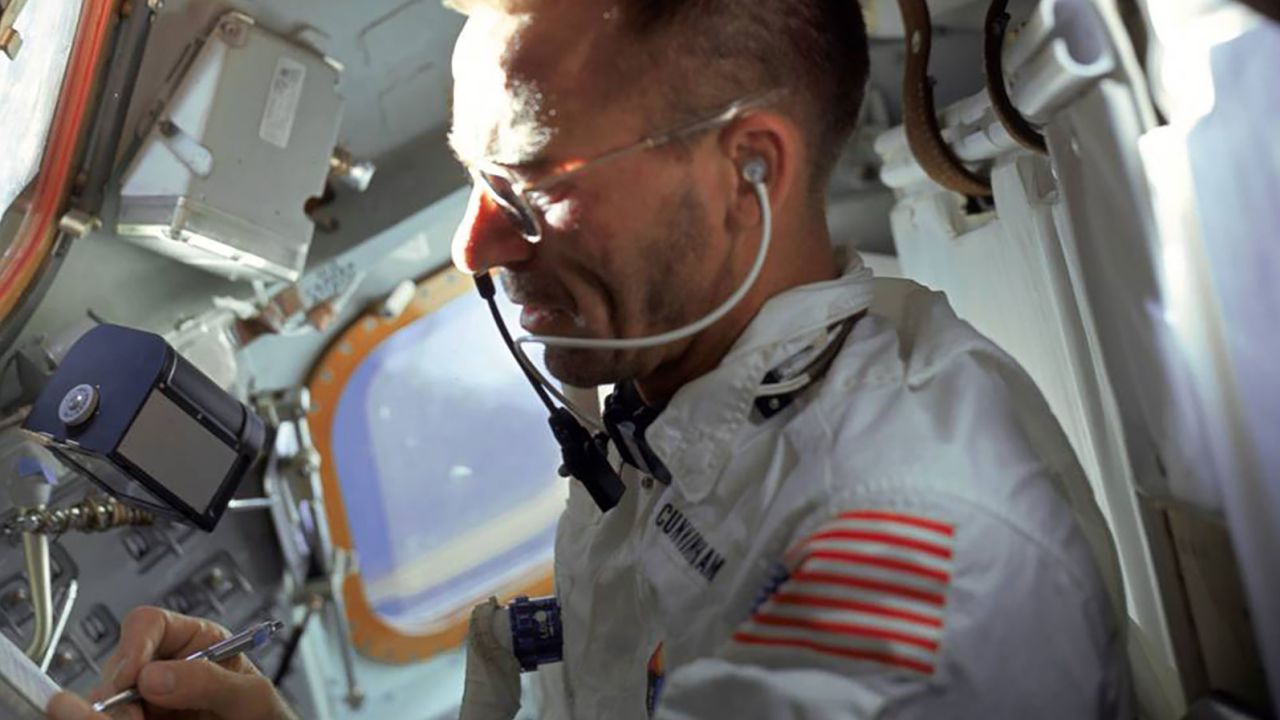
Cunningham writes with a Fisher Space Pen during the flight of Apollo 7, the first crewed Apollo flight and the Space Pen's first trip to space. The pens have been used on every NASA human spaceflight mission since.
NASA
The Apollo 7 mission launched in 1968 and lasted roughly 11 days, sending the crew on a journey into orbit that amounted to a test flight that could demonstrate the Apollo capsule’s ability to rendezvous with another spacecraft in orbit and pave the way for future exploration deeper into space. It was also notable for featuring in the first live TV broadcast of Americans from space, according to NASA.
Cunningham was the last surviving member of the Apollo 7 crew, which also included astronauts Wally Schirra and Donn Eisele.
Born in Creston, Iowa, and a recipient of an honors bachelor’s degree in physics and a masters with distinction in physics from the University of California at Los Angeles, Cunningham was 36 years old when the Apollo 7 mission launched. During an interview with NASA’s Oral History Office in 1999, he reflected on his career path and motivations.
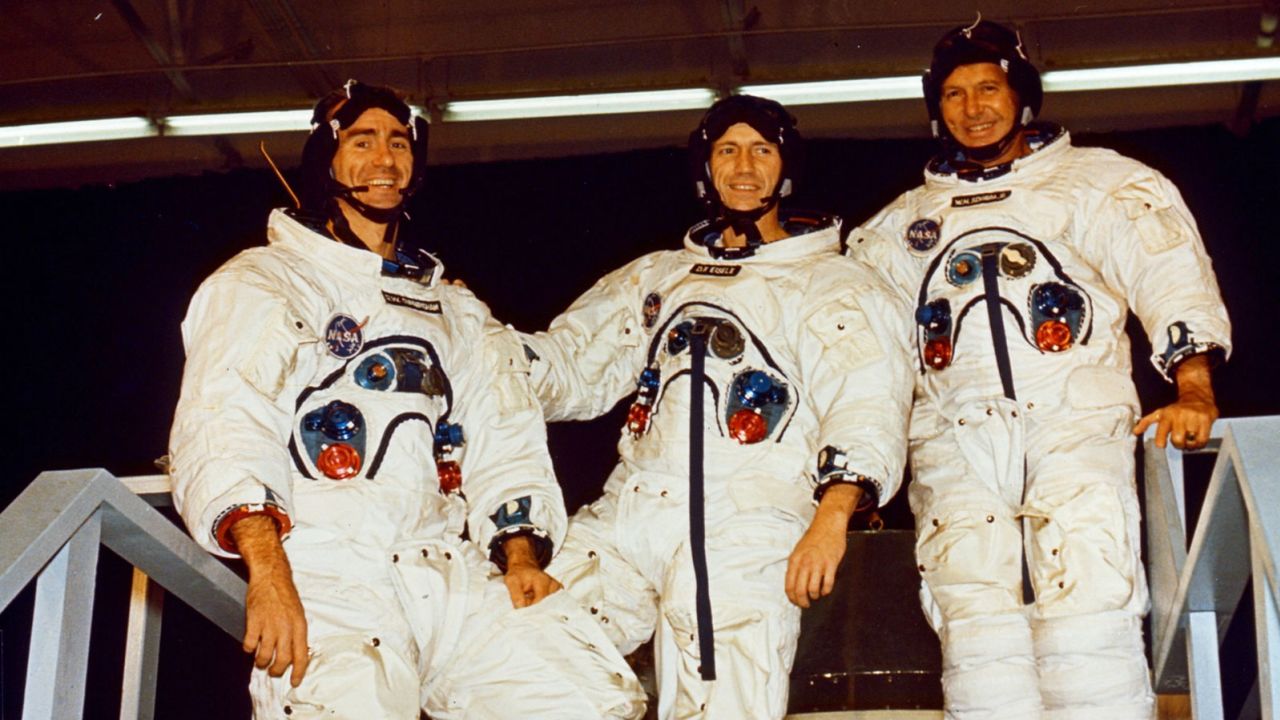
The crew for NASA's first Apollo manned flight — (from left) Cunningham, Donn F. Eisele and Walter M. Schirra — prepares for mission simulator tests in 1968 at the North American Aviation plant.
NASA
“I’m one of those people that never really looked back. I only recall that when someone asked me after I became an astronaut,” Cunningham said. “All I remember is just kind of keeping my nose to the grindstone and wanting to do the best I could as — I didn’t realize at the time, but that was because I always wanted to be better prepared for the next step. I’ve always been looking to the future. I don’t live in the past.”
Though he ventured into outer space only once, Cunningham went on to become a leader in NASA’s Skylab program, the United States’ first space station that orbited Earth from 1973 to 1979.
Before joining NASA, Cunningham enlisted in the US Navy and began training as a pilot in 1952, according to his official NASA biography, and he served as a fighter pilot with the US Marine Corps on 54 missions in Korea.
“The only thing I can ever recall doing specifically to become an astronaut, because I looked at it that I had become one of, if not the best, fighter pilot in the world,” Cunningham said in the interview with NASA’s Oral History Office.
Cunningham also completed a doctorate in physics at UCLA without completing a thesis, and later, in 1974, he completed an advanced management program at the Harvard Graduate School of Business, according to NASA.
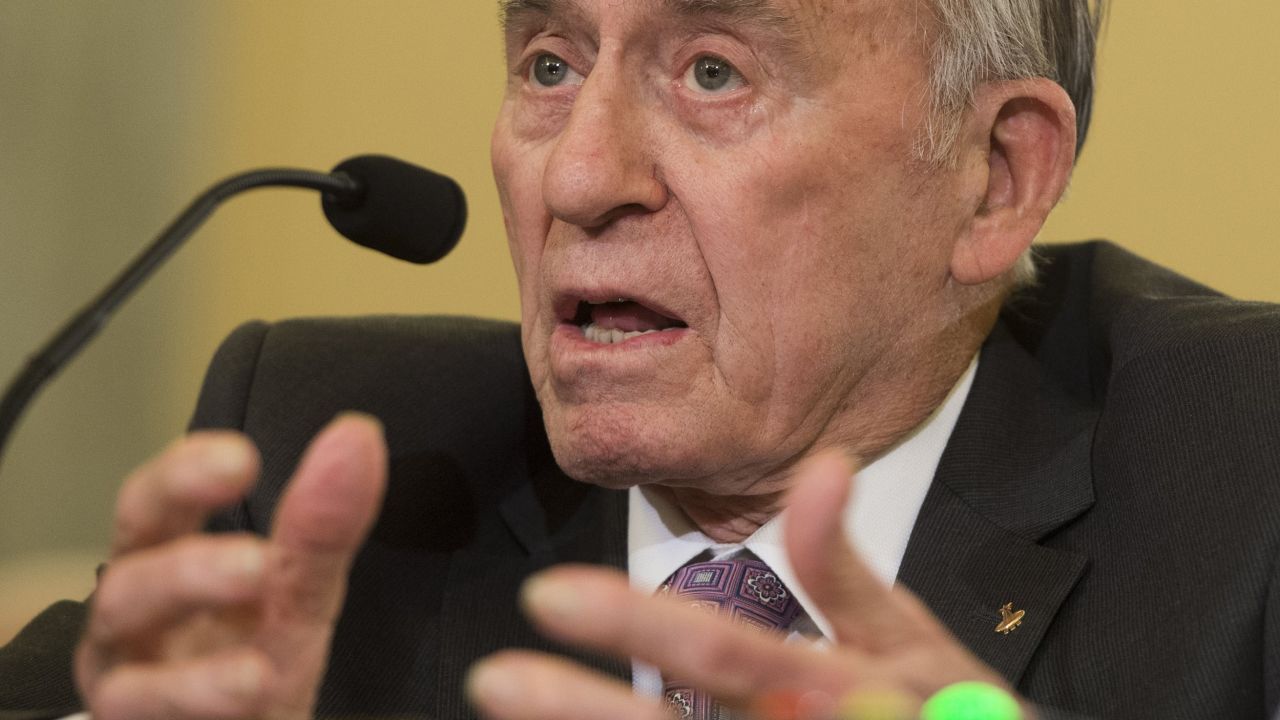
Cunningham testifies on space exploration during the US Senate Commerce, Science and Transportation's Subcommittee on Space, Science and Competiveness hearing on Capitol Hill in Washington, DC on February 24, 2015.
Saul Loeb/AFP/Getty Images
He worked as a physicist for the Rand Corporation, a nonprofit military think tank, prior to joining the astronaut corps.
After leaving the space agency, Cunningham wore many hats, taking on various roles in the private sector. According to his NASA biography, he served in a number of executive roles at development companies, worked as a consultant for startups, became an entrepreneur and investor, and, eventually, became a radio talk show host.
In later years, Cunningham also became an outspoken critic of prevailing notions about humanity’s impact climate change.
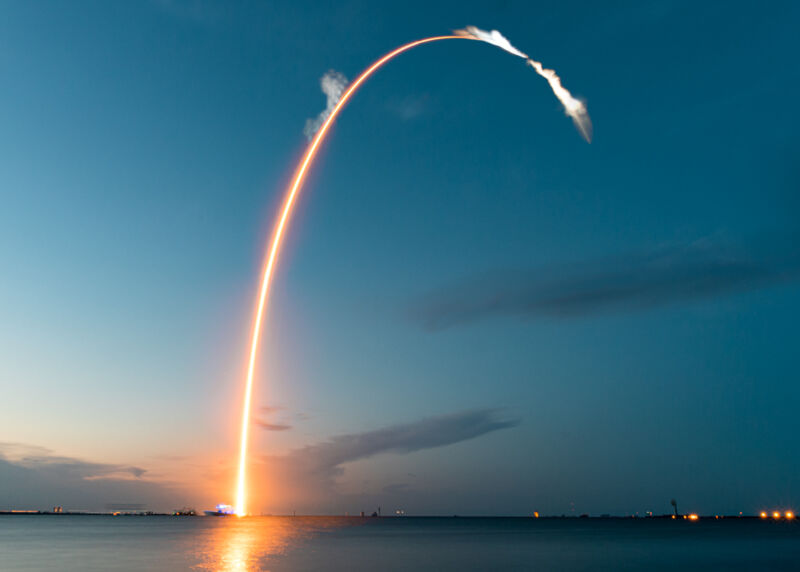
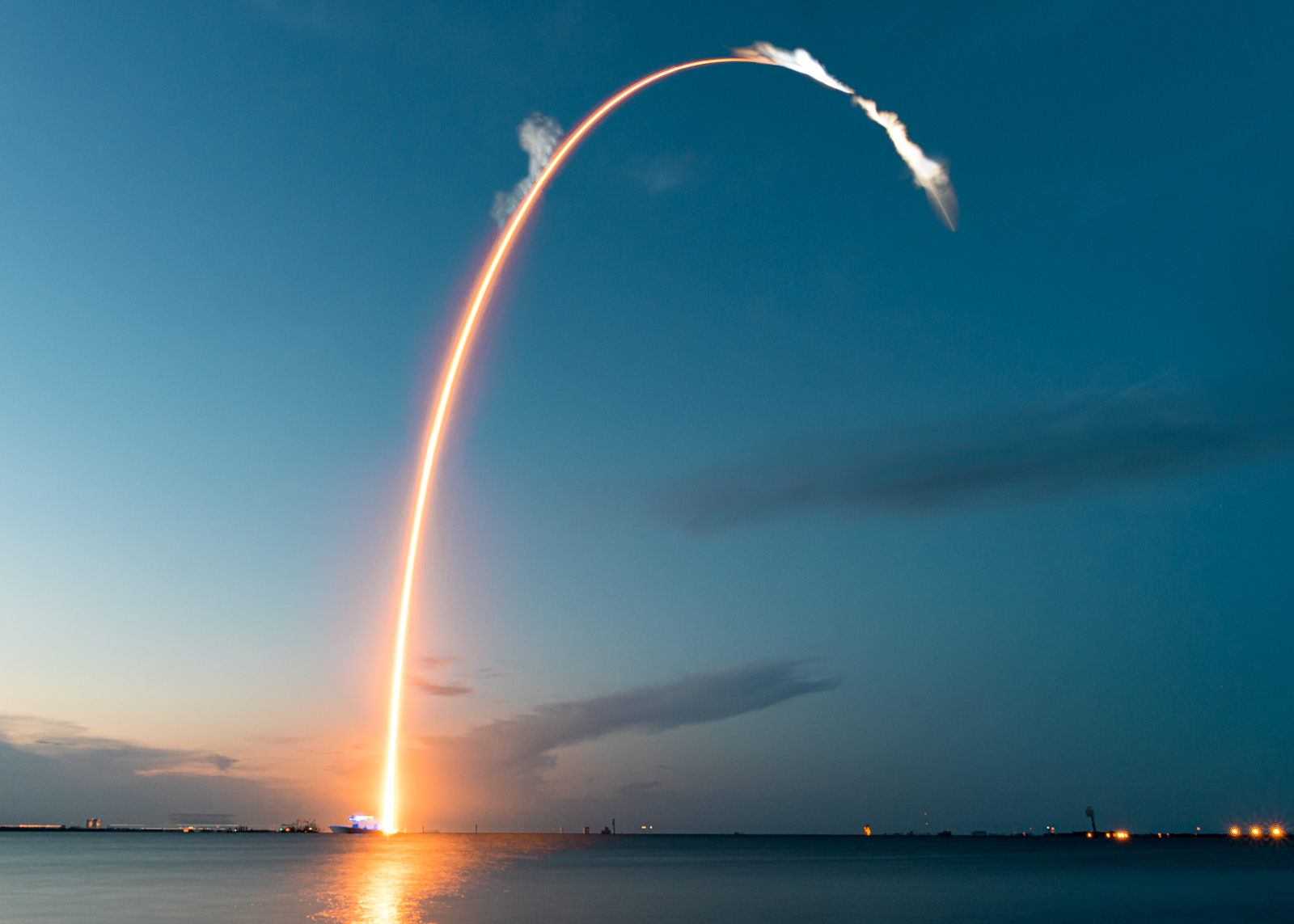
Enlarge/ One of SpaceX's 61 launches in the year 2022 was the CRS-25 supply mission for NASA to the International Space Station.
Trevor Mahlmann
On the penultimate day of 2022, SpaceX completed its final launch of the year, boosting an Israeli optical satellite into low Earth orbit. This was the company's seventh launch in December and capped a year in which the Falcon family of rockets launched 61 times, all successful.
All but one of these missions flew on the Falcon 9 rocket, and more than 90 percent of these flights were on a previously used booster. The other launch took place on a Falcon Heavy. With these 61 flights, SpaceX tied a record set by the Soviet R-7 rocket, which in 1980 flew a combined 61 missions across its Soyuz, Molniya, and Vostok variants.
The Soviets accomplished this amid the Cold War, of course, with a large budget devoted to space surveillance and a massive government space program with tens of thousands of workers. SpaceX performed the same feat as a private company, flying its Starlink satellites and a mix of missions for satellite companies and governmental space agencies. SpaceX also landed every first stage that attempted to return on a drone ship or landing site in 2022, for a total of 60 rockets, including two side-mounted boosters from the Falcon Heavy mission on November 1.
As early as Tuesday morning, SpaceX will open its launch account for 2023 with the Transporter-6 mission. As the name suggests, this will be the company's sixth rideshare mission, carrying 114 small satellites into low Earth orbit for various companies. These include CubeSats, microsats, picosats, and orbital transfer vehicles that will ferry spacecraft to be deployed into different orbits. These rideshare missions, which SpaceX initiated in January 2021, have put a damper on the financial prospects for some small-launch-vehicle companies by eating into the base of small-satellite customers.
SpaceX is targeting 9:56 am ET (14:56 UTC) on Tuesday for launch of the Transporter-6 mission from Space Launch Complex 40 at Cape Canaveral Space Force Station in Florida. This will be the second time SpaceX has attempted to launch one of its Falcon 9 first stages 15 times, as this rocket has previously launched the GPS III-3 satellite for the US Space Force, three other commercial missions, and 10 batches of Starlink satellites. It now seems possible that the company will fly one of its rockets as many as 20 times by the end of this year.
In 2022 SpaceX was able to dramatically increase its launch cadence by both ramping up Starlink satellite production as well as maturing its operations to reuse Falcon 9 first stages and payload fairings. Previously, from 2017 to 2021, SpaceX averaged 22 launches a year, with an annual record of 31 flights in 2021. Last year the company very nearly doubled its previous record.
The question for the new year, therefore, is whether SpaceX can take another leap in cadence. SpaceX founder Elon Musk said in August 2022 that the company aimed to launch 100 rockets in 2023. That seems like the upper bound of what is possible; however, given that the company was able to launch seven rockets in December, it is perhaps not unreachable in terms of raw production.
Of course, nothing in launch is straightforward, and another important factor will be payload readiness. Of its missions in 2022, 27 were for governments or commercial customers, whereas 34 were the company's Starlink Internet satellite payloads. Assuming about 30 flights for government and commercial customers, approaching 100 launches in 2023 would require SpaceX to nearly double production of its Starlink satellites. That, too, is a big ask for the disruptive California launch company.
But after seeing its remarkable performance in 2022, one can perhaps not rule out big asks.
Article From & Read More ( After doubling launch record in 2022, can SpaceX take another step up in 2023? - Ars Technica )
https://ift.tt/LE4HrTu
Science
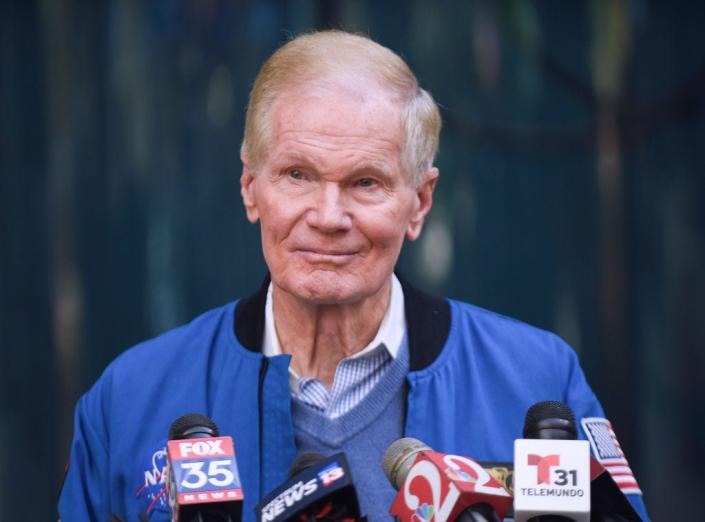
Nelson said: "It is a fact: we're in a space race. And it is true that we better watch out that they don't get to a place on the moon under the guise of scientific research. And it is not beyond the realm of possibility that they say, 'Keep out, we're here, this is our territory.'
"If you doubt that, look at what they did with the Spratly Islands."
NASA completed its Artemis 1 mission in November, which involved flying an unmanned Orion spacecraft around the Moon. The mission preceded Artemis 3, which aims to land astronauts on the lunar surface by 2025.
China recently completed its new space station, Tiangong, and in November, launched a crew of taikonauts towards the station. Beijing plans to launch three missions to the moon over the next decade as part of its Chang'e lunar program, after saying it had discovered a new lunar mineral that could be used as an energy source.
Nelson told Politico that China has enjoyed "enormous success and advances" in its space program over the last decade.
NASA is working with Elon Musk's SpaceX on the Artemis 3 mission. Nelson told Politico: "I ask the question every day: 'How is SpaceX's progress?' And all of our managers are telling me they are meeting all of their milestones."
NASA didn't immediately respond to Insider's request for comment, made outside normal US operating hours.
Article From & Read More ( NASA chief says China could claim the moon as its own territory if it beats the US to the lunar surface - Yahoo! Voices )
https://ift.tt/q9cT2ks
Science
How often does something work exactly as planned, and live up to its hype? In most of the world, that's the equivalent of stumbling across a unicorn that's holding a few winning lottery tickets in its teeth. But that pretty much describes our top science story of 2022, the successful deployment and initial images from the Webb Telescope.
In fact, there was lots of good news to come out of the world of science, with a steady flow of fascinating discoveries and tantalizing potential tech—over 200 individual articles drew in 100,000 readers or more, and the topics they covered came from all areas of science. Of course, with a pandemic and climate change happening, not everything we wrote was good news. But as the top stories of the year indicate, our readers found interest in a remarkable range of topics.
For better and worse, Anthony Fauci has become the public face of the pandemic response in the US. He's trusted by some for his personable, plain-spoken advice regarding how to manage the risks of infection—and vilified by others for his advocacy of vaccinations (plus a handful of conspiracy theories). So, when Fauci himself ended up on the wrong end of risk management and got a SARS-CoV-2 infection, that was news as well, and our pandemic specialist, Beth Mole, was there for it.
It turned out the trajectory of his infection was a metaphor for the pandemic itself, where every silver lining seems to be delivered with a few additional gray clouds. Fauci took Paxlovid, a drug that was developed due to some very rapid scientific work that involved finding out the structure of viral proteins and then identifying molecules that could fit into that structure. As a result of its design, Paxlovid rapidly and effectively suppresses the SARS-CoV-2 infections that cause COVID-19.
But once again, there are those gray clouds: once the treatment course runs out, many people experience a rebound of symptoms for reasons we're still working out. And Fauci was no exception, having symptoms severe enough that he went back on the drug to shut them down again—even though that's not been recommended by the Food and Drug Administration.
Neutron stars are probably the most extreme objects in the Universe (black holes being more of an aberration in spacetime than an object, per se). They're places where the tallest "mountains" are less than a millimeter, and cracks in the crust can create violent bursts of radiation. They're also places where the interior is a superfluid of rapidly circulating subatomic particles.
But in a handful of these stars, conditions get even more extreme, as any charged particles in the superfluidic interior can create a dynamo like the one in the Earth's core that creates our magnetic field. Except just a bit stronger. Well, as Paul Sutter details it, 1016 times stronger. These are the magnetars, a short-lived state of some neutron stars (they last about 10,000 years, which is short for astronomy).
There are plenty of ways a neutron star can kill you, given its intense gravity and tendency to spew out lethal levels of radiation. But magnetars have an additional trick: they end chemistry. The magnetic fields are so strong that they can distort the atomic orbitals that determine how different atoms latch on to each other to form chemical bonds. Get within 1,000 kilometers or so of a magnetar, and that distortion gets so severe that the chemical bonds no longer function. All your atoms are left free to wander around as they see fit, which isn't generally conducive to life.
This article was a personal rumination by Eric Berger, reflecting on the changes in NASA and the launch industry since he started covering both roughly two decades ago. For most of that time, NASA's budget has been dominated by the Space Launch System, which finally took its maiden flight this year, sending hardware to orbit the Moon and return for a flawless splashdown.
In the wake of that launch, you might expect that the piece would focus on that success. Instead, Berger argued that the many failures of the program—countless delays and cost overruns—changed the entire launch industry, giving small companies like SpaceX and Blue Origin a chance to thrive while their entrenched competitors were focused on getting all they could out of SLS contracts. Without SLS's problems, Berger argues, the vehicles that will eventually see NASA to a successful future of crewed exploration might never have been built.
This is one that falls into the "potentially not very good news category." One of the biggest unresolved questions regarding climate change is just how much warming we'll get from the amount of carbon dioxide we've put into the atmosphere. We have a best estimate, but it has significant error bars—a given level of emissions could potentially mean two or four degrees of warming, depending on whether the real value is on the low end or high end of those error bars.
There are a number of ways to narrow down those error bars, and Howard Lee looks at one of the simplest: looking at the past to find instances where the levels of carbon dioxide were different, and figure out the temperatures. Get enough of these, and you might narrow down the range of uncertainty, even if our ability to get accurate measurements of the past is necessarily a bit limited.
That process is what this story is about. We thought we had a good handle on the temperatures during the Eocene, tens of millions of years ago. But a new technique, applied to deep ocean sediments, indicates the temperatures were considerably warmer than previous estimates. What that means for the temperature of the planet's atmosphere is less certain, but it definitely implies that it might have been warmer than we knew. And that could mean the planet is more sensitive to greenhouse gasses than we thought.
Robert Oppenheimer was central to the US' production of an atomic bomb during World War II. A physicist at the University of California, Berkeley, Oppenheimer was tapped to head Los Alamos National Lab during the Manhattan Project, and he oversaw the first test of the device in the New Mexico desert. After the war, he went on to chair the US' Atomic Energy Commission, where he advocated for international policies that limited nuclear proliferation.
But, as Jennifer Ouellette describes, Oppenheimer ran afoul of the politics of his day. His advocacy of liberal causes in the prewar years brought him into association with communists in the Berkeley community—associations that came to the forefront during the Red Scare of the 1950s. At that point, his promotion of nuclear arms limits and opposition to the development of the hydrogen bomb raised further suspicions, which eventually led to his security clearance being revoked, which in turn sidelined him from nuclear policy discussions and cast a cloud over his later career.
While there was some movement to restore Oppenheimer's reputation while he was still alive, it took until this year for the US government to formally acknowledge that revoking his security clearance was a mistake. Oppenheimer won't get to enjoy the restoration of his security clearance, but his family can enjoy the fact that a dark stain has been lifted from a remarkable career.
For those of us who might be inclined to reject the contention that we live in remarkable times, I'd like to remind you that we currently have an operational helicopter on Mars—earlier this month, Ingenuity completed its 37th flight. Its success not only altered how we're approaching the exploration of Mars but is changing plans for how we might perform future missions.
Back in May, however, the future was less certain, with communications with Ingenuity lost. The helicopter was simply a demonstration project, meant to show that this was something that could help with future exploration. But, as Eric Berger writes, it had become central to the mission of the Perseverance rover—so much so that work of Perseverance was put on hold so it could devote its resources to try to reestablish communication with the helicopter. Obviously, given that Ingenuity is still flying, it worked.
It's a problem that roughly half of us have experienced: you're facing a urinal in a public toilet and, no matter how you angle or direct things, a series of splashes keep coming back out in your direction. You might think that after decades of design, this would be a solved problem, but finding a single solution that works for every user's height and—shall we say "stream properties"—turns out to be an open question.
Fortunately, it's a question of fluid mechanics, placing it firmly in the realm of physics. And, as Jennifer Ouellette detailed, more than one research group has found the problem fascinating. I hesitate to suggest that the most recent solution is going to last as the "best" solution, but it has got one thing going for it: it's based on the nautilus, which builds a shell that conforms to the Golden Ratio, a mathematical concept that seems to show up everywhere. So why not urinals?
People interested in old pants can take a look in the back of one of my closet's shelves. But if you want really old pants, then you should check in with Kiona Smith, who has you covered with the oldest pants yet discovered—over 3,000 years old. Found in western China, the pants may seem like a strictly archeological story. But there's also a mix of engineering, materials science, and human anatomy thrown into the mix, given how the pants are constructed.
The pants were constructed from different weaves and thicknesses, with the shape and material focused on the needs of someone who spent much of their time on horseback. Patterns woven into the fabric suggest that they originated in a culture that could have had widespread interactions with other areas of Asia. All in all, much more information than you might expect from a lone pair of pants.
Earlier this year, the upper state of an older rocket had a run in with the Moon. We've sent a fair bit of hardware towards the Moon over the years, and weren't especially careful about disposal of used hardware in the early years, so on its own, this wasn't much of a shock. But a search of known trajectories suggested that the hardware was actually recent, and was put in that trajectory when SpaceX launched a satellite for NOAA.
Even before Elon Musk's spectacular fall from grace in recent months, this elicited a fair bit of chortling. But that chortling was apparently misdirected. After a suggestion that the trajectories didn't actually work out, the original source of the SpaceX ID went back further, and found that the hardware was likely to be from an early Chinese Moon mission. With a better match in hand, SpaceX was let off the hook.
Regardless of the source, the Moon ended up struck but declined to comment for the story.
The year's most popular story was probably the best science story of the year: the Webb Telescope's successful commissioning and the images that resulted. Launched around this time last year, the hardware had to undergo a months-long series of self-assembly steps in space, any one of which could have failed and left the observatory a useless piece of space junk. Every single one went off without a hitch.
Those of us around for the Hubble's launch will remember the sinking disappointment when the images that came down didn't in any way reflect the promises of the hardware's design. In this case, as detailed in this piece by Eric Berger, the images lived up to every bit of Webb's promise. The months of aligning all the hardware after self-assembly created an observatory that actually exceeded design specifications, and the images showed it. Even the backgrounds of many subjects contained distant yet clearly resolved galaxies.
Science has already begun, with lots of draft manuscripts appearing almost as quickly as some of the public data was released to the scientific community. The best news here? All of this is likely to continue for years, because everything about this mission, including the launch trajectory, has seemed to exceed planning goals.