Rechercher dans ce blog

Wednesday, August 9, 2023

Hidden underworld filled with never-before-seen creatures discovered beneath the seafloor - Livescience.com

Beneath an undersea volcano, scientists have discovered a hidden world filled with bizarre creatures.

The first-of-its-kind habitat is teeming with never-before-seen life-forms, including strange species of worms, snails and deep-dwelling octopuses. The ecosystem, nestled beneath hydrothermal vents on the East Pacific Rise off Central America, was found when scientists aboard the research vessel Falkor used a robotic arm to scrape away layers of seafloor. 

"On land we have long known of animals living in cavities underground, and in the ocean of animals living in sand and mud, but for the first time, scientists have looked for animals beneath hydrothermal vents," Jyotika Virmani, executive director of the Schmidt Ocean Institute,  which spearheaded the expedition to the ecosystem, said in a statement. "This truly remarkable discovery of a new ecosystem, hidden beneath another ecosystem, provides fresh evidence that life exists in incredible places."

Related: Massive expanse of towering hydrothermal vents discovered deep in the Pacific

Scientists first discovered the hydrothermal vents in 1977 while exploring the East Pacific Ridge, a tectonic plate boundary near the Galapagos Islands off the west coast of South America. There, vents shaped like totems of melted wax stand roughly 35 to 40 feet (10 to 12 meters) tall and gush hot, mineral-rich water into the oceans.

Despite the extreme temperatures around the vents — up to 694 degrees Fahrenheit (368 degrees Celsius) — scientists found thriving food chains filled with chemosynthetic bacteria, gastropods, crabs and worms sustained by the rich nutrients gushing from the vents.

But until now, no scientist had thought to look beneath the vents. 

As part of the mission, scientists used a robotic arm to clear a square of ocean floor and then placed mesh boxes over cracks in the Earth's crust. When the researchers peered inside those boxes later, they discovered a host of animals living beneath the cavities, confirming that the creatures arrived there from beneath the seafloor.

One animal, the giant tube worm (Riftia pachyptila), was of particular interest to the researchers. Few of the animal's young are seen above the vents, leading scientists to suspect that the larvae hitch a ride inside subsea volcanic fluids to reach new habitats.

"Our understanding of animal life at deep-sea hydrothermal vents has greatly expanded with this discovery," Monika Bright, an ecologist at the University of Vienna who worked on the mission, said in the statement. "Two dynamic vent habitats exist. Vent animals above and below the surface thrive together in unison, depending on vent fluid from below and oxygen in the seawater from above."

The researchers, who will publish their findings later this year, will continue studying this fragile and mysterious ecosystem, which is considered vulnerable to the effects of deep-sea mining operations planned in the Pacific Ocean.

"The discoveries made on each Schmidt Ocean Institute expedition reinforce the urgency of fully exploring our ocean so we know what exists in the deep sea," Wendy Schmidt, president and co-founder of the Schmidt Ocean Institute, said in the statement. "The discovery of new creatures, landscapes, and now, an entirely new ecosystem underscores just how much we have yet to discover about our Ocean — and how important it is to protect what we don't yet know or understand."

Adblock test (Why?)

Article From & Read More ( Hidden underworld filled with never-before-seen creatures discovered beneath the seafloor - Livescience.com )
https://ift.tt/KiglLeH
Science

Tuesday, August 8, 2023

The 'unknome': A database of human genes we know almost nothing about - Phys.org

genome
Credit: Pixabay/CC0 Public Domain

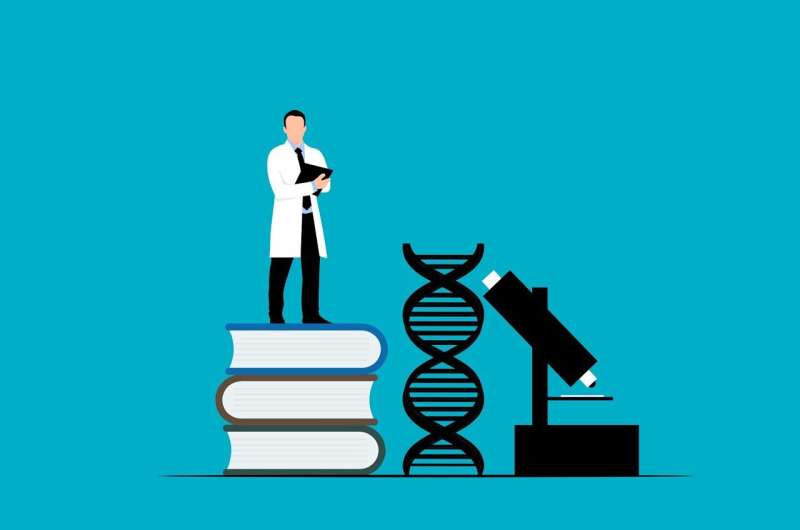
Researchers from the United Kingdom hope that a new, publicly available database they have created will shrink, not grow, over time. That's because it is a compendium of the thousands of understudied proteins encoded by genes in the human genome, whose existence is known but whose functions are mostly not.

The , dubbed the "unknome," is the work of Matthew Freeman of the Dunn School of Pathology, University of Oxford, England, and Sean Munro of MRC Laboratory of Molecular Biology in Cambridge, England, and colleagues, and is described in the open access journal PLOS Biology. Their own investigations of a subset of proteins in the database reveal that a majority contribute to important cellular functions, including development and resilience to stress.

The sequencing of the has made it clear that it encodes thousands of likely sequences whose identities and functions are still unknown. There are multiple reasons for this, including the tendency to focus scarce research dollars on already-known targets, and the lack of tools, including antibodies, to interrogate cells about the function of these proteins. But the risks of ignoring these proteins are significant, the authors argue, since it is likely that some, perhaps many, play important roles in critical cell processes, and may both provide insight and targets for therapeutic intervention.

To promote more rapid exploration of such proteins, the authors created the unknome database (www.unknome.org), that assigns to every protein a "knownness" score, reflecting the information in the about function, conservation across species, subcellular compartmentalization, and other elements.

Based on this system, there are many thousands of proteins whose knownness is near-zero. Proteins from model organisms are included, along with those from the human genome. The database is open to all and is customizable, allowing the user to provide their own weights to different elements, thereby generating their own set of knownness scores to prioritize their own research.

To test the utility of the database, the authors chose 260 genes in humans for which there were comparable genes in flies, and which had knownness scores of 1 or less in both species, indicating that almost nothing was known about them. For many of them, a complete knockout of the gene was incompatible with life in the fly; partial knockdowns or tissue-specific knockdowns led to the discovery that a large fraction contributed to essential functions influencing fertility, development, tissue growth, protein quality control, or stress resistance.

The results suggest that, despite decades of detailed study, there are thousands of fly genes that remain to be understood at even the most basic level, and the same is clearly true for the human genome. "These uncharacterized genes have not deserved their neglect," Munro said. "Our database provides a powerful, versatile and efficient platform to identify and select important of unknown function for analysis, thereby accelerating the closure of the gap in biological knowledge that the unknome represents."

Munro adds, "The role of thousands of human proteins remains unclear and yet research tends to focus on those that are already well understood. To help address this we created an Unknome database that ranks proteins based on how little is known about them, and then performed functional screens on a selection of these mystery proteins to demonstrate how ignorance can drive biological discovery."

More information: Rocha JJ, Jayaram SA, Stevens TJ, Muschalik N, Shah RD, Emran S, et al. (2023) Functional unknomics: Systematic screening of conserved genes of unknown function, PLoS Biology (2023). DOI: 10.1371/journal.pbio.3002222

Citation: The 'unknome': A database of human genes we know almost nothing about (2023, August 8) retrieved 8 August 2023 from https://ift.tt/14NMums

This document is subject to copyright. Apart from any fair dealing for the purpose of private study or research, no part may be reproduced without the written permission. The content is provided for information purposes only.

Adblock test (Why?)

Article From & Read More ( The 'unknome': A database of human genes we know almost nothing about - Phys.org )
https://ift.tt/qpZAmkl
Science

Artemis 2 astronauts eager to prep Orion spacecraft for more moon missions - Space.com

CAPE CANAVERAL, FLORIDA — The four astronauts who will launch on a historic moon mission next year just got a good look inside their spacecraft.

The four Artemis 2 astronauts gathered in front of their Orion spacecraft here at NASA's Kennedy Space Center to talk about the big challenges of getting ready to fly around the moon in November 2024 or so.

The NASA mission will be the first to send astronauts to the moon's vicinity since Apollo 17 in December 1972. It's a big challenge, but the Artemis 2 crew says they are ready to meet it — and so are their ground teams.

"This is a developmental mission," Artemis 2 astronaut Christina Koch said during a gaggle with a small group of reporters in front of Orion on Tuesday (Aug. 8). "We're going to be training. We're going to be figuring things out with the team as we go and really embrace the uncertainty."

Related: How Artemis 2 astronauts are training for their 2024 moon mission

Artemis 2 is the crewed gate-opener of the larger Artemis program, which aims to establish a permanent human presence on and around the moon. It's the only mission so far with a named crew: NASA's Koch, Reid Wiseman and Victor Glover, along with the Canadian Space Agency's Jeremy Hansen.

With the success of the uncrewed Artemis 1 that orbited the moon in late 2022, NASA is already deep in the build of future Orion spacecraft to ferry humans to lunar realms in the coming years.

On display here at the Neil Armstrong Operations and Checkout Building at KSC on Tuesday were three Orion spacecraft, in fact. The trio will carry the crews of Artemis 2 in 2024, Artemis 3 in 2025 or 2026, and Artemis 4 later in the decade, if the first two missions keep to their schedule.

The Artemis 2 Orion spacecraft at the Neil Armstrong Operations and Checkout Building at NASA's Kennedy Space Center in Florida, on Aug. 8, 2023. (Image credit: Elizabeth Howell)

Wiseman, the commander of Artemis 2, emphasized that the crewmembers are using "their own unique backgrounds" to inform the training. (Koch will become the first woman to go around the moon, while Glover will be the first Black astronaut and Hansen the first non-American to do so.)

"You do see it all with a different set of eyes," Wiseman said of the crew's individual perspectives, in response to a Space.com question. 

And the future is very much in everyone's minds, he said — not only for training the next crews, but for doing even more difficult missions in the future.

"We are helping influence the design of this," Wiseman said of Orion, "to help our future astronauts that are going to have much bigger, much more complex missions. So, making this operate as simply as possible for them."

Related: See Artemis 2 moon astronauts train with US Navy for Orion splashdown (photos, video)

The Artemis 3 spacecraft at the Neil Armstrong Operations and Checkout Building at NASA's Kennedy Space Center in Florida, on Aug. 8, 2023. (Image credit: Elizabeth Howell)

The crew is nearly five months into their training and says the "gelling" happened long before they were assigned to the mission during a star-studded event in April. Hansen and Wiseman were both selected as astronaut candidates for their respective corps in 2009, while Koch and Glover joined NASA in 2013. 

Before their selection for Artemis 2, the quartet already knew each other well, they told reporters, and that closeness is apparent. For example, Koch teased Hansen about his height (6 foot 2 inches), which is unusually tall for an astronaut.

Glover joked that he found a solution to crew disputes when he looked inside the open Orion spacecraft on Monday (Aug. 7): "We were able to identify a timeout (area) just in case we need it," he said, drawing laughter from reporters.

But being with Orion, which will be their home for 10 days on Artemis 2, brought a new perspective to the crew as they continue their training. "Seeing the spacecraft together does bond us in a new way," Koch said. "There are only three other humans that look at this spacecraft the same way as I do. They're all standing here, and that is something that we didn't have before yesterday, and it is special."

The Artemis 4 spacecraft at the Neil Armstrong Operations and Checkout Building at NASA's Kennedy Space Center on Aug. 8, 2023. (Image credit: Elizabeth Howell)

Glover added that the bonding goes beyond the crew to the vast ground teams supporting their mission. Many of the trainers on Artemis 2, for example, will be directly responsible for key systems on the spacecraft. And the Artemis 2 crew spent part of their time here in Florida working with the launch teams.

That's a deliberate choice by NASA. It allows the astronauts and systems teams to get to know each other long before the moon mission begins, "forming relationships from the highest levels of leadership, all the way down to people who are going in schools as well," Glover said. "We're really going to lean on those relationships as we take on several big challenges."

RELATED STORIES:

All four Artemis 2 crewmembers said they're looking forward to seeing  Earth from even farther away than the International Space Station, and then seeing the moon up close. Hansen will be the lone spaceflight rookie on the mission; Wiseman said he will be "excited to see Jeremy glued to the window looking back at Earth" in between testing out the Orion spacecraft in high Earth orbit.

As for the moon, Koch said the astronauts are excited not only to see our lunar neighbor up close, but also to explore the geology from orbit informed by professional training. (Both Koch and Hansen will do a geology expedition in Canada in September, for example.)

"I think even more so we're excited to take pictures of other people," she added, saying the crew recognizes they are lucky to explore so distant a location together, as the experience of coming close to the moon will likely mark them profoundly. "That's something I'm really excited about."

Adblock test (Why?)

Article From & Read More ( Artemis 2 astronauts eager to prep Orion spacecraft for more moon missions - Space.com )
https://ift.tt/3e60OgL
Science

Monday, August 7, 2023

Boeing resets Starliner plan to be ready for first NASA crew flight by March - CNBC

In this article

Boeing's Starliner spacecraft is seen before docking with the International Space Station on May 20, 2022 during the uncrewed OFT-2 mission.
Boeing

Boeing said Monday it aims to be ready to fly NASA astronauts with its Starliner capsule for the first time by March, resetting its timeline after the company delayed a planned launch this summer.

"Based on the current plans, we're anticipating that we're going to be ready with the spacecraft in early March," Boeing VP and Starliner manager Mark Nappi said during a press conference.

"That does not mean we have a launch date in early March," Nappi added. "We're now working with NASA — Commercial Crew program and [International Space Station] — and ULA [United Launch Alliance] on potential launch dates based on our readiness ... we'll work throughout the next several weeks and see where we can get fit in and then then we'll set a launch date."

The company continues to work toward Starliner's crew flight test, which is planned to carry NASA astronauts to the ISS in a final demonstration before beginning regular spaceflights.

Boeing delayed the launch twice this year — most recently due to issues with the spacecraft's parachutes and a type of tape used in its assembly — and now expects the capsule won't fly crew until next year.

Sign up here to receive weekly editions of CNBC's Investing in Space newsletter.

On Monday, representatives from NASA and Boeing said work to replace the problematic tape is expected to be complete by the end of September, and a parachute drop test is planned for "mid-to-late" November. Boeing's Nappi noted that the parachute work "is the critical path" toward being ready in March.

NASA's Commercial Crew manager Steve Stich said Starliner is 98% complete in terms of progress toward the agency certifying the spacecraft to carry its astronauts.

As for the timing of Boeing's first operational flight, Stich deferred, saying it depends on the timing and outcome of the final test flight.

"Could we fit it into the end of next year? It's probably a little too early to tell whether we could fit that flight in or not," Stich said.

Starliner continues to be a costly and behind-schedule endeavor for Boeing. Due to the years of delays and development cost overruns, Boeing last month reported that it's absorbed about $1.5 billion in overrun costs to date.

Adblock test (Why?)

Article From & Read More ( Boeing resets Starliner plan to be ready for first NASA crew flight by March - CNBC )
https://ift.tt/BMflkGW
Science

Sunday, August 6, 2023

Watch: First look of moon as captured by Chandrayaan-3 - The Tribune India

Tribune Web Desk

Chandigarh, August 6

A day after Chandrayaan-3 was inserted in lunar orbit, it captured the first look of moon on Sunday.

“The Moon, as viewed by #Chandrayaan3 spacecraft during Lunar Orbit Insertion (LOI) on August 5, 2023,” it tweeted.

The next operation -- reduction of orbit -- will be done at 11 pm on Sunday, ISRO said.

Chandrayaan-3 was inserted in lunar orbit on Saturday.

“I am feeling lunar gravity”, was Chandrayaan-3’s message to ISRO after successfully entering Moon’s orbit.

According to ISRO, Chandrayaan-3 would attempt soft landing on the Moon’s surface on August 23.

#ISRO #Social Media #Twitter

Adblock test (Why?)

Article From & Read More ( Watch: First look of moon as captured by Chandrayaan-3 - The Tribune India )
https://ift.tt/zPbDwot
Science

Our Galaxy Is Home to Trillions of Worlds Gone Rogue - The New York Times

Astronomers have found that free-floating planets far outnumber those bound to a host star.

Free-floating planets — dark, isolated orbs roaming the universe unfettered to any host star — don’t just pop into existence in the middle of cosmic nowhere. They probably form the same way other planets do: within the swirling disk of gas and dust surrounding an infant star.

But unlike their planetary siblings, these worlds get violently chucked out of their celestial neighborhoods.

Astronomers had once calculated that billions of planets had gone rogue in the Milky Way. Now, scientists at NASA and Osaka University in Japan are upping the estimate to trillions. Detailed in two papers accepted for publication in The Astronomical Journal, the researchers have deduced that these planets are six times more abundant than worlds orbiting their own suns, and they identified the second Earth-size free floater ever detected.

The existence of wandering worlds orphaned from their star systems has long been known, but poorly understood. Previous findings suggested that most of these planets were about the size of Jupiter, our solar system’s most massive planet. But that conclusion garnered a lot of pushback; even scientists who announced it found it surprising.

To better study these rogue worlds, David Bennett, an astronomer at the NASA Goddard Space Flight Center, and his team used nine years of data from the Microlensing Observations in Astrophysics telescope at the University of Canterbury Mount John Observatory in New Zealand. Exoplanets were indirectly detected by measuring how their gravity warped and magnified the light arriving from faraway stars behind them, an effect known as microlensing.

With help from empirical models, the researchers worked out the spread of the masses for more than 3,500 microlensing events, which included stars, stellar remnants, brown dwarfs and planet candidates. (Data from one of those candidates was compelling enough for the team to claim the discovery of a new rogue Earth.) From this analysis, they estimate that there are about 20 times more free-floating worlds in our Milky Way than stars, with Earth-mass planets 180 times more common than rogue Jupiters.

The conclusion that most rogue worlds are small makes more sense than the idea that they are Jupiter-size, Dr. Bennett said. That’s because planets are thought to go rogue when two protoplanets slam into each other. The force of the impact is so strong that it knocks one out of the emerging star system altogether.

But planets can be kicked out of their star systems only by larger objects. If most of these stellar orphans were Jupiter-size, a lot of so-called super-Jupiters must be orbiting host stars — but those are scarce. On the other hand, these results suggest that lower mass planets are the ones at risk of ejection.

“So things are dangerous for the Earths,” Dr. Bennett said.

He also said that the abundance of free floaters in the Milky Way suggests that planet-size objects slamming into each other during the formation process “are maybe more common than theorists might have guessed.”

Przemek Mróz, an astronomer at the University of Warsaw who was not involved in the work, said that the group’s results strengthened earlier hints about rogue worlds from observations made with the Optical Gravitational Lensing Experiment and the Korean Microlensing Telescope Network. “So now we have three independent studies and three independent lines of evidence that low mass free-floating planets are very common in the Milky Way,” he wrote in an email.

There’s still some ambiguity about whether these planets are truly unleashed, or just cast out to wide enough orbits that scientists can’t link them to a host star. Dr. Mróz thinks the observed population probably includes a mix of both, but it’ll be difficult to deduce the relative numbers of each with microlensing measurements alone.

The new studies’ astronomers are looking forward to even better free-floating planet data taken with the Nancy Grace Roman Space Telescope, a NASA mission set to launch in 2027, which could spot hundreds of rogue Earths. Combined with data from the European Space Agency’s Euclid Telescope, or well-positioned observatories on the ground, scientists will be able to measure the mass more directly, with less reliance on models.

Could any of these planets be habitable? Possibly, Dr. Bennett surmised, explaining that they’d be dark without a host star, but not necessarily frigid. Hydrogen in a planet’s atmosphere could act like a greenhouse and trap heat emanating from its interior — which is what sustains microbial life in deep sea vents on Earth.

But for now, searching for life on these lone worlds is out of reach. “Maybe they’ll have a method to do it in a hundred years,” Dr. Bennett said. “But scientists now are looking for things that we can actually do.”

The team didn’t look beyond the bounds of the Milky Way. “But we expect that other galaxies are pretty similar,” Dr. Bennett said — meaning that these outcasts might be sprinkled across our entire universe.

Adblock test (Why?)

Article From & Read More ( Our Galaxy Is Home to Trillions of Worlds Gone Rogue - The New York Times )
https://ift.tt/CeyxVwh
Science

Friday, August 4, 2023

How a solar eruption would impact astronauts on the moon and Mars - Mashable

For the first time, instruments on Earth, the moon, and Mars measured the effects of a giant solar eruption simultaneously, offering new insight into how radiation exposure varies in different worlds.

The event was a rare kind of a coronal mass ejection — plasma spewed from the outer layer of the sun's atmosphere into space — on Oct. 28, 2021.

This outburst was so immense, it launched energetic particles over a wide expanse of space, slamming into both Mars and Earth while they were on opposite sides of the sun, at about 155 million miles apart. The burst was even able to penetrate Earth's magnetic bubble, making it just the 73rd time this has happened since the 1940s.

On Earth, the atmosphere and magnetic field shield people against the harmful health impacts of most kinds of solar weather events. Scientists are more concerned about disruptions to power grids and telecommunications systems.

But not all worlds are so lucky.

"Understanding these events is crucial for future crewed missions to the surface of the Moon," said Jingnan Guo, an astrophysicist who researched the event, in a statement.

The new research leveraged an international fleet of spacecraft, including the European Space Agency's (ESA) ExoMars orbiter, NASA’s Curiosity rover, China's Chang’e-4 moon lander, NASA’s Lunar Reconnaissance Orbiter, and Germany's EuCROPIS Earth orbiter. The results appear in a new Geographical Research Letters paper.

One of the biggest threats to astronauts who are expected to travel deeper into the cosmos over the next couple of decades and beyond will be their exposure to space radiation — often caused by powerful eruptions at the sun.

With the moon and Mars as the latest targets for exploration, NASA and the European Space Agency are trying to better understand these solar events and their risks to humans. Astronauts who receive a high level of radiation absorption — above 700 milligray — may get "radiation sickness," wherein bone marrow deteriorates and can lead to infection and internal bleeding.

If an astronaut gets a dose over 10 gray, they probably won't live more than two weeks, according to the ESA. Apollo astronauts barely missed a solar outburst of that level on the lunar surface in August 1972. Fortunately, the event happened in between the crewed Apollo 16 and 17 missions.

The measured event in October 2021 was only 31 milligray at the moon, based on data from the Lunar Reconnaissance Orbiter. But experts calculate that an event every 5-or-so years may exceed the "safe dose level" on the moon if no additional radiation protection has been provided, Guo said.

Want more science and tech news delivered straight to your inbox? Sign up for Mashable's Light Speed newsletter today.

Astronauts making a spacecraft radiation shelter
Astronauts will practice assembling a makeshift radiation shelter within the Orion spacecraft during the Artemis II mission. Credit: NASA

During the upcoming Artemis II mission, the first crewed moon mission in a half-century, astronauts will be busy onboard the spacecraft with several emergency drills. One will be an important test of its so-called "radiation shelter," which is little more than rearranging bags of their food and supplies around a storage area in the ship. The shelter is meant to reduce the crew's exposure to harmful penetrating space radiation during a catastrophic event, like a solar flare, that could increase their cancer risk.

To protect themselves, astronauts will move to the central part of the crew module and create a shelter using stowage bags. The mission could launch in late 2024.

Earth's moon doesn't have its own magnetic field, and Mars doesn't have one anymore, meaning particles from the sun can easily reach their surfaces, and even interact with the soil to make secondary forms of radiation. Mars does however have a thin atmosphere that stops most of the lower energy solar particles and slows down the highly energetic ones.

Comparing space radiation differences
For the first time, instruments on Earth, the moon, and Mars measured the effects of a giant solar eruption simultaneously, offering new insight into how radiation exposure varies in different worlds. Credit: ESA

That appeared to be helpful, according to the new research. When scientists compared the measurements taken in orbit around Mars to those at the surface of the Red Planet, the difference in space radiation exposure was striking: The orbiter measured 30 times higher than the 0.30 milligray detected on the surface.

That's perhaps a surprising bit of good news for the pioneers who will brave the first voyage to Mars.

Adblock test (Why?)

Article From & Read More ( How a solar eruption would impact astronauts on the moon and Mars - Mashable )
https://ift.tt/PQviOdz
Science

Search

Featured Post

Two meteor showers will peak tonight. How to watch the Southern Delta Aquariids and the Alpha Capricornids. - Yahoo

[unable to retrieve full-text content] Two meteor showers will peak tonight. How to watch the Southern Delta Aquariids and the Alpha Caprico...

Postingan Populer