Rechercher dans ce blog

Saturday, August 12, 2023

Scientists solve Australian chicken farmer's fossil mystery - Phys.org

Scientists name new species of giant amphibian found in retaining wall
An artist's impression of Arenaerpeton supinatus, the ancestor of today's Chinese Giant Salamander. Credit: Jose Vitor Silva

A mystery fossil accidentally unearthed by an Australian chicken farmer in the 1990s has finally been identified as a stout amphibian with tusks and "gnarly teeth", scientists said Wednesday.

The 240 million-year-old fossil was discovered by Mihail Mihailidis as he washed down a massive sandstone slab that was originally destined to become a retaining wall for his garden.

Donated to the Australian Museum in 1997, the near-pristine specimen has puzzled scientists who have labored for almost 30 years to figure out what kind of beast it belonged to.

University of New South Wales paleontologist Lachlan Hart said it had now been identified as a "heavyset" amphibian measuring 1.2 meters (nearly four feet) from snout to tail—resembling a cross between a crocodile and a giant salamander.

He said it likely preyed on , using its "pretty gnarly teeth" and "a pair of fang-like tusks on the roof of its mouth".

"We don't often find skeletons with the head and body still attached, and the soft tissue preservation is an even rarer occurrence," Hart said.

The has been given the scientific name of "Arenaerpeton supinatus", which researchers said roughly translated to "supine sand creeper".

It comes from an extinct group of animals known as the "temnospondyls", Hart said, which roamed the planet before the dinosaurs.

Researchers X-rayed the bulky fossil with the help of Australia's border force, which let them run it through a giant scanner more commonly used to search cargo for contraband.

It was found in the mid 1990s near the seaside town of Umina Beach, about one hour's drive north of Sydney in the state of New South Wales.

A blaze of international publicity followed, with Time Magazine suggesting at the time it could "amplify the story of human evolution".

"This is one of the most important fossils found in New South Wales in the past 30 years, so it is exciting to formally describe it," Australian Museum paleontologist Matthew McCurry said.

"It represents a key part of Australia's fossil heritage."

More information: Lachlan J. Hart et al, A new chigutisaurid (Brachyopoidea, Temnospondyli) with soft tissue preservation from the Triassic Sydney Basin, New South Wales, Australia, Journal of Vertebrate Paleontology (2023). DOI: 10.1080/02724634.2023.2232829

© 2023 AFP

Citation: Scientists solve Australian chicken farmer's fossil mystery (2023, August 12) retrieved 12 August 2023 from https://ift.tt/9Xhaj4S

This document is subject to copyright. Apart from any fair dealing for the purpose of private study or research, no part may be reproduced without the written permission. The content is provided for information purposes only.

Adblock test (Why?)

Article From & Read More ( Scientists solve Australian chicken farmer's fossil mystery - Phys.org )
https://ift.tt/fKnMsoi
Science
Friday, August 11, 2023

Mission to the Moon: Who will win Russian and India's race to the lunar South Pole? - BBC

Two spacecraft – one built by India and the other by Russia – are hurtling on missions towards our Moon by very different routes. But does it matter which touches down first?

Right now, a mini space race is afoot. Two spacecraft, one Russian and the other Indian, are headed for the South Pole of the Moon – where no lander has ever successfully gone before. The Russian and Indian vehicles are on competing quests to search for water ice and potentially useful minerals that might be tucked away in the lunar dust.

Such was the timing of the crafts' departures that they are due to reach their destinations around the same date. No one planned this showdown, it is simply a curious twist of fate – but one that has got the world watching, and wondering: who will get there first?

Worries around the Moon

The timing of Luna-25's arrival seems to have worried the Indian Space Research Organisation, who two days before Russia's planned launch issued a public statement assessing the increasingly cramped orbital space around the Moon. It warned that there are already six active spacecraft orbiting the Moon – four belong to Nasa, one is from South Korea and another from an earlier Indian mission – but added that with the arrival of Luna-25 followed by nine further spacecraft over the next two years there will be a growing risk of collisions. It said that its own Chandrayaan-2 spacecraft, which launched three years ago, has already had to perform three collision avoidance manoeuvres to prevent close encounters with Nasa's Lunar Reconnaissance Orbiter and the Korea Pathfinder Lunar Orbiter.

For decades, our reading of things that happen in space has been unavoidably shaped by the original space race of the 1960s, in which the United States and the Soviet Union vied to put a human being on the Moon. Despite the Soviet Union becoming the first nation to put a satellite in Earth orbit, launch a human into space, and land an uncrewed spacecraft on the Moon, the US grabbed the biggest prize of all when the Apollo 11 mission carried astronauts to the lunar surface. Their adventure was broadcast on TV screens around the world and it was followed by further crewed Apollo missions in subsequent years, with the last taking place in 1972. More than 50 years later, the US remains the only country to have achieved a crewed Moon landing.

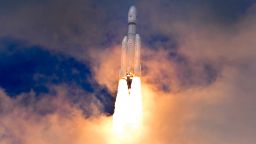
The Indian lander, Chandrayaan-3, blasted off from Earth on 14 July, packed with a payload of scientific equipment as well as a small, six-wheeled rover for exploration of the lunar surface. It's due to touch down on the lunar surface on 23 August after first sling-shotting around the Earth a few times and spending several weeks orbiting the Moon in preparation for the landing. The Russian lander, meanwhile, Luna-25, departed our planet only recently, taking off just after 2am Moscow time on 11 August (11pm GMT 10 August). It is taking a much faster, more direct route to the Moon and could reach the surface in as little as 10 days post-launch, on 21 August. Officials at the Russian space agency Roscosmos have made no secret about their desire to be first to make a soft landing at the Moon's South Pole.

But Luna-25's journey might take slightly longer than that, meaning Chandrayaan-3 could arrive on the Moon first, in the end. Slow and steady could win this race.

The missions, however, reflect the renewed interest in the Moon for space exploration. The recent discovery of significant pockets of water ice on our nearest celestial neighbour has excited scientists because hydrogen in the water could potentially be extracted to make rocket fuel at a future Moon base. Plus, the water might even be drinkable after treatment.

The so-called race between Luna-25 and Chandrayaan-3 encapsulates a new era of lunar exploration, in which nations including the US, Israel, and China, as well as private companies, are targeting the Moon with spacecraft and forthcoming crewed missions. For many, it's just friendly competition. And yet, a fresh chapter of human exploration is at stake. The small steps taken by individual landers and crewed missions could add up to giant leaps in conquering the Solar System in the coming decades and centuries. Who gets there first really could matter.

"It's turned out to be more of a coincidence than anything," says Wendy Whitman Cobb, professor of strategy and security studies at the US Air and Space Force's Air University, referring to the timing of the Luna-25 and Chandrayaan-3 missions. "But it is a very interesting coincidence." Luna-25's launch has been repeatedly delayed – it was originally scheduled for 2021.

Watch: Russia launches first Moon mission in 47 years

India has a "leg up", she says, since its spacecraft is already in orbit around the Moon. The Russians probably feel some pressure to get there first, though, she suggests, given their more direct route. Chandrayaan-3 is twice as heavy as Luna-25 and was also launched using a much less powerful rocket, meaning it needed to build up speed by taking large elliptical orbits around the Earth before it could swing out towards the Moon itself. Operators of the two craft will have to assure themselves of the performance of each vehicle before starting the touchdown procedure. Unexpected malfunctions could push the attempt back or scupper it entirely. They won't know how it's going to go, really, until they get there.

National pride will probably be a factor in pushing ahead wherever possible. Russia is arguably hoping to prove its continued capabilities in space given that the country's space programme has been affected by sanctions following Russia's invasion of Ukraine. "Their space industry has really, really suffered," says Whitman Cobb.

But it's hardly a race to the Moon, as such, for Russia, says Stefania Paladini, who studies the space industry at Queen Margaret University in the UK, because the former Soviet Union succeeded in putting multiple landers and even rovers on the Moon 50 years ago. In that sense, the Russians won the race long ago and, clearly in homage to that, the name Luna-25 harks back to the last Russian lunar mission, Luna 24 in 1976. The Soviet Luna 1 space probe is regarded as the first spacecraft to reach the Moon (observers concluded that it was designed to impact the lunar body but instead passed it by, 3,725 miles (5,995km) above its surface) in 1959.

Conversely, if Chandrayaan-3 touches down as planned, it "would be the first time for India to actually succeed", in achieving a "soft landing" on the Moon, says Paladini, noting how the nation's previous attempt, with the Chandrayaan-2 lander, ended in failure when the vehicle crashed onto the lunar surface in September 2019. (India has technically sent a spacecraft to the Moon's South Pole before with its Moon Impact Probe, which smashed into a ridge close to Shackleton Crater in November 2008, but it was far from being a soft landing and the spacecraft was never expected to survive the landing.)

You might also like: 

What is new here is the targeted landing sites at the South Pole of the Moon. No spacecraft has ever touched down there successfully. All of the Apollo missions went to locations further north, near to the Moon's equator – those landing sites featured relatively smooth terrain and plenty of sunlight. At the South Pole, in contrast, the terrain is much bumper, littered with craters, and light from the Sun arrives at a harsher angle. (Read about how the boots worn by the next astronauts to walk on the Moon will cope with the conditions at the lunar South Pole.)

India's Chandrayaan-3, which took off on July 14 2023, is the country's second attempt to soft-land an unmanned spacecraft on the Moon (Credit: Getty Images)

India's Chandrayaan-3, which took off on July 14 2023, is the country's second attempt to soft-land an unmanned spacecraft on the Moon (Credit: Getty Images)

"The sun is very low over the horizon," explains Jack Burns, a professor of astrophysics and planetary science at the University of Colorado Boulder. "The shadows are very long, the Moon is very uniform in terms of its grey surface, so being able to differentiate between craters and boulders is going to be much more challenging."

The US aims to send a crewed mission, Artemis III, to the lunar South Pole as early as 2025, so learning from the experiences of robotic landers before that date will presumably be useful to some extent. But crewed spaceflight will always be much harder than uncrewed, notes Whitman Cobb. "I don't even see it as being necessarily in the same league," she says.

What really matters, going forward, is who is able to set up a sustained and worthwhile presence on the moon, argues Vishnu Reddy, professor of planetary sciences at the University of Arizona. He disapproves of talk of a race or competition between nations and private companies. "Honestly, I think it's a distraction," he says. "Competitions only take you to the flag. You can't have sustainable, long-term presence based on politics or trying to beat one nation or the other."

The scientific equipment aboard each lander is relatively similar, he points out. The vehicles will hopefully help scientists to better understand more about the crucial lunar water ice, minerals, and the Moon's limited atmosphere, among other things. Just getting a clearer picture of the lunar South Pole is helpful, as is proving the capacity to land safely in such a tricky location.

There is another way of framing current expeditions to the Moon, though, says Anu Ojha, engagement, international and inspiration director at the UK Space Agency, who was previously involved with the Luna-25 mission before the invasion of Ukraine led the European Space Agency to discontinue its activities with Russia. Think of it like international "architectures" competing against one another, he suggests. The US, UK and India are among 27 countries signed up to the Artemis Accords. Meanwhile, Russia and China are collaborating on their own future Moon base, the International Lunar Research Station. Construction could begin as early as 2026. Luna-25 and Chandrayaan-3 are essentially early forays from each of these two international conglomerations.

Chandrayaan-3 is taking a longer route to the Moon than Luna-25, first orbiting the Earth several times to gain the momentum needed to reach lunar orbit (Credit: Alamy)

Chandrayaan-3 is taking a longer route to the Moon than Luna-25, first orbiting the Earth several times to gain the momentum needed to reach lunar orbit (Credit: Alamy)

And the question that hovers over the lunar horizon is this: what next? What if we do set up lunar bases and begin extracting resources from the Moon for use in future space missions? The Outer Space Treaty, signed in 1967, establishes the fact that no nation can own the Moon. However, a subsequent treaty, known as the Moon Agreement, which more carefully defines that no nation can own resources on the Moon, has never been signed by key countries including the US, China and Russia.

"What does that mean going forward, when you're mining resources? Does everybody have an equal claim?" asks Burns, pondering the political headaches that will likely face new lunar pioneers. These headaches are going to have to be sorted out somehow, he notes. "We don't want to end up in some territorial disputes on the Moon, things are bad enough on Earth."

For now, Luna-25 and Chandrayaan-3 fly silently through the vacuum of space, just small players in a human quest to explore the Moon and potentially expand the reach of our species into the vast Solar System beyond. These two landers are but tiny chess pieces on one very big board. But, as players of chess know, it is a game where every move counts.

--

Join one million Future fans by liking us on Facebook, or follow us on Twitter or Instagram.

If you liked this story, sign up for the weekly bbc.com features newsletter, called "The Essential List" – a handpicked selection of stories from BBC Future, Culture, Worklife, Travel and Reel delivered to your inbox every Friday.

Adblock test (Why?)

Article From & Read More ( Mission to the Moon: Who will win Russian and India's race to the lunar South Pole? - BBC )
https://ift.tt/0hlEBxW
Science

When and how to watch the Perseid meteor shower - CNN

Editor’s Note: Sign up for CNN’s Wonder Theory science newsletter. Explore the universe with news on fascinating discoveries, scientific advancements and more.

CNN  — 

One of nature’s most stunning light displays is right around the corner.

The Perseid meteor shower will reach its peak this weekend, according to the American Meteor Society. During that window on August 12 and 13, the waning crescent moon will be only 10% illuminated, according to EarthSky.

“With a 10% illuminated waning crescent moon, that means any moonlight we do get will be less and not drown out the fainter stars,” said Dr. Shannon Schmoll, director of the Abrams Planetarium at Michigan State University, in an email. “It also won’t rise until almost 4am (ET), meaning you have some time to view the meteor shower without any moonlight interfering.”

Like most major meteor showers, the Perseids will be most visible to viewers in the Northern Hemisphere, just a few hours before dawn, and there is the potential to see over 50 meteors per hour streak across the sky.

“The number used to describe the number of meteors you see per (hour) is called the Zenith Hourly Rate. This is how many meteors you could see under the darkest conditions assuming it was radiating from the highest point in the sky,” Schmoll explained. “This is not possible, so it’s always a much bigger number than you’d actually see sitting outside. The ZHR for this shower is 100. That is pretty high, so even without ideal circumstances you will likely see one every couple of minutes or so if you can get to dark skies away from city lights early in the morning.”

The highly anticipated celestial event’s name is a nod to its origins near the constellation of Perseus.

Perseids meteors are fragments of a large comet called Swift-Tuttle, which orbits the sun once every 133 years. When Earth’s path intersects with the comet’s debris field, the annual shower occurs.

The shower began this year on July 14, and will continue until September 1, though not as many meteors will be visible after the peak.

For the best viewing experience, sky gazers should watch the skies from an area without light pollution and check the local forecast as cloudy skies could obstruct your view, according to The Old Farmer’s Almanac.

“Meteor showers result in beautiful streaks of light as debris passes through our atmosphere,” Schmoll said. “Some of these streaks are brighter than others. So the less light around when observing the meteor shower means we are more likely to see fainter meteors.”

You can catch several major meteor showers later this year, according to the American Meteor Society. They will reach their peak on the following dates:

Orionids: October 21-21

Southern Taurids: November 4-5

Northern Taurids: November 11-12

Leonids : November 17-18

Geminids: December 13-14

Ursids: December 21-22

Autumnal equinox

This year, the end of the Perseid meteor shower coincides with the meteorological start of the fall season in the Northern Hemisphere.

Meteorological fall begins on September 1 in 2023 and will end exactly 90 days later, on November 30.

According to The Old Farmer’s Almanac, meteorological seasons are based on the temperature cycle in a calendar year. Climate scientists and meteorologists use this timetable to keep track of the weather every year.

The more commonly celebrated astrological start of fall, the autumn equinox, will take place on September 23.

The timing of autumnal seasons is based on the position of Earth in relation to the sun’s position. During an equinox, the sun passes directly over Earth’s equator, leading to shorter days and generally cooler weather.

Annular solar eclipse

An annular solar eclipse will be visible from the Western Hemisphere on October 14. The eclipse will cross North, Central and South America, according to NASA.

During this cosmic event, the moon will pass between the sun and Earth at its farthest distance from the planet. The distance will cause the moon to appear smaller than the sun, but will not completely overshadow the star, making the moon appear to have a “ring of fire” around it.

Because the sun will not be completely covered, it is not safe to look directly at the sun without specialized eyewear during an annular eclipse.

Adblock test (Why?)

Article From & Read More ( When and how to watch the Perseid meteor shower - CNN )
https://ift.tt/OUu4Xlw
Science

The discovery promises to spark a revolution in physics, but more results are needed to know for sure. - Livescience.com

A tiny wobbling particle may be about to reveal a fifth force of nature, scientists behind one of the biggest particle physics experiments say.

Physicists at the Fermi National Accelerator Laboratory, or Fermilab, near Chicago have found more evidence that the muon, a subatomic particle, is wobbling far more than it should — and they think it's because an unknown force is pushing it.

The results build on a previous experiment made in 2021 but produced four times the data with the experimental uncertainty reduced by a factor of two. If the findings are true, and the theoretical controversies around these measurements can be overcome, they represent a breakthrough in physics of a kind that hasn't been seen for 50 years, when the dominant theory to explain subatomic particles was solidified. 

In other words, the muon's minute wobbling — known as its magnetic moment — has the potential to shake the very foundations of science. 

"We're really probing new territory," Brendan Casey, a senior scientist at Fermilab who works on the experiment, known as Muon g-2, said in a statement. "We're determining the muon magnetic moment at a better precision than it has ever been seen before." 

Related: Bizarre particle that can remember its own past created inside quantum computer

Occasionally referred to as "fat electrons," muons are similar to electrons but are 200 times heavier and radioactively unstable — decaying in mere millionths of a second into electrons and tiny, ghostly, chargeless particles known as neutrinos. Muons also have a property called spin, which makes them behave as if they were tiny magnets, causing them to wobble like mini gyroscopes when inside a magnetic field.

To investigate the muon's wobbling, physicists at Fermilab sent the particles flying around a  minus 450 degree Fahrenheit (minus 268 degrees Celsius) superconducting magnetic ring at nearly the speed of light — a speed that, due to relativistic time dilation, extends the muons' short lifetimes by a factor of about 3,000. 

By looking at how muons wobbled as they made thousands of laps around the 50-foot-diameter (15 meters) ring, the physicists compiled data suggesting that the muon was wobbling far more than it should be.

The explanation, the study scientists say, is the existence of something not yet accounted for by the Standard Model — the set of equations that explain all subatomic particles, which has remained unchanged since the mid-1970s. 

This mysterious something could be a completely unknown force of nature (the known four are gravitational, electromagnetic and the strong and weak nuclear forces). Alternatively, it could be an unknown exotic particle, or evidence of a new dimension or an undiscovered aspect of space-time. 

But whichever way they slice it, the physicists' data suggests that something unknown is nudging and tugging at the muons inside the ring.

Full confirmation will take a little while longer, however. To be as certain as possible, physicists will use all of the data collected during the g-2 experiment's 2018 to 2023 run: The current result only takes data from 2019 and 2020. Secondly, they will need to wait for theoretical predictions from the Standard Model to catch up.

There are currently two theoretical methods for calculating what the muon's wobble should be under the Standard Model. These two methods produce conflicting predictions. Some of these calculations, including one published the same week as the 2021 g-2 experiment findings, give a much larger value to the theoretical uncertainty of the muon's magnetic moment — threatening to rob the experiment of its physics-breaking significance.

Another experiment, using data from the CMD-3 accelerator in Novosibirsk, Russia, also appears to find the muons wobbling within normal bounds, but the experiment directly contradicts a previous run of the accelerator that hinted at an opposite result.

Fermilab researchers hope that the full results, which they expect to be ready in 2025, could be precise enough to give a clear reading.

The scientists have submitted their work for publication in the journal Physical Review Letters; a preprint of the findings can be found here.

Adblock test (Why?)

Article From & Read More ( The discovery promises to spark a revolution in physics, but more results are needed to know for sure. - Livescience.com )
https://ift.tt/oUPx10p
Science

Thursday, August 10, 2023

The 2023 Perseid meteor shower peaks this weekend! Here's what you need to know. - Space.com

The Perseid meteor shower will peak this weekend as Earth makes a yearly dive through debris left behind by a Comet 109P/Swift-Tuttle.

The peak activity of the Perseid meteor shower will occur around 04:00 EDT (0800 GMT) on Sunday. Aug. 13.

The Perseids are a yearly highlight for meteor hunters who, in the right conditions, could see as many as 100 fireballs and light trails per hour from the meteor shower, according to the Royal Museums Greenwich, with even more potentially visible at the shower's peak.

This year the Perseid meteor shower is active between July 17 and Aug. 24. The Perseids takes its name from the fact that its meteors appear to streak towards Earth from the constellation Perseus. Astronomers call the point from which meteors appear to stream the radiant. 

This means the best time to see the Perseid meteor shower is when the radiant in Perseus is above the horizon. For skywatchers based in New York City, the radiant point of the Perseids is circumpolar, which means it is always overhead, meaning the meteor shower is visible all night after the sun has set and the sky has darkened. 

Related: Meteor showers 2023: When is the next one?

From New York City on Sunday, meteor hunters should see the radiant of the Perseids at around 70⁰ over the horizon. The moon will be close to its new moon phase, meaning it is almost absent from the night sky, with the lack of moonlight providing dark skies that are ideal for spotting meteors. 

In favorable weather and away from Earth-based light sources, In the Sky estimates that sky watchers observing the Perseids peak on Sunday could see as many as 141 meteors per hour. 

The meteors of the Perseids may appear to stream to Earth from the distant stars of the constellation Perseus, but the actual origin of the meteors is located in the solar system.

The Perseids' radiant is in the Perseus Constellation, this is where most of the meteors will appear to radiate from. (Image credit: Future)

The Perseid meteor shower originates from a cloud of debris left in the inner solar system by the comet 109P/Swift-Tuttle, informally known as Comet Swift–Tuttle. 

A 16-mile (26-kilometer) wide body of dust, ice, rock, and dark organic material, Comet Swift–Tuttle orbits the sun at a speed of 93,600 miles per hour. Despite traveling at speeds 60 times greater than the top speed of a jet fighter here on Earth, Comet Swift–Tuttle still takes a leisurely 133 Earth years to fully orbit the sun.

When the comet gets close to the sun, radiation from our star heats it causing solid ice to transform immediately into gas, a process called sublimation. As this gas escapes the comet, it blows away fragments of ice, dust, and rock. This is left around the sun as clouds of gritty debris, which flatten out, creating a stream of cometary material around the sun. 

As Earth takes its own yearly trip around the sun, every summer between July and August it passes through this debris stream. As it does, fragments of ice and dust enter Earth's atmosphere at speeds as great as 130,000 miles per hour.

The debris causes the air in front of it to be compressed and heated to thousands of degrees. As a result, at an altitude of between around 44 miles (70 km) and 62 miles (100 km) over Earth larger fragments of rock and ice explode as bright fireballs. Smaller fragments of debris can pass further into Earth's atmosphere as they are being vaporized, with this more gradual destruction leaving longer streaks of light in their wake. 

If you want to hunt for meteors you should always come prepared. (Image credit: Created in Canva by Daisy Dobrijevic)

For skywatchers who want to see the Perseids at their peak and can't get away from the bright lights of the city, the Virtual Telescope Project will live stream the event from its all-sky camera at its facility in Italy. Coming from the remote Maremma countryside, the telescope will enjoy the perfect dark skies from which to see the fireballs and bright streaks of the Perseids.

The free online live stream will start at 21:30 EDT on Saturday (01:30 GMT on Sunday) and can be viewed at the Virtual Telescope Project WebTV page, YouTube channel and here on Space.com courtesy of the Virtual Telescope Project. 

If you are hoping to catch a look at the Perseid meteor shower for yourself, our guides to the best telescopes and binoculars are a great place to start.

If you're looking to snap photos of the meteor shower or the night sky in general, check out our guide on how to photograph meteor showers, as well as our best cameras for astrophotography and best lenses for astrophotography.

Editor's Note: If you snap an image of the Perseid meteor shower, and would like to share it with Space.com's readers, send your photo(s), comments, and your name and location to spacephotos@space.com.

Adblock test (Why?)

Article From & Read More ( The 2023 Perseid meteor shower peaks this weekend! Here's what you need to know. - Space.com )
https://ift.tt/MyPmf7i
Science

Russia’s latest mission launches to the moon - CNN

Editor’s Note: Sign up for CNN’s Wonder Theory science newsletter. Explore the universe with news on fascinating discoveries, scientific advancements and more.

CNN  — 

Russia has successfully launched Luna 25, the country’s first lunar lander in 47 years.

The uncrewed spacecraft lifted off from the Vostochny Cosmodrome in Amur Oblast, Russia. Hitching a ride aboard a Soyuz-2 Fregat rocket, Luna 25 took flight at 8:10 a.m. local time Friday, or 7:10 p.m. ET Thursday.

Residents of a Russian village were temporarily evacuated Friday morning since there is a “one in a million chance” that one of Luna 25’s rocket stages could fall there, according to Reuters.

The spacecraft is expected to first enter an orbit around Earth before transferring to a lunar orbit and ultimately descending to the surface of the moon. Russia’s last lunar lander, Luna 24, landed on the moon on August 18, 1976.

Luna 25 and India’s Chandrayaan-3 mission, which launched in mid-July, are both expected to land at the lunar south pole on August 23, and it’s a race to see which country will land first, according to Reuters. But Roscomos said the two missions are not expected to cause a problem for each other because their specific landing zones differ, Reuters reported.

Luna 25’s journey

Luna 25, also called the Luna-Glob-Lander, will study the composition of the moon’s polar soil and the plasma and dust contained in the very thin lunar exosphere, or the moon’s scant atmosphere, for one year.

The four-legged lander includes landing rockets, propellant tanks, solar panels, computers and a robotic arm equipped with a scoop to collect lunar samples, as well as a suite of instruments to study the samples and exosphere, according to NASA.

Initially, Roscosmos and the European Space Agency planned to partner on Luna 25, as well as Luna 26, Luna 27 and the ExoMars rover.

But that partnership ceased in April 2022 after Russia’s invasion of Ukraine, and the ESA Council moved to “discontinue cooperative activities with Russia.”

The future of moon exploration

Meanwhile, Chandrayaan-3, which includes a lander, rover and propulsion module, lifted off on July 14 and entered lunar orbit last weekend.

The mission is India’s second attempt to land at the lunar south pole after Chandrayaan-2 crashed into the moon in September 2019. If successful, the latest mission would make India only the fourth country to achieve the complicated feat, behind the United States, the former Soviet Union and China. Once on the surface, Chandrayaan-3 will spend a couple of weeks conducting a series of scientific experiments to learn more about the moon’s composition.

NASA plans to land a woman and a person of color on the moon for the first time at the lunar south pole in late 2025 during the Artemis III mission.

The reason so many missions have been designed to explore this region of the moon is due to its potential resources. Deep, permanently shadowed craters at the lunar south pole may contain ice that could be used for drinking water, oxygen and fuel — a key consideration as agencies like NASA look to sustainably explore the moon for longer periods of time in the future.

“We’re going to see several spacecraft, some perhaps from other nations, that are going to be landing on the south pole in the near future,” said NASA Administrator Bill Nelson during a news conference Tuesday. “There’s a renewed interest in the moon and of course it’s there because the potential of water. We’re going back to learn to live in a deep space environment for long periods of time, so that we can go to Mars and return safely.”

When asked about the upcoming Luna 25 launch, Nelson said “we wish them well,” noting that NASA has had a cooperative relationship with its Russian counterpart dating back to the Soviet era since 1975.

Adblock test (Why?)

Article From & Read More ( Russia’s latest mission launches to the moon - CNN )
https://ift.tt/cImlo15
Science

Early humans wiped out in Europe by 'glacial cooling', study suggests - Financial Times

What is included in my trial?

During your trial you will have complete digital access to FT.com with everything in both of our Standard Digital and Premium Digital packages.

Standard Digital includes access to a wealth of global news, analysis and expert opinion. Premium Digital includes access to our premier business column, Lex, as well as 15 curated newsletters covering key business themes with original, in-depth reporting. For a full comparison of Standard and Premium Digital, click here.

Change the plan you will roll onto at any time during your trial by visiting the “Settings & Account” section.

What happens at the end of my trial?

If you do nothing, you will be auto-enrolled in our premium digital monthly subscription plan and retain complete access for 65 € per month.

For cost savings, you can change your plan at any time online in the “Settings & Account” section. If you’d like to retain your premium access and save 20%, you can opt to pay annually at the end of the trial.

You may also opt to downgrade to Standard Digital, a robust journalistic offering that fulfils many user’s needs. Compare Standard and Premium Digital here.

Any changes made can be done at any time and will become effective at the end of the trial period, allowing you to retain full access for 4 weeks, even if you downgrade or cancel.

When can I cancel?

You may change or cancel your subscription or trial at any time online. Simply log into Settings & Account and select "Cancel" on the right-hand side.

You can still enjoy your subscription until the end of your current billing period.

What forms of payment can I use?

We support credit card, debit card and PayPal payments.

Adblock test (Why?)

Article From & Read More ( Early humans wiped out in Europe by 'glacial cooling', study suggests - Financial Times )
https://ift.tt/X12LrRo
Science

Search

Featured Post

Two meteor showers will peak tonight. How to watch the Southern Delta Aquariids and the Alpha Capricornids. - Yahoo

[unable to retrieve full-text content] Two meteor showers will peak tonight. How to watch the Southern Delta Aquariids and the Alpha Caprico...

Postingan Populer