Rechercher dans ce blog

Thursday, December 28, 2023

SpaceX Falcon Heavy rocket ready to launch military spaceplane after delays - Fox Weather

KENNEDY SPACE CENTER, Fla. – SpaceX plans to launch a U.S. military spaceplane from Florida on Thursday night, marking one of the final launches of the year.

A Falcon Heavy rocket is scheduled to launch the U.S. Air Force and Space Force X-37B Orbital Test Vehicle from Kennedy Space Center's launchpad 39A. The launch window opens at 8:07 p.m. EST.

Hours after the Falcon Heavy launch, SpaceX also plans to launch a round of Starlink internet satellites from Space Launch Complex 40 during a 4-hour window opening at 11 p.m. on Thursday. 

RECORD-BREAKING SPACEX ROCKET BOOSTER TOPPLES IN ROUGH SEAS AFTER 19TH LANDING

Previous launch attempts this month to send the X-37B spaceplane into orbit from SpaceX's launchpad at Cape Canaveral Space Force Station were thwarted by weather and technical delays.

This will be the first time the Boeing-built spaceplane flies with SpaceX.

X-37B has set new records for time in orbit with each flight. Since its first launch in 2010, X-37B has spent 3,774 days in space through six missions. Its last mission ended in November 2022 after more than 900 days in orbit on a mission for the U.S. Air Force and U.S. Space Force.

The spaceplane is an orbital platform for different test and experimentation missions, some of which are classified. This seventh mission, known as OTV-7 and designated USSF-52, will fly unclassified and classified experiments.

A NASA experiment called Seeds-2 will expose plant seeds to radiation during a long-duration spaceflight. A previous version of the experiment flew on X-37B's last mission. 

It is confidential when the spaceplane returns to Earth.

Cold viewing conditions with good launch weather 

A storm front moving south has dropped temperatures across Florida, providing chilly viewing conditions for those hoping to watch either of SpaceX's launches Thursday night. The temperature Thursday evening will be 60 degrees with scattered cloud cover.

SOUTH FACES FREEZING TEMPERATURES, CHANCE OF SNOW AS 2024 APPROACHES

Forecasters with the Space Force’s 45th Weather Squadron predict an 80% chance of favorable launch weather on Thursday night. 

Rain associated with the cold front pushing across Florida will move out by Thursday evening for the launch. However, the primary concern will be cumulus cloud cover associated with any remaining showers developing along the cold front.

If the launch is delayed to Friday night, the forecast improves to 95% favorable, with liftoff winds being the primary weather concern. Temperatures on the Space Coast will continue to drop into Friday and will be in the mid-50s by the backup launch window. 

This will mark the fifth Falcon Heavy launch in 2023. The powerful rocket produces more than 5 million pounds of thrust with three Falcon boosters and 27 Merlin engines.

SpaceX said this will be the fifth launch and landing of the Falcon Heavy side boosters. About 8 minutes after launch, the boosters will land for a sixth time back at Landing Zones 1 and 2 at Cape Canaveral Space Force Station. These landings can create sonic booms that reverberate across Florida's Space Coast and beyond. 

The final launch of 2023 will also be for SpaceX’s Starlink service but on the West Coast. SpaceX is targeting Saturday night to launch more Starlink satellites from Vandenberg Space Force Base in California. 

Adblock test (Why?)

Article From & Read More ( SpaceX Falcon Heavy rocket ready to launch military spaceplane after delays - Fox Weather )
https://ift.tt/bV2dLrH
Science

God of Chaos: NASA to study asteroid that might hit Earth in... - IndiaTimes

NEW DELHI: American space agency NASA with the help of its advanced ground and space-based telescope has found several asteroids which pose a possible risk for Earth. Bennu is the most prominent asteroid among them which has a 1/2700 chance of hitting Earth between 2175 and 2195. Dust and rock samples collected from Bennu were recently brought back to Earth by NASA.
Additionally, NASA has directed OSIRIS-REx spacecraft to study another possibly dangerous asteroid, Apophis.This asteroid is believed to get very close to Earth in this decade. The space agency has named this mission as God of Chaos.
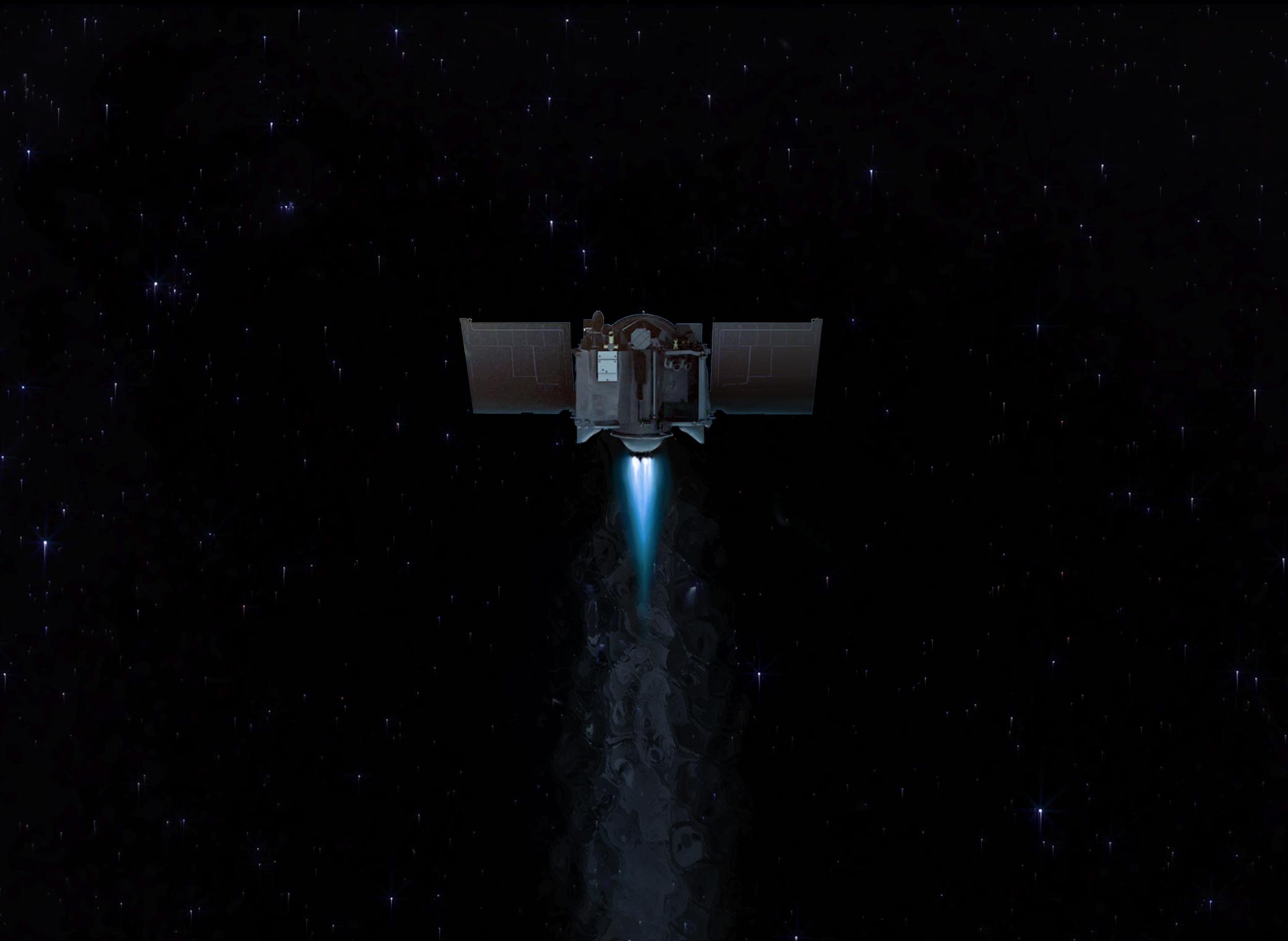
NASA will now use the OSIRIS-REx spacecraft to investigate the close approach of asteroid Apophis in 2029. However, it has no plans to gather samples from Apophis. Instead it will use spacecraft's thrusters while being 16 feet above the asteroid's surface to stir up rocks and dust to see the material beneath the asteroid's surface.
“The close approach is a great natural experiment. We know that tidal forces and the accumulation of rubble pile material are foundational processes that could play a role in planet formation. They could inform how we got from debris in the early solar system to full-blown planets," said Dani Mendoza DellaGiustina, Principal investigator for OSIRIS-APEX.
The mission has been named God of Chaos as Apophis because it means evil serpent in ancient Egyptian mythology. It is labeled as Asteroid 2004 MN4 by NASA's Center for Near-Earth Object Studies and is named as Asteroid 99942 Apophis.
As per NASA, Asteroid 99942 Apophis is scheduled to make a very close approach to Earth on April 13, 2029. On that day, it will get as close as 38,000 kilometers to Earth's surface, closer than many satellites orbiting the planet. Surprisingly, it will be visible to observers in the Eastern Hemisphere without needing a telescope or binoculars! The asteroid will be traveling at a speed of approximately 26,712 kilometers per hour, almost as fast as an Intercontinental Ballistic Missile (ICBM).
Scientists have ruled out the asteroid's risk of impact in 2029, but concerns remain for potential impacts in 2036 and 2068.

Adblock test (Why?)

Article From & Read More ( God of Chaos: NASA to study asteroid that might hit Earth in... - IndiaTimes )
https://ift.tt/TFD1p2K
Science

SpaceX Falcon Heavy to launch X-37B plane, one of the US military’s most fascinating secrets - CNN

CNN  — 

SpaceX’s hulking Falcon Heavy rocket will return to the skies Thursday evening, and this time it’s launching a mysterious spacecraft for the US military that will carry out cutting-edge research.

The rocket is scheduled to lift off from NASA’s Kennedy Space Center in Florida at 8:07 p.m. ET, carrying the military’s X-37B space plane — which is uncrewed and operates autonomously — to unprecedented altitudes. The launch will stream live on SpaceX’s website.

It is not clear, however, exactly where the space plane is going.

The X-37B’s activities in space have long been the subject of fascination and speculation in the space community as amateur enthusiasts race to track its whereabouts and share theories about its activities.

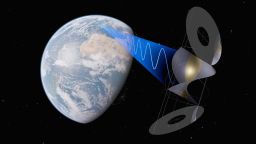
Resembling a miniature NASA space shuttle with the windows blacked out, the reusable and fully autonomous X-37B has been known to carry out research on concepts such as relaying solar energy from space for use back on Earth and studying the effects of radiation on seeds used to grow food.

And this mission — the seventh trip to space for an X-37B plane — promises to be even more intriguing than earlier flights.

X-37B orbital test vehicle concludes sixth successful mission

A powerful ride

This launch will mark the first time the space plane has hitched a ride on a SpaceX Falcon Heavy, one of the most powerful operational rockets in the world.

Previously, the X-37B has launched on the SpaceX Falcon 9 vehicle and the Atlas V rocket built by United Launch Alliance, a joint venture between Lockheed Martin and Boeing.

The Falcon Heavy produces more thrust than both of those rockets combined.

The launch via the Falcon Heavy could indicate that X-37B is destined for more distant orbits, perhaps even to the moon or Mars, suggested Paul Graziani, CEO of COMSPOC, a company dedicated to tracking objects in space.

If it does travel much deeper into the cosmos than earlier flights, it could be far more difficult for sky-gazers on Earth to determine where the vehicle is.

If the military doesn’t want people to track the X-37B, Graziani added, the vehicle can be hidden in the glare of the sun or by various other means — including changing its position often. The X-37B has already proven on previous flights that it’s capable of making multiple maneuvers in space.

COMSPOC will attempt to search for the vehicle if the spacecraft winds up in geosynchronous orbit, which lies about 22,400 miles (36,000 kilometers) from Earth and is where most massive communications satellites operate. Geosynchronous orbit is where the company focuses its sensors for tracking satellites, said Graziani and Bob Hall, COMSPOC’s director of operations integration.

“I think it’s one of the most interesting things that’s happened in space in a long time, whatever it’s going to do,” Graziani said of the X-37B launch.

Space technology innovations

The X-37B makes it possible for the United States to carry out experiments to understand how to improve ongoing and upcoming space operations and push the boundaries of what’s possible, according to a statement by Gen. B. Chance Saltzman, chief of space operations.

Among the research on board this mission is a NASA experiment that aims to find ways to sustain astronauts on future deep-space missions. Called Seeds-2, it will “expose plant seeds to the harsh radiation environment of long-duration spaceflight” and build on research carried out on previous X-37B missions.

Learning how to grow food in the harsh, soilless environment of outer space could be crucial for astronauts on lengthy missions to the moon or beyond — places where it’s more difficult to deliver fresh supplies.

It’s unclear how long the spacecraft will spend in orbit for this stint, though historically each X-37B flight has been longer than the last.

The last trip to space for the autonomous X-37B concluded in November 2022 after the spacecraft logged nearly 909 consecutive days in space. During that sixth mission, as CNN previously reported, the space plane carried experimental technology designed by the US Navy to convert solar energy and transmit it back to the ground, according to the military.

The X-37B has already spent more than 3,700 days in space on other uncrewed missions. When it returns to Earth, it will land on a runway, much like an airplane swooping down from the skies.

Challenging China

This launch comes after more than two weeks of delays. SpaceX was prepared to lift off on December 10. The launch was pushed off twice because of weather and issues with the ground pad before SpaceX abruptly delayed the mission indefinitely to “perform additional system checkouts.”

But during the downtime, China — which the US government considers its chief competitor in a modern space race — sent its own secretive spacecraft into orbit.

Little about the spacecraft from China is known. Some in the industry speculate it is a doppelganger of the X-37B in form and function, though no official photos of the vehicle have been released.

China’s state-run Xinhua News Agency reported that the clandestine spacecraft launched aboard a Long March 2F rocket.

The agency’s post added only that during its stay in space, the vehicle will test out reusable space technology and carry out unspecified science experiments “for the peaceful use of space.”

It is not clear how long China’s space plane will spend in orbit.

Adblock test (Why?)

Article From & Read More ( SpaceX Falcon Heavy to launch X-37B plane, one of the US military’s most fascinating secrets - CNN )
https://ift.tt/B4oWqMy
Science

Wednesday, December 27, 2023

Earth may rip apart passing asteroids, simulations suggest - Livescience.com

Every year, dozens of asteroids come closer to our planet than the moon is, and yet catastrophic collisions are exceedingly rare. Now, a new study proposes that Earth has a built-in defense system —  its intense gravitational forces — that it uses to tackle asteroid interlopers.

The enormous masses of planets and their moons mean they exert tremendous gravitational forces on nearby objects. The differences in gravity these objects experience, called tidal forces because astronomers used them to explain how the moon causes tides on Earth,  can be so strong in some cases that the objects get ripped up ― a process called tidal disruption.

In 1994, space enthusiasts got a firsthand glimpse of the awesome power of tidal disruption when pieces of the comet Shoemaker-Levy 9, torn apart by Jupiter's tidal forces during a close encounter two years earlier, crashed into the gas giant. But for decades, astronomers couldn't find evidence that Earth and other terrestrial planets tidally disrupt passing asteroids or comets.

Related: 'Planet killer' asteroids are hiding in the sun's glare. Can we stop them in time?

Mikael Granvik, first author of the new study and a planetary scientist at Sweden's LuleÄ University of Technology, has long been searching for these gravitationally ripped-apart near-Earth asteroids (NEAs). "Some ten years ago we looked for families of NEAs that would have formed in such tidal disruptions, but didn't find any," Granvik told Live Science in an email. A follow-up study explained why: Any fragments formed this way would "mix with the background so quickly" that identifying a specific family is impossible, he said.

The hunt for gravitationally torn asteroids remained at a dead end untilGranvik had a flash of insight. In 2016, he helped create a model that calculated the trajectories of asteroids of different sizes to determine their numbers at different distances from the sun.

Granvik and his colleagues compared their model's results with seven years' worth of asteroid observations collated by the Catalina Sky Survey, a NASA-funded Arizona telescope-based program that detects NEAs. But their estimates vastly underpredicted the numbers of certain asteroids ― those spotted at the distances at which Earth and Venus orbit the sun. Most of these missed asteroids were pretty small, chugging along roughly circular paths around the sun, more or less within the same plane as the orbits of Earth  and Venus.

A map of all the known near-Earth asteroids and comets as they orbit the Sun. (Image credit: NASA/ JPL-Caltechu003c/strongu003e)

Then came Granvik's eureka moment. He realized these oddball asteroids could be tidally disrupted fragments of larger asteroids.

To check this idea, Granvik and co-author Kevin Walsh, a researcher at theSouthwest Research Institute in Colorado, considered a scenario where asteroids that encountered rocky planets lost between 50% and 90% of their mass, generating streams of fragments. Now, their model correctly accounted for the previously unexplained asteroids, suggesting they had been created by tidal disruptions. They described the findings in a new study, which has been accepted for publication in The Astrophysical Journal Letters and is available on the preprint database arXiv.

"While individual families are hard to find, the combination of multiple families will produce a signature that we can identify," Granvik said. Additional simulations showed such fragments hung around a really long time, lasting an average of 9 million years before colliding with the sun or a planet  or getting kicked out of the solar system.

Tidal disruption caused by Earth may help tackle asteroids, but it creates problems too, by generating more NEAs that are likely to strike our planet. Don't panic, though — because these fragments are smaller than 0.6 mile (1 kilometer) in diameter, "they don't pose an extinction-level threat," Granvik said. However, they do "increase the possibilities for Tunguska-level and Chelyabinsk-level events" — the two largest asteroid impact events in recent history.

Adblock test (Why?)

Article From & Read More ( Earth may rip apart passing asteroids, simulations suggest - Livescience.com )
https://ift.tt/G1LCNc9
Science

NASA's Daring Mission To Intercept the “God of Chaos” Asteroid As It Closes In on Earth - SciTechDaily

OSIRIS-REx Heads Home

OSIRIS-REx, now OSIRIS-APEX, is on a mission to study asteroid Apophis, utilizing its close approach to Earth in 2029. After successfully returning a sample from Bennu, the spacecraft will observe Apophis, an “S-type” asteroid, providing insights into solar system formation and planetary defense. Credit: NASA’s Goddard Space Flight Center

The former OSIRIS-REx spacecraft sets off on a journey to study asteroid Apophis and take advantage of the asteroid’s 2029 flyby of Earth, the likes of which hasn’t happened since the dawn of recorded history.

At the end of a long-haul road trip, it might be time to kick up your feet and rest awhile – especially if it was a seven-year, 4 billion-mile journey to bring Earth a sample of asteroid Bennu. But OSIRIS-REx (Origins, Spectral Interpretation, Resource Identification and Security – Regolith Explorer), the NASA mission that accomplished this feat in September, is already well on its way (with a new name) to explore a new destination.

When OSIRIS-REx left Bennu in May 2021 with a sample aboard, its instruments were in great condition, and it still had a quarter of its fuel left. So instead of shutting down the spacecraft after it delivered the sample, the team proposed to dispatch it on a bonus mission to asteroid Apophis, with an expected arrival in April 2029. NASA agreed, and OSIRIS-APEX (Origins, Spectral Interpretation, Resource Identification, and Security – Apophis Explorer) was born.

OSIRIS-REx Spacecraft Departing Asteroid Bennu

This illustration shows the OSIRIS-REx spacecraft departing asteroid Bennu to begin its two-year journey back to Earth. Credit: NASA/Goddard/University of Arizona

A Rare Opportunity at Apophis

After considering several destinations (including Venus and various comets), NASA chose to send the spacecraft to Apophis, an “S-type” asteroid made of silicate materials and nickel-iron – a fair bit different than the carbon-rich, “C-type” Bennu.

The intrigue of Apophis is its exceptionally close approach of our planet on April 13, 2029. Although Apophis will not hit Earth during this encounter or in the foreseeable future, the pass in 2029 will bring the asteroid within 20,000 miles (32,000 kilometers) of the surface – closer than some satellites, and close enough that it could be visible to the naked eye in the Eastern Hemisphere.

Scientists estimate that asteroids of Apophis’ size, about 367 yards across (about 340 meters), come this close to Earth only once every 7,500 years.

Asteroid Apophis Deep Space Network

These images of asteroid Apophis were recorded by radio antennas at the Deep Space Network’s Goldstone complex in California and the Green Bank Telescope in West Virginia. The asteroid was 10.6 million miles (17 million kilometers) away, and each pixel has a resolution of 127 feet (38.75 meters). Credit: NASA/JPL-Caltech and NSF/AUI/GBO

“OSIRIS-APEX will study Apophis immediately after such a pass, allowing us to see how its surface changes by interacting with Earth’s gravity,” said Amy Simon, the mission’s project scientist based at NASA’s Goddard Space Flight Center in Greenbelt, Maryland.

Apophis’ close encounter with Earth will change the asteroid’s orbit and the length of its 30.6-hour day. The encounter also may cause quakes and landslides on the asteroid’s surface that could churn up material and uncover what lies beneath.

“The close approach is a great natural experiment,” said Dani Mendoza DellaGiustina, principal investigator for OSIRIS-APEX at the University of Arizona in Tucson. “We know that tidal forces and the accumulation of rubble pile material are foundational processes that could play a role in planet formation. They could inform how we got from debris in the early solar system to full-blown planets.”

Apophis represents more than just the opportunity to learn more about how solar systems and planets form: As it happens, most of the known potentially hazardous asteroids (those whose orbits come within 4.6 million miles of Earth) are also S-types. What the team learns about Apophis can inform planetary defense research, a top priority for NASA.

OSIRIS-APEX: Travel Itinerary

By April 2, 2029 – around two weeks before Apophis’ close encounter with Earth – OSIRIS-APEX’s cameras will begin taking images of the asteroid as the spacecraft catches up to it. Apophis will also be closely observed by Earth-based telescopes during this time. But in the hours after the close encounter, Apophis will appear too near the Sun in the sky to be observed by ground-based optical telescopes. This means any changes triggered by the close encounter will be best detected by the spacecraft.


This animation depicts the orbital trajectory of asteroid 99942 Apophis as it zooms safely past Earth on April 13, 2029. Earth’s gravity will slightly deflect the trajectory as the 1,100-foot-wide (340-meter-wide) near-Earth object comes within 20,000 miles (32,000 kilometers) of our planet’s surface. The dots are the many man-made satellites that orbit our planet. The motion has been speeded up 2,000 times. Credit: NASA/JPL-Caltech

OSIRIS-APEX will arrive at the asteroid on April 13, 2029, and operate in its proximity for about the next 18 months. In addition to studying changes to Apophis caused by its Earth encounter, the spacecraft will conduct many of the same investigations OSIRIS-REx did at Bennu, including using its instrument suite of imagers, spectrometers, and a laser altimeter to closely map the surface and analyze its chemical makeup.

As an encore, OSIRIS-APEX will reprise one of OSIRIS-REx’s most impressive acts (minus sample collection), dipping within 16 feet of the asteroid’s surface and firing its thrusters downward. This maneuver will stir up surface rocks and dust to give scientists a peek at the material that lies below.

Although the rendezvous with Apophis is more than five years away, the next milestone on its journey is the first of six close Sun passes. Those near approaches, along with three gravity assists from Earth, will put OSIRIS-APEX on course to reach Apophis in April 2029.

What OSIRIS-APEX will discover about Apophis remains to be seen, but if the mission’s previous incarnation is any indication, surprising science lies ahead. “We learned a lot at Bennu, but now we’re armed with even more questions for our next target,” Simon said.

NASA’s Goddard Space Flight Center provides overall mission management, systems engineering, and the safety and mission assurance for OSIRIS-APEX. Dani Mendoza DellaGiustina of the University of Arizona, Tucson, is the principal investigator. The university leads the science team and the mission’s science observation planning and data processing. Lockheed Martin Space in Littleton, Colorado, built the spacecraft and provides flight operations. Goddard and KinetX Aerospace are responsible for navigating the OSIRIS-APEX spacecraft. International partnerships on this mission include the spacecraft’s laser altimeter instrument from CSA (the Canadian Space Agency) and science collaboration with JAXA’s (the Japan Aerospace Exploration Agency) Hayabusa2 mission. OSIRIS-APEX (previously named OSIRIS-REx) is the third mission in NASA’s New Frontiers Program, managed by NASA’s Marshall Space Flight Center in Huntsville, Alabama, for the agency’s Science Mission Directorate in Washington.

Adblock test (Why?)

Article From & Read More ( NASA's Daring Mission To Intercept the “God of Chaos” Asteroid As It Closes In on Earth - SciTechDaily )
https://ift.tt/URP5TYV
Science

Tuesday, December 26, 2023

Pioneering spacecraft reaches moon's orbit, beams back images - Mashable

After more than three months of whizzing through space, Japan's lunar lander arrived at the moon on Christmas.

The Japan Aerospace Exploration Agency — NASA's Japanese counterpart known as JAXA for short — announced that its moon mission had achieved a major milestone on Dec. 25, successfully inserting into an oval-shaped orbit around the lunar north and south poles. For the next month, its orbit will gradually become more circular before it attempts the actual landing.

Whether the spacecraft will succeed in that regard is anyone's guess: About half of all lunar landing attempts have failed, and only one out of three missions that tried to touch down on the moon in 2023 made it without a crash. In August, India became the fourth country to land on the moon, joining the former Soviet Union, United States, and China as the only spacefaring nations to have achieved this feat. Russia and a private Japanese startup company's attempts, both robotic spacecraft, didn't make it.

Getting to the moon, about a quarter-million miles from Earth, isn't even half the battle. But so far, the SLIM mission, short for Smart Lander for Investigating the Moon, has not disappointed with its close-up photoshoot of the moon. As the spacecraft swooped about 370 miles above the surface, it snapped images with its navigation camera, revealing a lunar surface pocked and splattered by craters.

Apollo moon-landing deniers have taught us that even pictures sometimes aren't enough to convince folks inclined to believe conspiracy theories. So JAXA stitched together some of the lunar images into a flip book-like video (shown above in this X post) — further evidence of the landmark event.

"You can see that SLIM is indeed moving above the lunar surface," the Japanese space agency said on X, formerly Twitter, according to a Google translation.

Mashable Light Speed
Want more space and science stories in your inbox?
Sign up for Mashable's weekly Light Speed newsletter.
By signing up you agree to our Terms of Use and Privacy Policy.
Thanks for signing up!

The SLIM mission launched from the Tanegashima Space Center in Japan on Sept. 7 and is expected to touch down near Shioli crater on the moon's near side on Jan. 20. Its goal is to demonstrate a so-called "pinpoint landing" with an accuracy of less than 100 yards, a level of precision unprecedented for moon landings. Most landing targets are many square-miles in scope.

the surface of the moon
As the uncrewed SLIM spacecraft swooped about 370 miles above the ground, it snapped photos with its navigation camera, revealing a lunar surface pocked and splattered by craters. Credit: JAXA / SLIM

If Japan succeeds, it will be the fifth nation to set a spacecraft down on the moon.

That will put it a few weeks ahead of U.S.-based Astrobotic Technologies' moon landing effort, which will try to bring five NASA instruments to the surface, among other payloads. In April, a private Japanese company, ispace, also tried to land on the moon but ran out of fuel on descent and ultimately crashed.

About 60 years have passed since the first uncrewed moon landings, but touching down remains onerous. The moon's exosphere — an extremely thin atmosphere of gasses barely held by the moon's gravity — provides virtually no drag to slow a spacecraft down as it approaches the ground. Furthermore, there are no GPS systems on the moon to help guide a craft to its landing spot.

JAXA's spacecraft orbiting the moon
If the SLIM mission succeeds, Japan will be the fifth nation to set a spacecraft down on the moon. Credit: JAXA / SLIM

For decades, no one seemed interested in returning to the moon's surface, but that has changed in recent years, with NASA's Artemis campaign spurring them on. Several nations and private companies have set their sights on the lunar south pole because of its ice, thought to be buried there in permanently shadowed craters. The natural resource is coveted because it could supply drinking water, oxygen, and rocket fuel for future missions.

That means one day the moon could become more than just a heavenly destination, but a stop on the way to Mars — or possibly even other worlds.

Topics Innovations

Adblock test (Why?)

Article From & Read More ( Pioneering spacecraft reaches moon's orbit, beams back images - Mashable )
https://ift.tt/HIBU97b
Science

Monday, December 25, 2023

Japan's SLIM 'moon sniper' lander arrives in lunar orbit for Christmas - Space.com

A Japanese spacecraft just took a huge step toward pulling off the nation's first-ever moon landing.

Japan's robotic SLIM moon lander arrived in lunar orbit on Christmas Day (Dec. 25) as planned, the Japan Aerospace Exploration Agency announced. The spacecraft entered lunar orbit at 2:51 a.m. EDT (4:51 p.m. Japan Standard Time, 0751 GMT). 

"The Japan Aerospace Exploration Agency (JAXA) is pleased to announce that the Smart Lander for Investigating Moon (SLIM) was successfully inserted into lunar orbit at 16:51 (Japan Standard Time, JST) on December 25, 2023," JAXA officials wrote in an update. The spacecraft is in an elliptical orbit that takes 6.4 hours to circle the moon, coming within 373 miles (600 kilometers) of the lunar surface at its closest point and reaching out to 2,485 miles (4,000 km) at its farthest.

The milestone keeps SLIM on target to attempt a lunar touchdown on Jan. 19. Success in that endeavor would be historic; to date, only four nations — the Soviet Union, the U.S., China and India — have soft-landed a craft on the moon.

Related: Missions to the moon: Past, present and future

The 8.8-foot-long (2.7 meters) SLIM launched on Sept. 6 along with XRISM, a powerful X-ray space telescope. 

Both Japanese spacecraft deployed into Earth orbit, and XRISM remains there today. But SLIM left our planet's gravity well on Sept. 30, beginning a long, circuitous and energy-efficient route to the moon.

That trek came to an end today, when SLIM inserted itself itself into lunar orbit. The probe will now start gearing up for its touchdown attempt, during which it will try to live up to its "Moon Sniper" nickname: SLIM aims to hit its landing-zone target with an accuracy of 330 feet (100 m) or less, paving the way for even more ambitious  exploration efforts down the road.

SLIM "is a mission for researching the pinpoint landing technology necessary for future lunar probes and verifying this on the surface of the moon with a small-scale probe," JAXA officials wrote in a mission description.

"By creating the SLIM lander, humans will make a qualitative shift towards being able to land where we want and not just where it is easy to land, as had been the case before," they added. "By achieving this, it will become possible to land on planets even more resource-scarce than the moon."

If all goes according to plan, SLIM will also deploy two miniprobes onto the lunar surface after touching down. These daughter craft will snap photos, help mission team members monitor SLIM's status and provide an "independent communication system for direct communication with Earth," JAXA officials wrote in the SLIM mission's press kit.

RELATED STORIES:

SLIM isn't the first Japanese spacecraft to reach lunar orbit; the Hiten probe did so in 1990, followed by SELENE ("Selenological and Engineering Explorer"), also known as Kaguya, in 2007.

And Hakuto-R, a lander built by Tokyo-based company ispace, arrived in lunar orbit this past March. Hakuto-R tried to touch down on the moon a month later but crashed after its sensors got confused by the rim of a lunar crater.

Adblock test (Why?)

Article From & Read More ( Japan's SLIM 'moon sniper' lander arrives in lunar orbit for Christmas - Space.com )
https://ift.tt/ZXteMgw
Science

Search

Featured Post

Two meteor showers will peak tonight. How to watch the Southern Delta Aquariids and the Alpha Capricornids. - Yahoo

[unable to retrieve full-text content] Two meteor showers will peak tonight. How to watch the Southern Delta Aquariids and the Alpha Caprico...

Postingan Populer