Rechercher dans ce blog

Saturday, January 30, 2021

Wolf Moon is done, here’s a full 2021 Full Moon calendar with names - SlashGear

This week the alignment of our planet Earth, our moon, and our nearby Sun, created a Full Moon we call a “Wolf Moon.” This is just the first in a line of full moons that’ll appear to us humans over the next 11 months, and we’ve got the lot listed. In the mix are the Snow Moon, Worm Moon, Pink Moon, Flower Moon, and the Strawberry Moon. That one’s not about Prince, but it might as well be – after that is the Buck Moon, Sturgeon Moon, Harvest Moon, Hunter’s Moon, Beaver Moon, and in December we’ll see the Cold Moon!

Each of the moons has a different name – and some of the names might be different depending on your naming scheme of choice. The dates are the same regardless of your moon name set of choice. They began with the Wolf Moon on January 28, 2021. ABOVE: A section of a full worksheet created by the NASA Jet Propulsion Laboratory – they’ve got a whole BUNCH of infographics and worksheets just like it, if you’d like to take a peek.

SEE TOO: Biden’s Moon rock has an incredible NASA back-story

On February 27, 2021, we’ll see the Snow Moon. The “Worm Moon” arrives on March 28, 2021. On April 26, 2021, the full moon known as Pink Moon will appear – at around 11:32 PM (Eastern Standard Time). That’s one of the easier ones to schedule a good time to see. That’s also a SUPER FULL MOON – when the full moon appears when the moon is at its closest approach to Earth.

Some of these moons will only really look completely full at a very inopportune time – a time when you, depending on where you live, might not even be able to see our moon at all. Take for example the Flower Moon, set to appear on May 26th, 2021. That moon will appear fully FULL at 7:14 AM Eastern Standard Time. Too bad, too, because this is also a SUPER FULL MOON!

The June moon appears on June 24, and that’s the Strawberry Moon. The June full moon will appear most full at 2:40 PM Eastern Standard Time. The Buck Moon appears at 10:37 PM Eastern on July 23.

On August 22, 2021, we’ll see the full moon called Sturgeon Moon at 8:02 AM. The September 20th 2021 full moon is the all-important Harvest Moon! That’ll appear at around 7:55 PM Eastern. The Hunter’s Moon appears on October 20, 2021 at 10:57PM Eastern.

The Beaver Moon will be most apparent on November 19th, 2021 at 3:58 AM Eastern Standard Time. The most frigid of all the moons appears on December 18, 2021, at 11:35 PM – that’s the Cold Moon. Now go set your alarm to go off at these times through the year and you, too, shall see the most full moons of the year in the year 2021.

Let's block ads! (Why?)

Article From & Read More ( Wolf Moon is done, here’s a full 2021 Full Moon calendar with names - SlashGear )
https://ift.tt/2MFKYkR
Science

NASA's SLS rocket will go through a second and longer hot fire test - Engadget

NASA
NASA

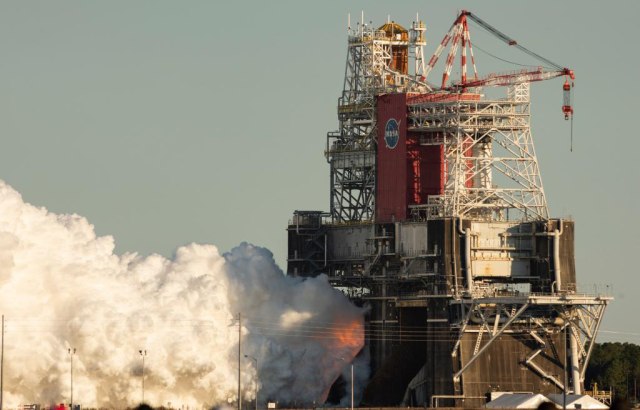
NASA will conduct a second hot fire test for the Space Launch System’s rocket core stage as early as the fourth week of February. It will be part of the rocket’s Green Run series of tests meant to assess the core stage and ensure it’s ready for the Artemis I mission, which will send an unmanned Orion spacecraft to the Moon. The rocket’s first ever hot fire test in mid—January, wherein all four of its RS-25 engines fired simultaneously, was cut short due to a problem with its hydraulic system. What was supposed to be an eight-minute burn lasted for only 67 seconds — NASA wants the second go to last longer than that to be able to collect more data.

The agency set an eight-minute goal for the second test, as well, since that’s how long it would take to send the rocket to space. According to NASA’s announcement, though, the Green Run team analyzed data from the first test firing and determined that four minutes would be enough to provide significant data that can help verify if the core stage truly is ready for flight. “Conducting a second hot fire test will allow the team to repeat operations from the first hot fire test and obtain data on how the core stage and the engines perform over a longer period that simulates more activities during the rocket’s launch and ascent,” NASA wrote.

To prepare for the second test, the Green Run team is analyzing data from the first one and drying and refurbishing the SLS engines. It will then take a month to refurbish the core stage and its engines after the second test before they can be shipped to NASA’s Kennedy Space Center in Florida for the Artemis I launch expected to happen later this year. It remains to be seen whether that timeline will be met when the Artemis program’s manned Moon landing probably won’t happen in 2024 like the previous administration had announced.

In this article: NASA, SLS, hot fire test, news, tomorrow
All products recommended by Engadget are selected by our editorial team, independent of our parent company. Some of our stories include affiliate links. If you buy something through one of these links, we may earn an affiliate commission.

Let's block ads! (Why?)

Article From & Read More ( NASA's SLS rocket will go through a second and longer hot fire test - Engadget )
https://ift.tt/2L0Fu3M
Science

NASA is preparing for 7 minutes of absolute terror - BGR

  • NASA’s Mars 2020 mission is closing in on its landing date, which is expected to be just a few weeks away.
  • The mission, which includes the Perseverance rover as well as the Mars Ingenuity helicopter, depends on a successful landing that is largely out of NASA’s hands at the moment.
  • The landing sequence is mostly automated, so NASA engineers can do little but sit back and hope for the best.

When NASA launched its Mars 2020 mission last year it was the end of one chapter and the beginning of another. The mission, which has been traveling through space for the past several months, is slated to arrive on the Martian surface on February 18th, and NASA is counting down the seconds until that touchdown happens.

One of the biggest hurdles that still exists between NASA and a successful Mars 2020 mission is the landing of the rover capsule itself. The so-called “seven minutes of terror” that NASA often speaks about regarding the landing is essentially a seven-minute window where the spacecraft will begin its descent and, if all goes as planned, deliver the most technologically advanced machine ever built for space exploration to the surface of the planet.

Today's Top Deal Amazon shoppers can't get enough of these best-selling black masks Price:$26.25 Available from Amazon, BGR may receive a commission Buy Now Available from Amazon BGR may receive a commission

In a new blog post, NASA offers a glimpse at where the mission stands, and the potential pitfalls in its way:

The spacecraft has about 25.6 million miles (41.2 million kilometers) remaining in its 292.5-million-mile (470.8-million-kilometer) journey and is currently closing that distance at 1.6 miles per second (2.5 kilometers per second). Once at the top of the Red Planet’s atmosphere, an action-packed seven minutes of descent awaits – complete with temperatures equivalent to the surface of the Sun, a supersonic parachute inflation, and the first ever autonomous guided landing on Mars.

Because of the distance between Mars and Earth, controlling the spacecraft in realtime is out of the question. Commands would take minutes to make it to their destination, so it’s up to the spacecraft to account for any variables that could threaten the descent and landing.

If the spacecraft is successful, and the landing goes off without a hitch, the potential for new discoveries on Mars is huge. The Perseverance rover is the most advanced piece of hardware ever sent to Mars, and it will be able to tell scientists things about the Red Planet that have never been studied in such a way before.

“Perseverance’s sophisticated science instruments will not only help in the hunt for fossilized microbial life, but also expand our knowledge of Martian geology and its past, present, and future,” Caltech’s Ken Farley, a scientist working on the Mars 2020 mission, said in a statement. “Our science team has been busy planning how best to work with what we anticipate will be a firehose of cutting-edge data. That’s the kind of ‘problem’ we are looking forward to.”

We can’t wait to see what happens.

Mike Wehner has reported on technology and video games for the past decade, covering breaking news and trends in VR, wearables, smartphones, and future tech. Most recently, Mike served as Tech Editor at The Daily Dot, and has been featured in USA Today, Time.com, and countless other web and print outlets. His love of reporting is second only to his gaming addiction.

Let's block ads! (Why?)

Article From & Read More ( NASA is preparing for 7 minutes of absolute terror - BGR )
https://ift.tt/3co1q45
Science

Friday, January 29, 2021

After aborted SLS hot-fire test, NASA and Boeing will try, try again - The Verge

NASA will make another attempt next month to test-fire its massive Space Launch System rocket after its first try was cut short, the agency said Friday night.

The rocket’s 212-foot-tall core stage will try to fire its four engines for eight minutes at NASA’s Stennis Space Center in Mississippi. The attempt is the last milestone “Green Run” test before the behemoth rocket gets shipped to Florida for its debut launch toward the moon.

All four of the rocket’s Aerojet Rocketdyne RS-25 engines ignited together for the first time earlier this month. But what was intended to be an eight minute test only lasted a little over a minute — a much shorter runtime than what engineers needed to proceed to Florida. The SLS core has been in development for a decade, and has consistently been late and over budget.

“Conducting a second hot fire test will allow the team to repeat operations from the first hot fire test and obtain data on how the core stage and the engines perform over a longer period that simulates more activities during the rocket’s launch and ascent,” NASA said in a blog post late Friday night.

NASA is targeting November for the SLS’s first launch, but the agency’s inspector general and the Government Accountability Office, the country’s biggest watchdog agency, say that’s unlikely. Instead, they indicated the launch will likely to slip into 2022. NASA remains publicly optimistic.

“It is still possible to launch Artemis I this year with this test in February,” NASA spokeswoman Kathryn Hambleton told The Verge.

Let's block ads! (Why?)

Article From & Read More ( After aborted SLS hot-fire test, NASA and Boeing will try, try again - The Verge )
https://ift.tt/2NQxrrt
Science

Earth is about to lose its second moon, forever - Livescience.com

Earth's second moon will make a close approach to the planet next week before drifting off into space, never to be seen again.

"What second moon," you ask? Astronomers call it 2020 SO — a small object that dropped into Earth's orbit about halfway between our planet and the moon in September 2020. Temporary satellites like these are known as minimoons, though calling it a moon is a bit deceptive in this case; in December 2020, NASA researchers learned that the object isn't a space rock at all, but rather the remains of a 1960s rocket booster involved in the American Surveyor moon missions.

This non-moon minimoon made its closest approach to Earth on Dec. 1 (the day before NASA identified it as the long-lost booster), but it's coming back for one more victory lap, according to EarthSky.org. Minimoon 2020 SO will make a final close approach to Earth on Tuesday (Feb. 2) at roughly 140,000 miles (220,000 kilometers) from Earth, or 58% of the way between Earth and the moon.

Related: The 15 weirdest galaxies in our universe

The booster will drift away after that, leaving Earth's orbit entirely by March 2021, according to EarthSky. After that, the former minimoon will be just another object orbiting the sun. The Virtual Telescope Project in Rome will host an online farewell to the object on the night of Feb. 1.

NASA learned that the object has made several close approaches to Earth over the decades, even coming relatively near in 1966 — the year that the agency launched its Surveyor 2 lunar probe on the back of a Centaur rocket booster. That gave scientists their first big clue that 2020 SO was man-made; they confirmed it after comparing the object's chemical makeup with that of another rocket booster, which has been in orbit since 1971.

Godspeed, minimoon 2020 SO. We built you. We abandoned you. And now, you abandon us.

Originally published on Live Science.

Let's block ads! (Why?)

Article From & Read More ( Earth is about to lose its second moon, forever - Livescience.com )
https://ift.tt/3taLV5Q
Science

Satellite boom attracts technology giants - BBC News

LauncherOne ignites its engine
Virgin Orbit

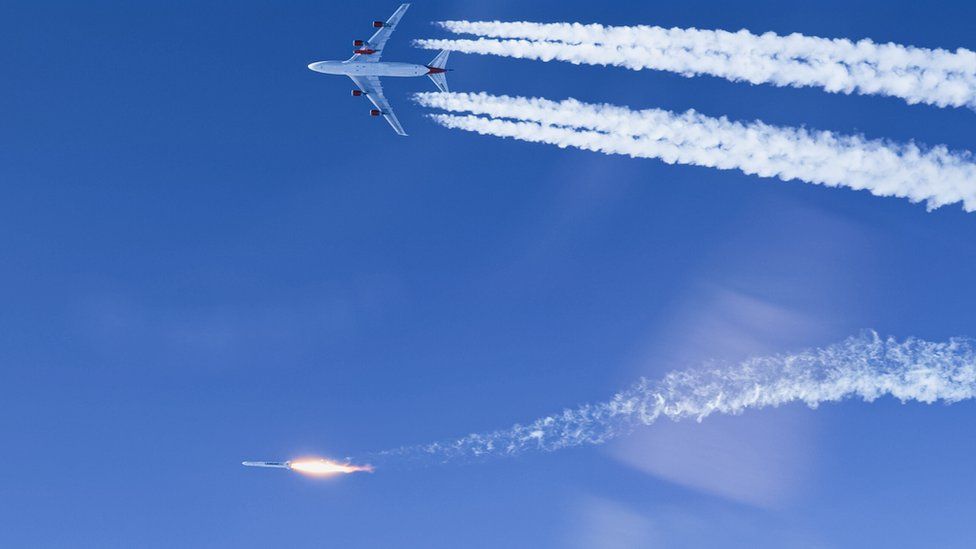
Sir Richard Branson's rocket company Virgin Orbit has joined a growing list of private companies that can launch satellites into orbit.

Earlier this month, 10 payloads were lofted on the Virgin Orbit rocket, which was launched from under the wing of one of the entrepreneur's old 747 jumbos.

Sir Richard is hoping to tap into what is a growing market for small, lower-cost satellites.

Space has traditionally had a high barrier to entry. Today, just seven firms make up 75% of the industry, according to Scott Campbell, director at Deloitte Ventures.

The space industry is worth $380bn (£285bn), and 60% of that is commercial. But previously, virtually all investment into space was by governments, he says.

The first real shift came in 2011 when US President Barack Obama opened up space to businesses, and now more disruption is coming.

"The new space race and start-up scene is almost entirely based around space applications: what can I do with data from space?" says Mr Campbell.

Traditionally, building and launching a satellite to collect data or enable communications costs hundreds of millions of dollars.

Satellites comparisons

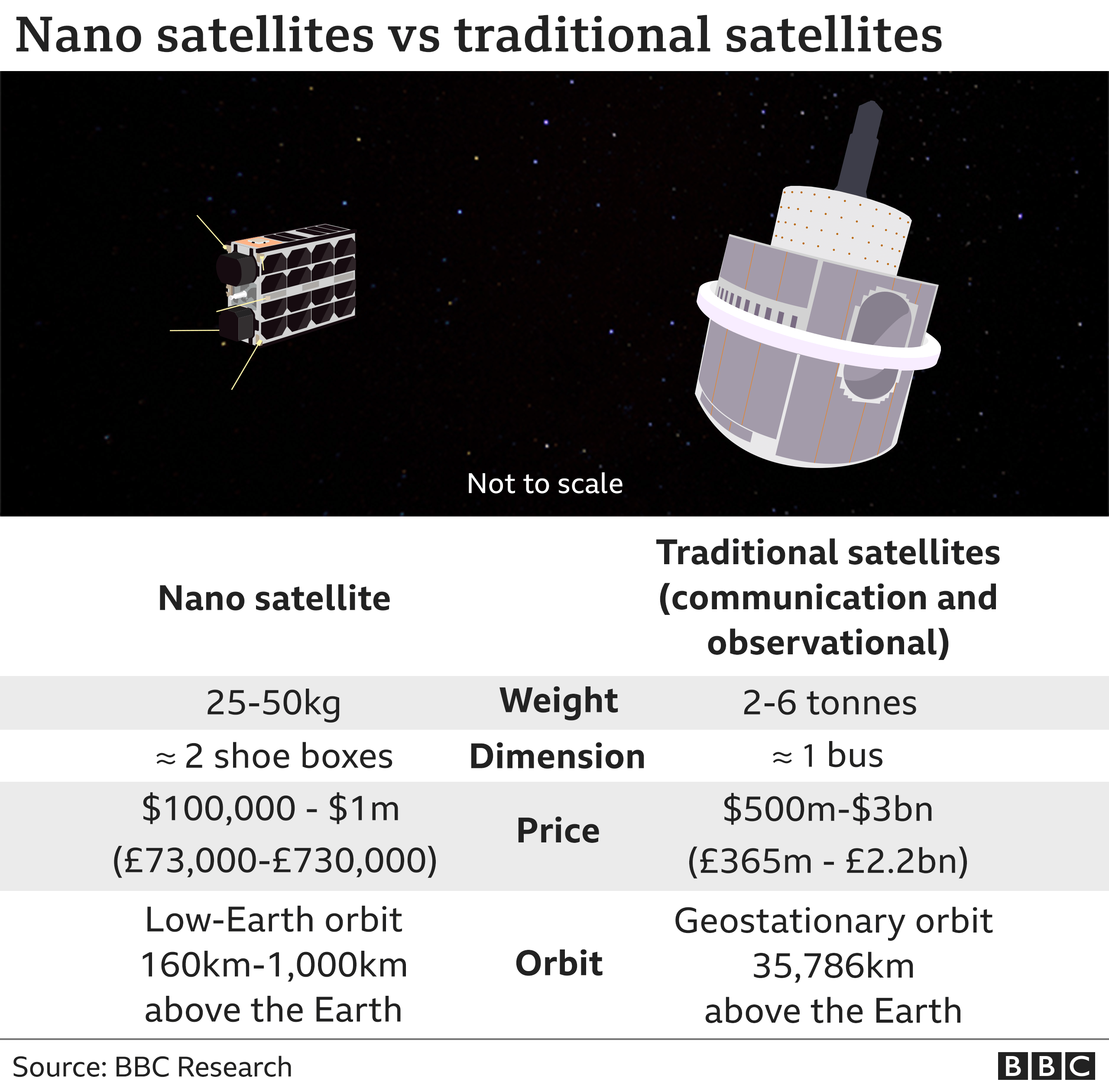
The satellites weighed up to six tonnes, were the size of a bus, and would be sent up into geostationary orbit - 35,786km (22,236 miles) above the Earth.

But today, you could send up a so-called nanosat weighing just 25-50kg into low-Earth orbit (160-1,000km above Earth) for between $100,000 and $1m.

Launch prices are also falling because technology giants are driving demand, says Mark Boggett, chief executive of British venture capital firm Seraphim Capital.

"Because tech firms need to launch their own satellites in the thousands [for space internet networks], this further drives down the cost of launch and storage for everyone else," he says.

"Whole new industries of businesses can benefit from using this data, essentially democratising space."

British space venture capitalist Mark Boggett
Seraphim Capital

And of course, if more data is being transmitted back to Earth, someone will need to process it.

As a result, Deloitte's Scott Campbell has seen "an explosion of businesses around space". In 2011, there were 234 space-related firms in the UK, rising to 948 companies in 2018.

As for satellites, today there are fewer than 9,000 in orbit, according to Seraphim.

OneWeb, SpaceX, Planet, Spire and Amazon have put up 10% of these satellites since 2016, but there are 200 smaller firms behind them who are projected to launch 25,000 satellites over the next four years.

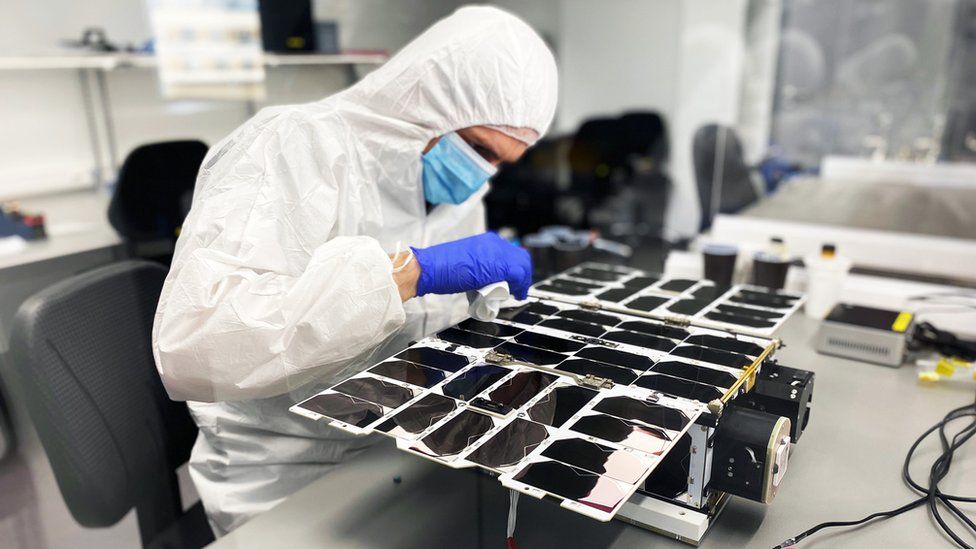
One smaller firm is nanosat manufacturer NanoAvionics, which announced plans in October to create 400 new jobs in the UK. The firm saw revenues soar 300% in the last year.

A NanoAvionics engineer assembling a nanosatellite
NanoAvionics

"In the old days, we launched one satellite that had lots of sensors on it. But today, we've launched hundreds of satellites that have the same one sensor, and that's a much cheaper, repeatable way to do it with more consistent data," says Robin Sampson, head of operations at NanoAvionics UK.

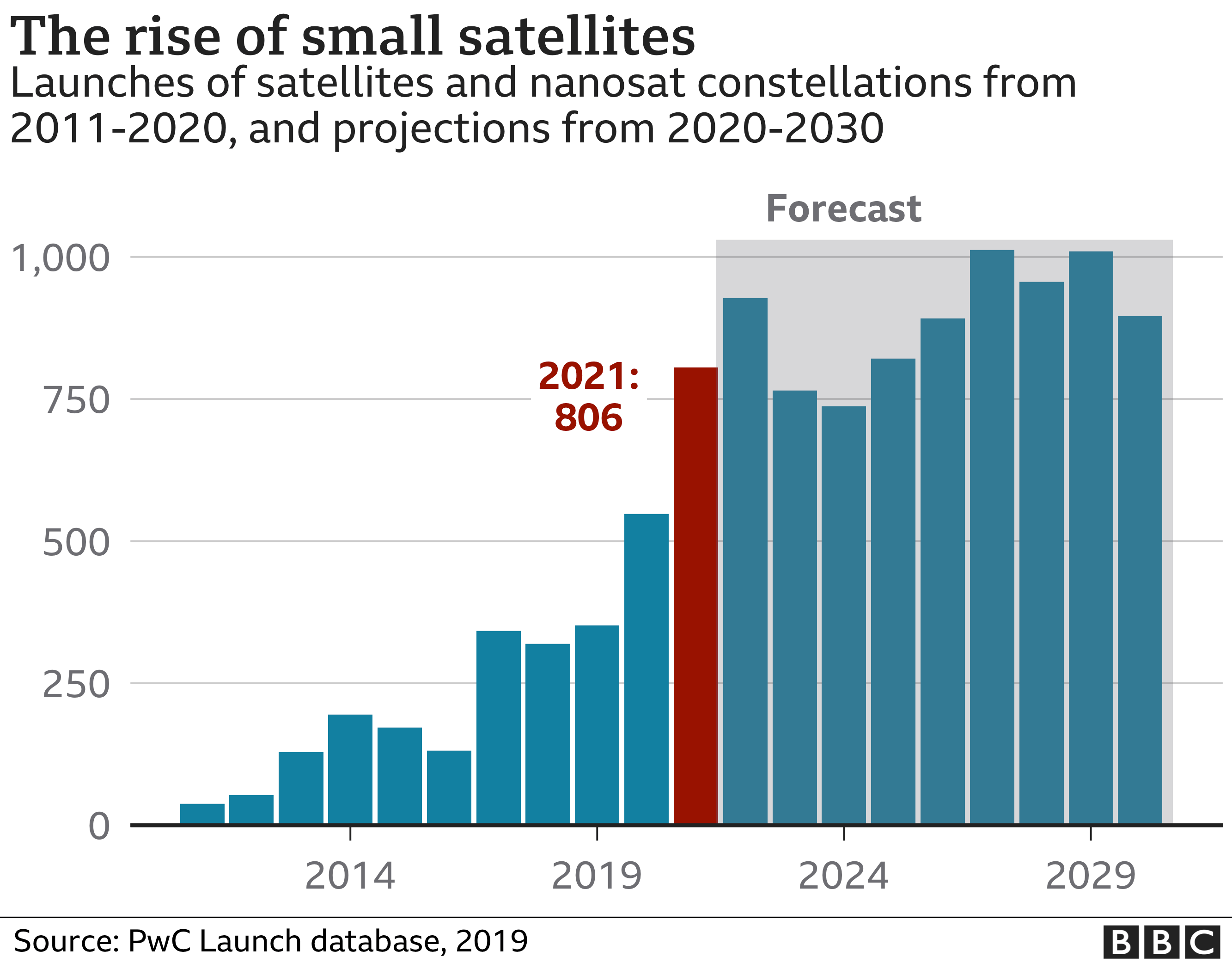
PWC UK's space lead Dinesh Patel says the nanosat market is worth only £1.8bn today, but annual growth rates of 20% are projected.

Satellites have traditionally been used for communications, TV services and tracking the weather, but new cheaper options are attracting tech giants with big plans.

Presentational grey line

Late last year Microsoft announced it was teaming up with Elon Musk's SpaceX.

Their partnership, Azure Space, plans to combine Microsoft's cloud computing services with a global network of satellites.

Tom Keane, corporate vice president at Microsoft Azure, tells the BBC that space makes it possible to "move computing to the edge", which means processing data much closer to users' devices than ever before.

"The edge could be anywhere - on a device... you're wearing, it could be something you're carrying, it could be in your car," he says.

"Space allows you to connect all of that infrastructure together, and then you can use artificial intelligence [like] predictive analytics to gain insights over things that were previously not connected together."

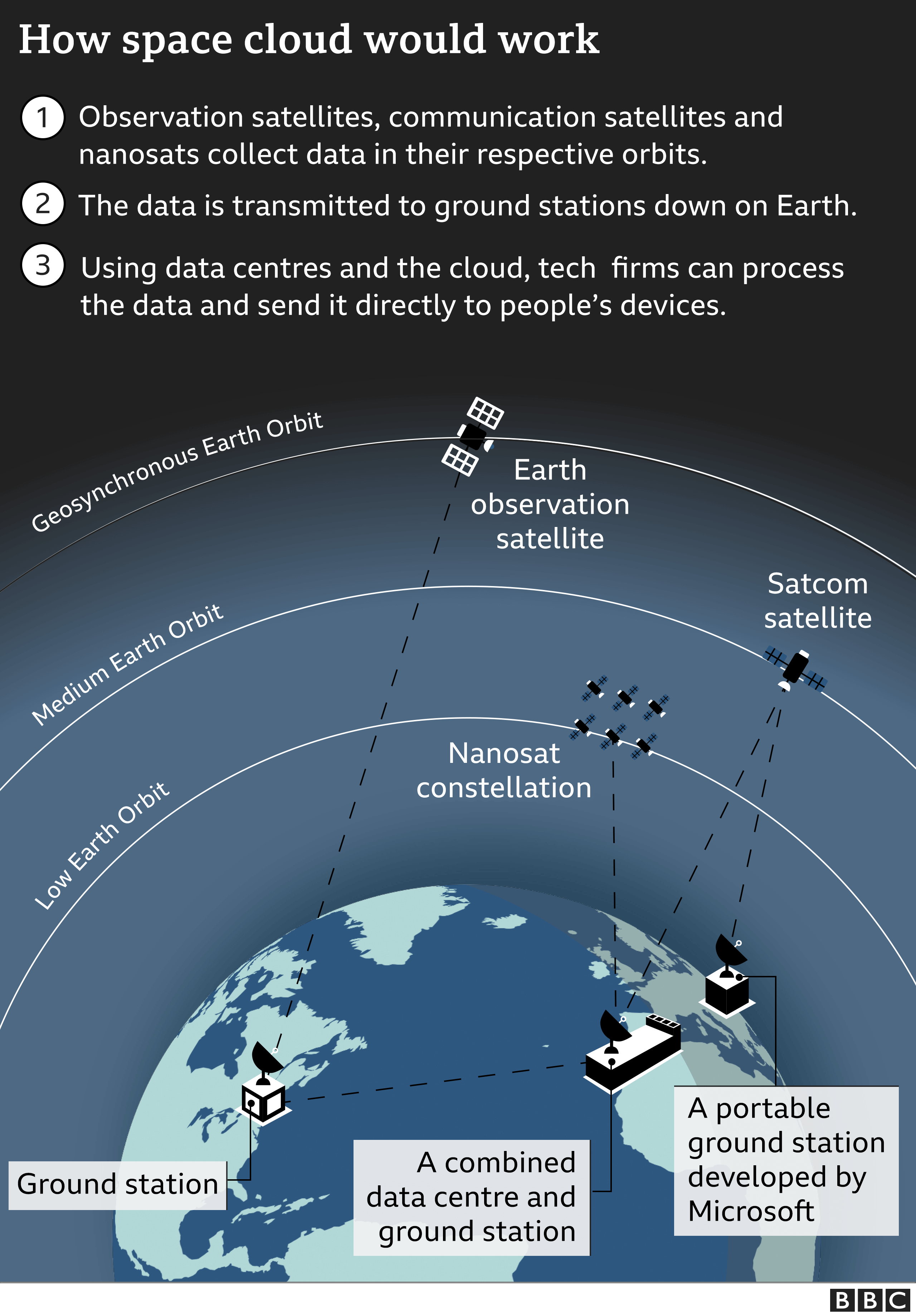
Ground stations, which receive data from satellites, are also potential money makers for IT giants.

How space cloud would work

Microsoft Azure's Tom Keane plans to revolutionise ground stations, which are currently "expensive and often monolithic devices" and hook them up to Microsoft's data centres.

"Today, in many cases, data [from ground stations] may not be used, or it's certainly not used as broadly as it could be. By connecting that ground station, you take the data from space... to solve problems that you can't solve today."

Another opportunity is to connect the 3.8 billion people in rural areas who still do not have an internet connection.

SpaceX in particular has been launching batches of small satellites into orbit since 2018 to form a huge constellation, with the aim of providing instant broadband anywhere on Earth.

The rise of small satellites

Other businesses will hope to make money by collecting data from nanosats, processing it with artificial intelligence, and using it in innovative ways to solve problems.

Firms are looking to collect Earth observation data like weather, heat signatures and atmospheric gas composition to help farmers, for example, and to monitor things like flood defences, traffic and construction sites.

But not everyone thinks constellations of satellites orbiting close to Earth is a good idea.

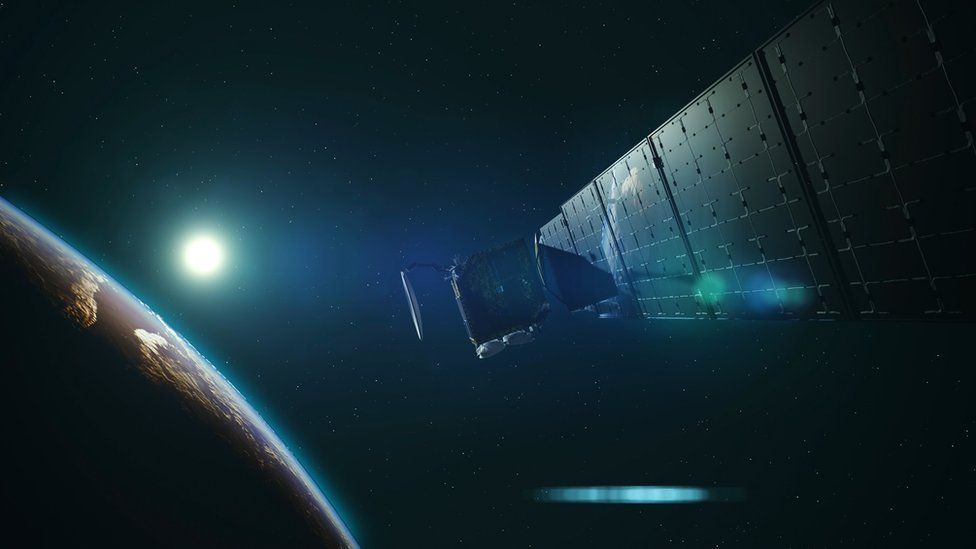
An artists’ impression of a small satellite in low-Earth orbit
Microsoft

Alex Gellman, boss of Vertical Bridge, the largest privately owned communications infrastructure company in the US, says there are limitations to space broadband due to latency.

Latency measures the time it takes to get a response after you send out a data request.

To send data over a 4G mobile network, the latency through air would be 3.3 microseconds/km, while data sent over fibre broadband, where the signal moves through glass, has a latency of 5 microseconds/km. In comparison, nanosats are much further away.

"If the satellite has to communicate with a ground base station to compute, [the data] has to go back to the satellite, and then to your device, so it could be four round trips before it gets to the device," he explains.

"Satellites do bring internet to places that don't have it, but it's not a service comparable to 4G or 5G ultimately."

Wall-E satellite space junk scene
Walt Disney Pictures

And then there's the space trash problem, warns Paul Kostek, a senior member at IEEE, the world's largest technical professional organisation.

"We're talking thousands of small satellite launches and there's a traffic management problem that people have not really encountered before," he says.

"What happens if one satellite gets hit by space debris, breaks apart and goes into the orbit of another constellation? You've added more debris in orbit around the Earth."

He doesn't think geostationary satellites will become obsolete, but legacy space firms are wary.

"Everyone's trying to work out where they fit in. There's going to be a shake-up going forward," says Mr Kostek.

Let's block ads! (Why?)

Article From & Read More ( Satellite boom attracts technology giants - BBC News )
https://ift.tt/36njnvR
Science

Unsolved mystery of Russia's missing hikers may have finally been cracked - CNET

screen-shot-2021-01-29-at-6-00-44-pm.png

The mystery of the Dyatlov Pass has raised questions for over half a century.

Soviet investigators/Creative Commons

The Dyatlov Pass incident is a spooky tale most often told in hushed tones around a campfire, but this very real -- and very mysterious -- event has long been the subject of conspiracy theories, scientific conjecture and even a movie or two. But the truth of what drove nine experienced hikers to slash through the safety of their own tent and flee, half-dressed into the snow of the Ural mountains, has remained inconclusive for over half a century. 

That is, until now. After 62 years of speculation, scientists believe they may have figured out what happened in the Ural Mountains, all those years ago. 

Thanks to simulations, analytical models and even some borrowed Disney technology, the data indicates an impactful force of nature could very well be the conclusive answer. 

What is the Dyatlov Pass mystery?

In January 1959, a team of experienced Russian mountaineers were trekking in the Ural Mountains -- at least, they were, until they perished under mysterious circumstances. 

Personal diaries and film discovered on site confirm that the team had made camp on a stretch of the slopes known as Kholat Saykhl, or "dead mountain." However, something caused the hikers to flee in the middle of the night, cutting their way out of the tent and sprawling across the mountain -- barely dressed despite subzero temperatures and a thick layer of snow.

When a search and rescue team finally found them, scattered over the pass weeks later, they discovered that while six of the hikers had died from hypothermia, the remaining three hikers had been killed by extreme physical trauma. There were body parts missing -- one hiker's eyes, another's tongue -- and severe skeletal damage to some of the skulls and chests.

The only problem? There was no convincing evidence to explain why or how this had happened. At the time, the investigators concluded only that an unknown but powerful "natural force" had compelled them to leave their tent. Conspiracies range from katabatic winds through to Yeti attack and even infrasound-induced panic, but no definitive conclusion was ever made to explain the deaths. 

Until, potentially, now.

Simulations, Disney and a potential answer

In an article published in the journal Communications Earth and Environment, researchers identified data supporting the theory that a small, impactful avalanche could have been the culprit.

It's not the first time such a hypothesis has arisen. In fact, it was one of the first conclusions drawn -- it just had no supporting evidence. In 2019, a team of Russian scientists also concluded that it was an avalanche, but the data to support the theory was once again lacking. There had been no definitive evidence of an avalanche -- even a small one. The topography and snowfall levels didn't match such an incident.

Now, however, a team from the Snow Avalanche Simulation Laboratory at the École polytechnique fédérale in Lausanne, Switzerland, has been able to use analytical models, simulations and even technology from Disney's animation studios to explain how an avalanche may have occurred without leaving behind evidence.

Reported by National Geographic, the data indicated the avalanche would have been particularly small -- perhaps as small as 16 feet of ice and snow, compacted into a solid slab. This would allow for the conditions to mask the phenomena over time, with snowfall obscuring any debris, while still creating enough of a threat to compel the hikers to slash their way out.

But it still didn't explain the extreme trauma left on some of the bodies. To answer that question, the team looked to Disney's Frozen. Johan Gaume, head of the laboratory, combined their simulation tools with animation models borrowed from Frozen's creative team to analyze how the impact of the avalanche would affect the bodies.

Using the simulation, enhanced by these animation models, the team was able to conclude that the suspected avalanche could have had enough of an impact if the hikers had arranged their bedding on top of their skis, providing a rigid base upon which the force would have been exerted -- crushing skulls and chests between the two hard forces.

There's still little evidence as to what happened next, given that all the hikers were found outside the tent, but the best theory is that they then tried to escape the avalanche and rescue their injured teammates -- though their injuries and the extreme temperature would eventually prove fatal. As for the missing body parts? Animal scavengers are the likely culprit.

So while the study goes a long way in explaining a possible, even likely, scenario for the deaths of the hikers on Dyatlov Pass, a lot of questions still remain. 

And those questions are inevitably going to keep conspiracy theorists busy speculating for years to come.

Let's block ads! (Why?)

Article From & Read More ( Unsolved mystery of Russia's missing hikers may have finally been cracked - CNET )
https://ift.tt/36nzfi2
Science

Search

Featured Post

Two meteor showers will peak tonight. How to watch the Southern Delta Aquariids and the Alpha Capricornids. - Yahoo

[unable to retrieve full-text content] Two meteor showers will peak tonight. How to watch the Southern Delta Aquariids and the Alpha Caprico...

Postingan Populer