Article From & Read More ( Scientists Hold Their Breath As James Webb Space Telescope Deploys With High Hopes - MSNBC )
https://ift.tt/3z4c21k
Science
Tuesday, December 28, 2021

Friday, December 24, 2021
How astronauts celebrate Christmas in space - CNN
Sign up for CNN's Wonder Theory science newsletter. Explore the universe with news on fascinating discoveries, scientific advancements and more.
(CNN)Just in time for Christmas, a SpaceX cargo vehicle arrived at the International Space Station Wednesday morning bearing holiday treats and science experiments.
The orbiting laboratory is hosting seven crew members throughout the holiday season.
The international crew includes Russian cosmonauts Anton Shkaplerov and Pyotr Dubrov; NASA astronauts Raja Chari, Dr. Thomas Marshburn, Kayla Barron and Mark Vande Hei; and European Space Agency astronaut Matthias Maurer.
"Even though we'll be up here this year, we have our space family," Barron said in a special holiday video shared by NASA. "I think we're going to create some of our own traditions, and we'll be able to talk to our family on the ground. ... I think I'll make sure that I give my family a call let them know how much I'm thinking about them, how much I love them and how much I can't wait to see them when I get home."
Maurer joked that the crew will be able to celebrate Christmas together 16 times as the space station orbits the Earth.
"There's a new family here in space, so getting to spend Christmas as a family with this family is what I'm looking forward to," Chari said.
Typically, the entire crew will gather for a special meal and call home to talk with friends, family and loved ones.


The current crew on the space station includes (from left) NASA astronauts Mark Vande Hei, Raja Chari and Kayla Barron; European Space Agency astronaut Matthias Maurer; and NASA astronaut Dr. Thomas Marshburn.
They will also ring in the new year together.
"We're privileged to have the perspective of seeing so many countries, we can go from one side to the other in just a few minutes," Marshburn said. "It truly gives us a feeling of unification for all human beings around the world."
"We get to see the sunrise many times a day, so thinking about the fact that people are waking up to a new year each time we see that sunrise is pretty cool," Chari added.
Maurer is eager to begin some of the science experiments that arrived on the cargo vehicle and said it "will be a splendid start to the new year."
Holidays away from Earth
Astronauts have marked the tradition of celebrating holidays in space since the days of the Apollo mission, when the Apollo 8 crew famously shared their Christmas Eve message in a live television broadcast in 1968 by taking turns reading from the Book of Genesis in the Bible.
How these holidays are marked and celebrated is up to each individual crew, and space veterans tend to share suggestions and ideas with rookies before they go up, NASA astronaut Dr. Andrew Morgan told CNN in 2020.
Morgan spent the entirety of the holiday season on the space station in 2019 alongside crewmates Jessica Meir, Christina Koch, Alexander Skvortsov, Oleg Skripochka and Luca Parmitano.


NASA astronaut Jessica Meir showed off her Hannukah socks in the cupola.
In the days leading up to the holiday, Morgan and his crew played Christmas music throughout the station and had classic holiday movies playing to create a festive atmosphere. The crew also used a projector with a recording of a burning Yule log to make it look like they had a cozy fireplace on the space station, he said.
Given the international nature of their crew, they actually celebrated Christmas twice: Christmas on December 25 and Russian Orthodox Christmas on January 7.
Meir is Jewish and marked the passing of Hanukkah on the space station, tweeting pictures of her festive socks, but she also grew up celebrating Christmas and joined in the festivities on the station.
If your idea of planning ahead is buying Christmas gifts on Black Friday, it's very different for astronauts thinking ahead to their space mission if it includes holidays.


(From left) Jessica Meir, Luca Parmitano, Dr. Andrew Morgan and Christina Koch celebrate Christmas in space -- in matching pajamas.
"We had to think about a year or more in advance to make sure we purchased, packed and kept these gifts a secret the entire time," Morgan said.
Morgan knew that Parmitano enjoyed a special Russian treat called chocolate cheese, which is essentially a heavy chocolate fudge, so Morgan saved some to include with Parmitano's present. Morgan also gave every crewmate a harmonica in their stocking so they could have a harmonica band on board.
Together, the crew shared a holiday message and serenaded their mission control centers across the world with one refrain each from John Lennon's "Happy Christmas" and José Feliciano's "Feliz Navidad" -- all while wearing matching festively striped pajamas.
Morgan was missing his family and thinking about the traditions he would normally share with them. One of his favorites is spending Christmas Eve only lit by candlelight. He grew up with this tradition and continues it with his family to this day.


A festive Yule log is projected on the space station.
When he woke up on Christmas morning in the space station, all of the lights were turned off in the modules, a normal occurrence while the astronauts are asleep.
But Koch had taken small flashlights and covered them with gold-colored tape to make them look like little burning candles. They were everywhere -- in the lab, the crew quarters, the galley where the crew eats.
"When I saw that, I actually got choked up with nostalgia," Morgan said. "It made me think about missing my family during Christmas, but also just the thoughtfulness of Christina's gesture. She had paid attention to that little detail, and it was extremely meaningful. It's one of the many memories I cherish from my time on the space station."
Many happy New Years
The space station operates on Greenwich Mean Time to stick to a schedule. The crew witnesses 16 sunrises and 16 sunsets each day as they orbit the Earth at 17,500 miles per hour (28,000 kilometers per hour).
So when it comes time to say "Happy New Year," the crew has many chances to celebrate. The astronauts make calls down to each mission control as the New Year arrives in their time zone.
New Year's is a much bigger holiday than Christmas for the Russian crew, so the entire crew came together to enjoy a large meal and toast to the year ahead.


The crew formed a band to serenade mission control centers around the world.
The other big tradition involves watching a Russian film, which, when translated essentially means, "The Irony of Fate." The 1976 Soviet romantic comedy television film has "a little bit of a bizarre plot about a gentleman who becomes so drunk, he ends up in Leningrad and doesn't know how he got there," Morgan said.
It's a cultural phenomenon to watch the movie on New Year's Eve in Russia, so it is played in the Russian segment to honor the tradition.
"To experience that with our Russian crew mates was extra special," Morgan said. "That exchange of those traditions and experiencing each others' holidays and sharing that with each other across an international crew, that will be the thing I take away from that experience. It embodies everything good about international cooperation and sharing traditions across different countries."
https://ift.tt/32gMjXP
Science
4 of the biggest archeological finds of 2021 — including a 'game changer' - NPR

The pandemic has made the future uncertain, but archaeologists never stopped working to discover our past. AFP Contributor/AFP via Getty Images
Global lockdowns and political strife made it a tough year for archaeologists, at least in terms of getting out there on excavation sites.
But despite what many might think, archaeology isn't just about sifting through soil in search of lost artifacts.
A lot of the work actually happens far away from the dig site, in labs where scientists are analyzing these found objects, trying to piece together humankind's unrecorded history.
So while archaeologists spent less time out digging, 2021 was still a good year in archaeology.
We take a look at some of the biggest advancements in archaeology from this year. We spoke to the Trowelblazers, a group of four female archaeologists of different specialties dedicated to highlighting the historic and integral roll of women in the "digging sciences".
They told us what they thought were some of the most important developments in their field in 2021.
Neanderthals may have been more human than we think
Dr. Rebecca Wragg Sykes is an archaeologist who specializes in Neanderthals, a relative of modern humans that went extinct about 40,000 years ago.
She chose to highlight a paper published last April in the journal Scientific Reports about the discovery of 100,000-year-old Neanderthal footprints on a coastal area of the Spanish Iberian peninsula.

Researchers used modern imaging technology to gather data and analyze the 100,000-year-old footprints. Eduardo Mayoral et al/Scientific Reports
While these aren't the first Neanderthal footprints to be discovered, they are very special.
"This is especially nice, because it's a group - mixed age, including children, some of which are quite young. They seem to be sort of foraging around on the edge of a lagoon," Wragg Sykes said.
The diversity in age is key here and actually helps to challenge a common assumption that Neanderthals foraged in solitude, with the adults peeling off from the group to find food for the children.
The discovery instead gives support to the theory that hunting and gathering might have been a family affair, involving a collaborative and intergenerational effort.
Adorably, the paper also noted that some of the footprints which belonged to children were "grouped in a chaotic arrangement," as if they were playing.
"That's an angle on the Neanderthal life that we don't often get to see," Wragg Sykes said, adding that the discovery helps give a sense of humanity to this not-so-distant human relative.
The powerful women of ancient Spain

A 3,700-year-old set of woman's remains adorned with precious objects was found in the La Almoloya grave and suggests female power in society. Arqueoecologia Social Mediterrània Research Group/Universitat Autònoma de Barcelona
Dr. Brenna Hasset is a biological archaeologist who describes her specialty as fascinating and exciting, while also a bit macabre.
"My job is essentially digging up dead people. So I study the lives of people in the past, to try and understand how they lived, how they died."
This year, Hasset was most excited by a paper published in the journal Antiquity about a 3,700-year-old grave site found in Spain. One tomb at the site held the remains of a man and a woman, in addition to a number of personal belongings.
The excavators found that the woman's remains were adorned with a number of precious objects, such as bracelets, necklaces, and a silver diadem, or crown.

Hasset said you can tell what someone meant to their community by the things they're buried with. Arqueoecologia Social Mediterrània Research Group/Universitat Autònoma de Barcelona
Hasset notes that a lot can be learned about someone's role in society by the things they're buried with. The presence of such precious objects suggests that the woman held a high social status and perhaps even political power.
"We always think of these societies being run by sort of manly men, and their pointy objects to enforce power," Hasset said. "When we see these women with these exceptional artifacts, are we actually seeing signs of a type of women's power?"
The million-year-old mammoth

DNA from mammoth teeth found preserved in permafrost in Siberia is over 1,000,000 years old and was the oldest to ever be sequenced. Koichi Kamoshida/Getty Images
Dr. Victoria Herridge isn't exactly an archaeologist, she's actually a paleontologist who specializes in ancient elephant species.
She chose to highlight a paper published in Nature last February that reported the successful sequencing of DNA retrieved from mammoth teeth found in permafrost in Siberia. The DNA is more than a million years old and is the oldest DNA to ever be successfully sequenced. The discovery challenges the previously held theory that there was only one mammoth species in Siberia at the time, instead showing multiple genetic lineages. The researchers spoke with NPR's All Things Considered last February.
However, for Herridge, it was the age of the DNA that got her most excited, which has broad implications for paleontology, archaeology and a number of adjacent fields, she said.
"To me, it's just like a proper game changer!"
Herridge said this DNA was especially valuable because the last million years were a key period for understanding the course of mammal evolution.
She points out that while the cold conditions of the permafrost helped preserve the DNA, the sheer age of the samples is groundbreaking nonetheless.
"It shows that you can get genetic information way, way, way further back in time that we previously thought was possible."
Herridge made sure to highlight one of the paper co-authors, Patrícia Pečnerová, whose ingenious lab techniques made sequencing the DNA possible.
"I think it shows that the things that maybe were previously dismissed as being impossible may not be impossible. And so maybe we shouldn't rule out the chances with decent, careful lab work and developing techniques."
How to not lose track of our tracks
Dr. Suzanne Pilaar Birch is an associate professor of archaeology and geography at the University of Georgia in Athens.
She chose to feature a paper published recently in Nature about a renewed analysis of footprints discovered in the 1970s in Tanzania. Researchers returned to the site and upon reexamination determined that the tracks belonged to an early hominin species, not to an animal species like a bear, as was previously thought.
The prints, which are an estimated 3.6 million years old, are the oldest evidence of bipedal locomotion of a human ancestor. NPR's Nell Greenfieldboyce covered these findings earlier this month.
However, Pilaar Birch highlighted this story not because of its extraordinary findings, but rather for how it highlights the need for better preservation of our archaeological assets.
"This was work that was done 50 years ago," Pilaar Birch said, "[But] the casts that had been made from this trackway had actually been lost."
She notes that if the casts had been properly taken care of, it may not have been necessary to go back to the site and that we might have been able to draw this important conclusion earlier.
Pilaar Birch said there was a great need to improve long-term preservation of archaeological assets and record management.
While many institutions struggle with funding, she said there was a movement to change that, especially in the area of data preservation and aggregation.
"It's definitely an area that we're seeing a lot of advancement and the National Science Foundation is very supportive and funding new database initiatives."
Article From & Read More ( 4 of the biggest archeological finds of 2021 — including a 'game changer' - NPR )https://ift.tt/3sCdGX7
Science
Wednesday, December 22, 2021
At least 70 free-floating planets found in the Milky Way - Inverse
Rogue planets don’t play by the rules. These free floaters roam the universe on their own without being bound to a host star.
Astronomers know very little about these rebellious worlds, but a recent discovery may help them learn more about free-floating planets. Using data from several telescopes worldwide, a team of astronomers discovered at least 70 rogue planets in the Milky Way, marking the largest group of rogue planets ever found.
A group of researchers detailed its discovery in a study published Wednesday in the journal Nature Astronomy.
HERE’S THE BACKGROUND — When scouring the cosmos for exoplanets, astronomers wait for a dip in a star’s light that reflects when a planet is transiting around the star.
NASA launched its Kepler space telescope in 2009 to find Earth-like planets orbiting different stars. But in 2012, the telescope spotted a free-floating planetary-mass object around 100 light years away from Earth.
Planet CFBDSIR2149 was the first rogue planet discovery, and its proximity helped astronomers learn more about these planetary anomalies.
Rogue planets, also known as free-floating, nomad, or orphan planets, wander the cosmos without orbiting a star. In October 2020, astronomers discovered an Earth-sized rogue world in the galaxy, and some scientists believe these planets could even be capable of hosting life, despite all odds.
There may be plenty of rogue planets in the Milky Way, but those nomadic planets are hard to find since they emit virtually no light and don’t transit in front of a star from our view on Earth.
Instead, astronomers usually discover rogue planets through microlensing. This method uses an object in the background as a magnifying lens when a foreground object moves in front of it, bending the light in a way that can reveal a planet’s mass.
WHAT’S NEW — The team behind the recent discovery used data spanning 20 years from several ground-based and space telescopes, including the European Space Observatory’s Very Large Telescope in Chile and the European Space Agency’s Gaia satellite, combined with tens of thousands of wide-field images.
They observed the motion and luminosity of millions of sources that appeared in the data.
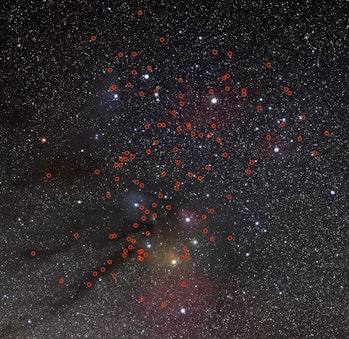
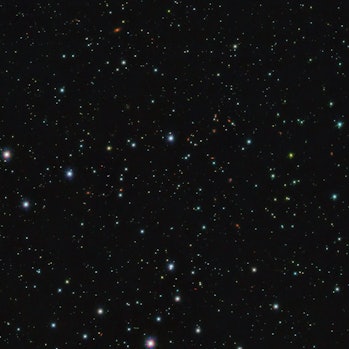
The researchers found at least 70 rogue planets and up to 170 candidate planets. The team found these free-floaters in a star-forming region near the Sun, located within the Scorpius and Ophiuchus constellations.
“We did not know how many to expect and are excited to have found so many,” Núria Miret-Roig, an astronomer at the Laboratoire d’Astrophysique de Bordeaux, France and the University of Vienna, Austria, and lead author of the new study, said in a statement.
The recent discovery suggests there could be a lot more of these planets roaming the galaxy. However, scientists are still not sure of their origin.
Rogue planets could have formed the same way stars do — from a cloud of gas and dust — and just exist on their own, or they could have once been a part of a star system before getting ejected.
Without a star to orbit, these planets go about their business independently, orbiting around the center of a galaxy much as stars do.
WHAT’S NEXT — The team hopes that by studying the large group of rogue planets, they will be able to identify their origins and how they formed and evolved.
They have their hopes set on ESO’s upcoming Extremely Large Telescope (ELT), which is currently under construction in the Chilean Atacama Desert and is due to start observations later this decade.
“These objects are extremely faint and little can be done to study them with current facilities,” Hervé Bouy, an astronomer at the Laboratoire d’Astrophysique de Bordeaux, France, and project leader of the new research, said in a statement. “The ELT will be absolutely crucial to gathering more information about most of the rogue planets we have found.”
NASA’s upcoming Nancy Grace Roman Space Telescope, which is set to launch in 2027, will also be equipped with the proper tools to search for these free-floaters.
Abstract: Free-floating planets (FFPs) are planetary-mass objects that are not bound to host stars. First 1 discovered in the 1990s, their nature and origin are still largely unconstrained because of a lack of large homogeneous samples enabling a statistical analysis of their properties. To date, most FFPs have been discovered using indirect methods; micro-lensing surveys have proven particularly successful to detect these objects down to a few Earth masses1, 2. However, the ephemeral nature of micro-lensing events prevents any follow-up observations and individual characterisation. Several studies have identified FFPs in young stellar clusters3, 4 and the Galactic field5 but their samples are small or heterogeneous in age and origin. Here we report the discovery of between 70 and 170 FFPs (depending on the assumed age) in the region encompassing Upper Scorpius (USC) and Ophiuchus (Oph), the closest young OB association to the Sun. It is the largest homogeneous sample of nearly coeval FFPs discovered to date. We found an excess of FFPs by a factor of up to seven compared to core-collapse models predictions6–8, demonstrating that other formation mechanisms may be at work. We estimate that ejection from planetary systems might have a contribution comparable to that of core-collapse in the formation of FFPs. Therefore, ejections due to dynamical instabilities in giant exoplanet systems must be frequent within the first 10 Myr of a system’s life.Article From & Read More ( At least 70 free-floating planets found in the Milky Way - Inverse )
https://ift.tt/3Eku2pl
Science
Woolly mammoths and humans coexisted in North America much longer than experts thought - Livescience.com
Woolly mammoths may have survived in North America thousands of years longer than scientists previously thought, vials of Alaskan permafrost reveal.
The hairy beasts might have persisted in what is now the Yukon, in Canada, until around 5,000 years ago — 5,000 years longer than experts previously estimated, a new study suggests. That conclusion comes from snippets of mammoth DNA that were found in vials of frozen dirt that had been stored and forgotten in a laboratory freezer for a decade.
Related: Mammoth resurrection: 11 hurdles to bringing back an ice age beast
"Organisms are constantly shedding cells throughout their life," said study lead author Tyler Murchie, a postdoctoral researcher in the Department of Anthropology at McMaster University in Ontario. For instance, He explained thata person sheds roughly 40,000 skin cells per hour, on average, meaning we are constantly ejecting bits of our DNA into our surroundings.
That's also true of other life-forms; nonhuman animals, plants, fungi, and microbes are constantly leaving microscopic breadcrumb trails everywhere. Most of this genetic detritus doesn't linger in the environment, though. Soon after being discarded, the vast majority of the DNA bits are consumed by microbes, Murchie said. The fraction of the shed DNA that does remain might bind to a small bit of mineral sediment and be preserved. Though only a tiny proportion of what was initially shed remains centuries later, it can nevertheless provide a window into a vanished world teeming with strange creatures.
"In a tiny fleck of dirt," Murchie told Live Science, "is DNA from full ecosystems."
Murchie analyzed soil samples taken from permafrost in the central Yukon. Many of the samples dated to the Pleistocene-Holocene transition (14,000-11,000 years ago), a period marked by rapidly changingclimatic conditions in which many large mammals — such as saber-toothedicats, mammoths and mastodons — vanished from the fossil record.
The DNA fragments in Murchie's samples were small — often no larger than 50 letters, or base pairs. However, on average, he was able to isolate roughly 2 million DNA fragments per sample. By analyzing DNA from soil samples of known ages, he indirectly observed the evolution of ancient ecosystems over this turbulent period.

The main advantage to studying ancient DNA is that researchers can observe organisms that tended not to fossilize well. "An animal has only one body," said Murchie, and the odds of it fossilizing are not that great. On top of that, you have to find it. But that same animal constantly ejected innumerable amounts of DNA into the environment throughout its lifetime.
The soil samples — which span a period of time from 30,000 years ago to 5,000 years ago — revealed that mammoths and horses likely persisted in this Arctic environment much longer than previously thought. Mammoths and horses were in steep decline by the Pleistocene-Holocene transition, the DNA data suggest, but they didn't disappear all at once due to changes in climate or overhunting.
An earlier study, published in October in the journal Nature, suggested that some mammoths survived on isolated islands away from human contact until 4,000 years ago. However, the new study is the first to determine that small populations of mammoths coexisted with humans on the mainland of North America well into the Holocene, as recently as 5,000 years ago.
. Megafauna extinctions from this era have largely been blamed on one of two explanations: human paleo-hunters or climate catastrophe, said lead author Hendrik Poinar, an evolutionary geneticist and director of the McMaster Ancient DNA Centre.
However, the new study "changes the focus away from this two-pitted debate that has plagued [paleontology] for so long," Poinar said.
The team's research provides evidence that the extinction of North American megafauna is much more nuanced, he said. There's no doubt that the animals were under pressure from both human hunters and a rapidly changing climate. The question is, "how much were they hunted and whether or not that was truly the tipping point," Poinar told Live Science.
Analyzing ancient DNA from dirt has the potential to tell us a lot about ancient life; Poinar and Murchie said Arctic permafrost is ideal for these types of ancient DNA studies because freezing preserves ancient DNA very well. But that might not be possible forever: As ice in the Arctic melts due to rapid increases in temperature, "we're going to lose a lot of that life history data," Murchie said. "It's just going to fall away before anyone gets a chance to study it."
This study was published Dec. 8 in the journal Nature Communications.
Originally published on Live Science.
Article From & Read More ( Woolly mammoths and humans coexisted in North America much longer than experts thought - Livescience.com )https://ift.tt/3EieEK5
Science
Tuesday, December 21, 2021
Comets' heads can be green, but never their tails: After 90 years, we finally know why - Phys.org

Every so often, the Kuiper Belt and Oort Cloud throw galactic snowballs made up of ice, dust and rocks our way: 4.6-billion-year-old leftovers from the formation of the solar system.
These snowballs—or as we know them, comets—go through a colorful metamorphosis as they cross the sky, with many comets' heads turning a radiant green color that gets brighter as they approach the Sun.
But strangely, this green shade disappears before it reaches the one or two tails trailing behind the comet.
Astronomers, scientists and chemists have been puzzled by this mystery for almost a century. In the 1930s, physicist Gerhard Herzberg theorized the phenomenon was due to sunlight destroying diatomic carbon (also known as dicarbon or C2), a chemical created from the interaction between sunlight and organic matter on the comet's head—but as dicarbon isn't stable, this theory has been hard to test.
A new UNSW Sydney-led study, published today in Proceedings of the National Academy of Sciences (PNAS), has finally found a way to test this chemical reaction in a laboratory—and in doing so, has proven this 90-year-old theory correct.
"We've proven the mechanism by which dicarbon is broken up by sunlight," says Timothy Schmidt, a chemistry professor at UNSW Science and senior author of the study.
"This explains why the green coma—the fuzzy layer of gas and dust surrounding the nucleus—shrinks as a comet gets closer to the Sun, and also why the tail of the comet isn't green."
The key player at the center of the mystery, dicarbon, is both highly reactive and responsible for giving many comets their green color. It's made up of two carbon atoms stuck together and can only be found in extremely energetic or low oxygen environments like stars, comets and the interstellar medium.
Dicarbon doesn't exist on comets until they get close to the Sun. As the Sun starts to warm the comet up, the organic matter living on the icy nucleus evaporates and moves to the coma. Sunlight then breaks up these larger organic molecules, creating dicarbon.
The UNSW-led team have now shown that as the comet gets even closer to the Sun, the extreme UV radiation breaks apart the dicarbon molecules it recently created in a process called 'photodissociation'. This process destroys the dicarbon before it can move far from the nucleus, causing the green coma to get brighter and shrink—and making sure the green tinge never makes it into the tail.
This is the first time this chemical interaction has been studied here on Earth.
"I find incredible that someone in the 1930s thought this is probably what's happening, down to the level of detail of the mechanism of how it was happening, and then 90 years later, we find out it is what's happening," says Ms Jasmin Borsovszky, lead author of the study and former UNSW Science Honors student.
"Herzberg was an incredible physicist and went on to win a Nobel Prize for Chemistry in the 1970s. It's pretty exciting to be able to prove one of the things that he theorized."
Prof. Schmidt, who has been studying dicarbon for 15 years, says the findings help us better understand both dicarbon and comets.
"Dicarbon comes from the breakup of larger organic molecules frozen into the nucleus of the comet—the sort of molecules that are the ingredients of life," he says.
"By understanding its lifetime and destruction, we can better understand how much organic material is evaporating off comets. Discoveries like these might one day help us solve other space mysteries."
A laser show like no other
To solve this puzzle, the team needed to recreate the same galactic chemical process in a controlled environment on Earth.
They pulled this off with the help of a vacuum chamber, a lot of lasers, and one powerful cosmic reaction.
"First we had to make this molecule which is too reactive to store in a bottle," says Prof. Schmidt. "It's not something we could buy from the shops.
"We did this by taking a larger molecule, known as perchloroethylene or C2Cl4, and blasting off its chlorine atoms (Cl) with a high-powered UV laser."
The newly-made dicarbon molecules were sent traveling through a gas beam in a vacuum chamber, which was around two meters long.
The team then pointed another two UV lasers towards the dicarbon: one to flood it with radiation, the other to make its atoms detectable. The radiation hit ripped the dicarbon apart, sending its carbon atoms flying onto a speed detector.
By analyzing the speed of these quickly-moving atoms, the team could measure the strength of the carbon bond to about one in 20,000—which is like measuring 200 meters to the nearest centimeter.
Ms Borsovszky says due to the complexity of the experiment it took nine months before they were able to make their first observation.
"We were about to give up," she says. "It took so long to make sure everything was precisely lined up in space and time.
"The three lasers were all invisible, so there was a lot of stabbing in the dark—quite literally."
Prof. Schmidt says this is the first time anyone has ever observed this chemical reaction.
"It's extremely satisfying to have solved a conundrum that dates back to the 1930s."
Solving space mysteries
There are around 3700 known comets in the solar system, although it's suspected there could be billions more. On average, a comet's nucleus is a whopping 10 kilometers wide—but its coma is often 1000 times bigger.
Bright comets can put on spectacular shows for those lucky enough to see them. But in the past, comets might have done more than that for Earth—in fact, one of the theories about the origin of life is that comets once delivered the building blocks of life right to our doorstep.
"This exciting research shows us just how complex processes in interstellar space are," says Professor Martin van Kranendonk, a UNSW astrobiologist and geologist who was not involved in the study.
"Early Earth would have experienced a jumble of different carbon-bearing molecules being delivered to its surface, allowing for even more complex reactions to occur in the leadup to life."
Now that the case of the missing green tail in comets is solved, Prof. Schmidt, who specializes in space chemistry, wants to continue solving other space mysteries.
Next, he hopes to investigate diffuse interstellar bands: patterns of dark lines between stars that don't match any atom or molecule we know of.
"Diffuse interstellar bands are a pretty big unsolved mystery," he says. "We don't know why the light that's arriving on Earth often has nibbles taken out.
"This is just one more mystery in a huge inventory of bizarre things in space that we're yet to discover."
More information: Photodissociation of dicarbon: How nature breaks an unusual multiple bond, Proceedings of the National Academy of Sciences (2021). doi.org/10.1073/pnas.2113315118
Provided by University of New South Wales
Citation: Comets' heads can be green, but never their tails: After 90 years, we finally know why (2021, December 20) retrieved 21 December 2021 from https://ift.tt/3ecrlM4
This document is subject to copyright. Apart from any fair dealing for the purpose of private study or research, no part may be reproduced without the written permission. The content is provided for information purposes only.
https://ift.tt/3GVIhCG
Science
Monday, December 20, 2021
Alligator-Sized Millipede Fossil Found on English Beach - Gizmodo

A team of paleontologists has described a shockingly large millipede fossil that was found on an English beach in 2018. The millipede that left the fossil was well over 8 feet long and may have been a predator.
Sometime between April 2017 and January 2018, a large block of sandstone broke away from a cliffside in Northumbria, England, and fell about 20 feet to the beach below. A paleontologist making a serendipitous stroll along the beach found the rock and realized that it contained the fossil of a giant millipede. A team from the University of Cambridge studied the find; their results were published today in the Journal of the Geological Society.
“It was a complete fluke of a discovery,” said Neil Davies, a paleontologist at the University of Cambridge and the study’s lead author, in a university release. “The way the boulder had fallen, it had cracked open and perfectly exposed the fossil, which one of our former PhD students happened to spot when walking by.”
The creature is part of the genus Arthropleura, and it lived about 326 million years ago, 100 million years before the first dinosaurs started appearing. The fossil is missing the head, but the animal was estimated to measure 8 feet and 7 inches long and may have weighed over 100 pounds in life.
“These would have been the biggest animals on land in the Carboniferous,” Davies told Gizmodo in an email. “It took four of us with sledgehammers and a pneumatic drill to get it out, and then it was a difficult climb up a 20-metre cliff, carrying the 40 kg fossil between us.”
The research team thinks the fossil isn’t the animal itself but a molted carapace, called the exuvium. So even the size of the animal as it is known from this fossil may not be the largest that millipede eventually grew.
Based on the location of the fossil and stone it was in, the researchers think the exoskeleton was in a river channel, where it was filled with sandy sediment, preserving it. The exoskeleton was found near tetrapod prints dating to the same time, indicating that giant invertebrates coexisted with vertebrates.

The sandstone block also included some fossilized plants from the Carboniferous Period that suggested the giant millipede lived in a drier, more open environment than previously thought. The traditional view has been that arthropleurids lived in swampy environments, since so many of their fossils have been found in coal mines that were once dense, wet forests.
The animals may have gotten so large in part because of how much oxygen was in Earth’s atmosphere in the ancient past. But the Arthropleura predates the peak of that atmospheric oxygen, so there were probably other factors at play, like the animal’s diet. Davies said that the animals may have been predators that got their nutrients from other invertebrates or even amphibians, if not from the leaf litter itself.
These millipedes are now extinct, which may have to do with how the ancient climate changed. “The organisms lived near the equator, which became hot and dry during the Permian,” Davies said. “This likely changed the vegetation and food may have become more scarce. At the same time, the first reptiles were beginning to dominate land habitats, so they would have faced more competition for fewer resources.”
Regardless of the source of their gigantism, the millipedes would’ve been a sight to behold. I, for one, am perfectly happy to admire the creativity of evolution while being grateful I don’t have to see one of these things in the flesh.
More: Newly Discovered Millipede Is First With More Than 1,000 Legs
https://ift.tt/33NloTO
Science
Subscribe to:
Posts (Atom)
Postingan Populer
-
The Event Horizon Telescope (EHT) collaboration, who produced the first ever image of a black hole released in 2019, has today a new view o...
-
[unable to retrieve full-text content] 10 night sky events to see in September, from a blood moon eclipse to a prime view of the Milky Way...
-
NASA's newest space telescope will face 29 "harrowing" days after launch as it makes its way to a deep-space destination near...