A Japanese spacecraft just took a huge step toward pulling off the nation's first-ever moon landing.
Japan's robotic SLIM moon lander arrived in lunar orbit on Christmas Day (Dec. 25) as planned, the Japan Aerospace Exploration Agency announced. The spacecraft entered lunar orbit at 2:51 a.m. EDT (4:51 p.m. Japan Standard Time, 0751 GMT).
"The Japan Aerospace Exploration Agency (JAXA) is pleased to announce that the Smart Lander for Investigating Moon (SLIM) was successfully inserted into lunar orbit at 16:51 (Japan Standard Time, JST) on December 25, 2023," JAXA officials wrote in an update. The spacecraft is in an elliptical orbit that takes 6.4 hours to circle the moon, coming within 373 miles (600 kilometers) of the lunar surface at its closest point and reaching out to 2,485 miles (4,000 km) at its farthest.
The milestone keeps SLIM on target to attempt a lunar touchdown on Jan. 19. Success in that endeavor would be historic; to date, only four nations — the Soviet Union, the U.S., China and India — have soft-landed a craft on the moon.
The 8.8-foot-long (2.7 meters) SLIM launched on Sept. 6 along with XRISM, a powerful X-ray space telescope.
Both Japanese spacecraft deployed into Earth orbit, and XRISM remains there today. But SLIM left our planet's gravity well on Sept. 30, beginning a long, circuitous and energy-efficient route to the moon.
That trek came to an end today, when SLIM inserted itself itself into lunar orbit. The probe will now start gearing up for its touchdown attempt, during which it will try to live up to its "Moon Sniper" nickname: SLIM aims to hit its landing-zone target with an accuracy of 330 feet (100 m) or less, paving the way for even more ambitious exploration efforts down the road.
SLIM "is a mission for researching the pinpoint landing technology necessary for future lunar probes and verifying this on the surface of the moon with a small-scale probe," JAXA officials wrote in a mission description.
"By creating the SLIM lander, humans will make a qualitative shift towards being able to land where we want and not just where it is easy to land, as had been the case before," they added. "By achieving this, it will become possible to land on planets even more resource-scarce than the moon."
If all goes according to plan, SLIM will also deploy two miniprobes onto the lunar surface after touching down. These daughter craft will snap photos, help mission team members monitor SLIM's status and provide an "independent communication system for direct communication with Earth," JAXA officials wrote in the SLIM mission's press kit.
RELATED STORIES:
SLIM isn't the first Japanese spacecraft to reach lunar orbit; the Hiten probe did so in 1990, followed by SELENE ("Selenological and Engineering Explorer"), also known as Kaguya, in 2007.
And Hakuto-R, a lander built by Tokyo-based company ispace, arrived in lunar orbit this past March. Hakuto-R tried to touch down on the moon a month later but crashed after its sensors got confused by the rim of a lunar crater.
Black holes were thought to arise from the collapse of dead stars. But a Webb telescope image showing the early universe hints at an alternative pathway.
How many ways are there to leave this universe?
Perhaps the best known exit entails the death of a star. In 1939 the physicist J. Robert Oppenheimer and his student Harlan Snyder, of the University of California, Berkeley, predicted that when a sufficiently massive star runs out of thermonuclear fuel, collapses inward and keeps collapsing forever, shrink-wrapping space, time and light around itself in what today is called a black hole.
But it turns out that a dead star might not be needed to make a black hole. Instead, at least in the early universe, giant clouds of primordial gas may have collapsed directly into black holes, bypassing millions of years spent in stardom.
That is the tentative conclusion recently reached by a group of astronomers studying UHZ-1, a speck of light dating from not long after the Big Bang. In fact, UHZ-1 is (or was) a powerful quasar that spat fire and X-rays from a monstrous black hole 13.2 billion years ago, when the universe was not quite 500 million years young.
That is unusually soon, cosmically speaking, for so massive a black hole to have come into being through stellar collapses and mergers. Priyamvada Natarajan, an astronomer at Yale and the lead author of a paper published in the Astrophysical Journal Letters, and her colleagues, contend that in UHZ-1 they have discovered a new celestial species, which they call an overmassive black hole galaxy, or O.B.G. In essence, an O.B.G. is a young galaxy anchored by a black hole that became too big too fast.
The discovery of this precocious quasar could help astronomers solve a related puzzle that has tantalized them for decades. Nearly every galaxy visible in the modern universe seems to harbor at its center a supermassive black hole millions of billions of times as massive as the sun. Where did those monsters come from? Could ordinary black holes have grown so large so fast?
Dr. Natarajan and her colleagues propose that UHZ-1, and so perhaps many supermassive black holes, began as primordial clouds. These clouds could have collapsed into kernels that were precociously heavy — and were sufficient to jump-start the growth of overmassive black hole galaxies. They are another reminder that the universe we see is governed by the invisible geometry of darkness.
“As the first O.B.G. candidate, UHZ-1 provides compelling evidence for the formation of heavy initial seeds from direct collapse in the early universe,” Dr. Natarajan and her colleagues wrote. In an email, she added: “Nature does seem to make BH seeds many ways, beyond just stellar death!”
Daniel Holz, a theorist at the University of Chicago who studies black holes said: “Priya has found an extremely exciting black hole, if true.”
He added, “It is simply too big too early. It’s like looking in at a kindergarten classroom and there among all the 5-year-olds is one that is 150 pounds and/or six feet tall.”
According to the story that astronomers have been telling themselves about the evolution of the universe, the first stars condensed out of clouds of hydrogen and helium left over from the Big Bang. They burned hot and fast, quickly exploding and collapsing into black holes 10 to 100 times as massive as the sun.
Over eons, successive generations of stars were formed from the ashes of previous stars, enriching the chemistry of the cosmos. And the black holes left over from their deaths kept merging and growing somehow, into the supermassive black holes at the centers of galaxies.
The James Webb Space Telescope, launched two years ago this Christmas, was designed to test this idea. It possesses the biggest mirror in space, 21 feet in diameter. More important, it was designed to record infrared wavelengths from the light of the most distant and therefore earliest stars in the universe.
But as soon as the new telescope was trained on the sky, it caught sight of new galaxies so massive and bright that they defied cosmologists’ expectations. Arguments have raged for the last couple of years about whether these observations in fact threaten a longstanding model of the cosmos. The model describes the universe as composed of a trace of visible matter, astounding amounts of “dark matter,” which provides the gravity to hold galaxies together, and “dark energy,” pushing these galaxies apart.
The discovery of UHZ-1 represents an inflection point in these debates. In preparation for a future observation by the James Webb Space Telescope of a massive cluster of galaxies in the constellation Sculptor, Dr. Natarajan’s team asked for time on NASA’s Chandra X-ray Observatory. The cluster’s mass acts as a gravitational lens, magnifying objects far behind it in space and time. The researchers hoped to get a glimpse in X-rays of whatever the lens might bring into view.
What they found was a quasar powered by a supermassive black hole about 40 million times as massive as the sun. Further observations by the Webb telescope confirmed that it was 13.2 billion light-years away. (The Sculptor cluster is about 3.5 billion light-years away.) It was the most distant and earliest quasar yet found in the universe.
“We needed Webb to find this remarkably distant galaxy, and Chandra to find its supermassive black hole,” Akos Bogdan of the Center for Astrophysics Harvard & Smithsonian said in a news release. “We also took advantage of a cosmic magnifying glass that boosted the amount of light we detected.”
The results indicate that supermassive black holes existed as early as 470 million years after the Big Bang. That isn’t enough time to allow the black holes created by the first generation of stars — starting out at 10 to 100 solar masses — to grow so big.
Was there another way to make even bigger black holes? In 2017 Dr. Natarajan suggested that collapsing clouds of primordial gas could have birthed black holes more than 10,000 times as massive as the sun.
“You can then imagine one of these subsequently growing into this young, precociously large black hole,” Dr. Holz said. As a result, he noted, “at every subsequent time in the universe’s history there will always be some surprisingly large black holes.”
Dr. Natarajan said, “The fact that these start out in life overmassive implies that they will likely eventually evolve into supermassive black holes.” But no one knows how that works. Black holes make up 10 percent of the mass in the early quasar UHZ-1, whereas they compose less than one one-thousandth of a percent of the mass of modern-day galaxies like the giant Messier 87, whose black hole weighed in at 6.5 billion solar masses when its picture was taken by the Event Horizon Telescope in 2019.
That suggests that complicated environmental feedback effects dominate the growth and evolution of these galaxies and their black holes, causing their mass in stars and gas to bulk up.
“So in effect these extremely early O.B.G.s are really telegraphing much more information about, and illuminating, seeding physics rather than later growth and evolution,” Dr. Natarajan said. She added: “Though they have important implications.”.
Dr. Holz said, “It would certainly be cool if it turns out to be what’s happening, but I’m genuinely agnostic.” He added, “It’s going to be a fascinating story no matter how we solve the mystery of early big black holes.”
In a successful demonstration of new laser communications capabilities, NASA beamed an ultra-high definition video across 19 million miles of space from its Psyche spacecraft to Earth earlier this month. It’s the first time a UHD streaming video has been sent from deep space via laser. The history-making video? A 15-second clip of an orange cat named Taters chasing a laser dot.
The signal from the video, sent on December 11, made it to Earth in 101 seconds from Psyche’s location at the time, which was about 80 times as far as the distance between Earth and the moon. It was uploaded before the mission launched, and sent back home by a flight laser transceiver aboard Psyche at a rate of 267Mbps. The spacecraft, which set off on its journey in October, is on its way to study a metal-rich asteroid in the main asteroid belt between Mars and Jupiter.
“Despite transmitting from millions of miles away, it was able to send the video faster than most broadband internet connections,” said Ryan Rogalin, the receiver electronics lead for the project at NASA’s Jet Propulsion Lab. “In fact, after receiving the video at Palomar, it was sent to JPL over the internet, and that connection was slower than the signal coming from deep space.”
SpaceX marked a milestone for its reusable rocket technology in the early hours of Saturday when the company launched 23 Starlink satellites into low earth orbit from Cape Canaveral Space Force Station in Florida.
The satellites launched from into cloudy skies atop a SpaceX Falcon 9 rocket, briefly lighting up the night sky along a section of the Florida coast.
Shortly after launch, the rocket’s first stage booster landed on a droneship floating in the Atlantic Ocean, marking the 19th launch and landing of the booster, a first for the company. Elon Musk’s SpaceX has pioneered reusable rocket technology in an attempt to lower costs and revolutionize the space industry.
The first stage booster had previously been used in 13 Starlink launches, as well as in the Crew Demo-2, ANASIS-11, CRS-21, Transporter-1, and Transporter-3 missions, according to SpaceX.
SpaceX confirmed the deployment of the 23 Starlink satellites at 1:38 a.m. ET.
IPO spinoff talk has recently spun around Starlink, the SpaceX-owned satellite internet constellation, although CEO Musk apparently nixed the possibility that the private space company will spin off Starlink next year. Earlier this week Justus Parmar, CEO of Fortuna Investments, a venture-capital and advisory company currently focused on space investments, told MarketWatch that he thinks a Starlink IPO is unlikely to happen.
In November Musk tweeted that Starlink has achieved breakeven cash flow, noting that it also accounts for a majority of all active satellites. The SpaceX chief added that Starlink will have launched a majority of all satellites cumulatively from Earth by next year.
Saturday’s launch was the latest in a busy year for SpaceX. The private space company has made more than 90 launches in 2023 and plans to make 12 launches a month in 2024.
1. India’s lunar lander reaches the dark side of the moon
While western billionaires were busy sending rockets to space only for them to crash and burn, scientists in India were quietly doing something no one had accomplished before. Their Chandrayaan-3 moon lander was the first mission to reach the lunar south pole – an unexplored region where reservoirs of frozen water are believed to exist. I remember my heart soaring when images of the control room in India spread around social media, showing senior female scientists celebrating their incredible achievement.
The success of Chandrayaan-3, launched in July 2023, showed the world that not only is India a major player in space, but that a moon lander can be launched successfully for $75m (£60m). This cost is not to be sniffed at but it is much cheaper than most other countries’ budgets for a moon mission.
July 2023 was an extremely busy month for space firsts. It kicked off with the launch of the Euclid satellite, designed to explore dark matter and dark energy in unprecedented detail. Only a fortnight later, China successfully launched the world’s first methane-fuelled rocket (Zhuque-2), demonstrating a potentially greener way to do space travel, again at vastly reduced cost.
Two weeks after landing, Chandrayaan-3 was sent to sleep during the very cold lunar night-time, only to never wake up, but it had done what it had been sent to do: to detect sulphur on the surface of the moon and to show that lunar soil is a good insulator. With greater diversity, lower costs, and greener rockets, it feels like humanity could be on the brink of a new, more accessible era of space exploration. Haley Gomez
Haley Gomez is a professor of astrophysics at Cardiff University
2. AI finally starting to feel like AI
It’s often hard to spot technological watersheds until long after the fact, but 2023 is one of those rare years in which we can say with certainty that the world changed. It was the year in which artificial intelligence (AI) finally went mainstream. I’m referring, of course, to ChatGPT and its stablemates – large language models. Released late in 2022, ChatGPT went viral in 2023, dazzling users with its fluency and seemingly encyclopaedic knowledge. The tech industry – led by trillion-dollar companies – was wrong-footed by the success of a product from a company with just a few hundred employees. As I write, there is desperate jostling to take the lead in the new “generative AI” marketplace heralded by ChatGPT.
Why did ChatGPT take off so spectacularly? First, it is very accessible. Anyone with a web browser can access the most sophisticated AI on the planet. And second, it finally feels like the AI we were promised – it wouldn’t be out of place in a movie, and it’s a lot more fluent than the Star Trek computer. We’ve been using AI for a long time without realising it, but finally, we have something that looks like the real deal. This isn’t the end of the road for AI, not by a long way – but it really is the beginning of something big. Michael Wooldridge
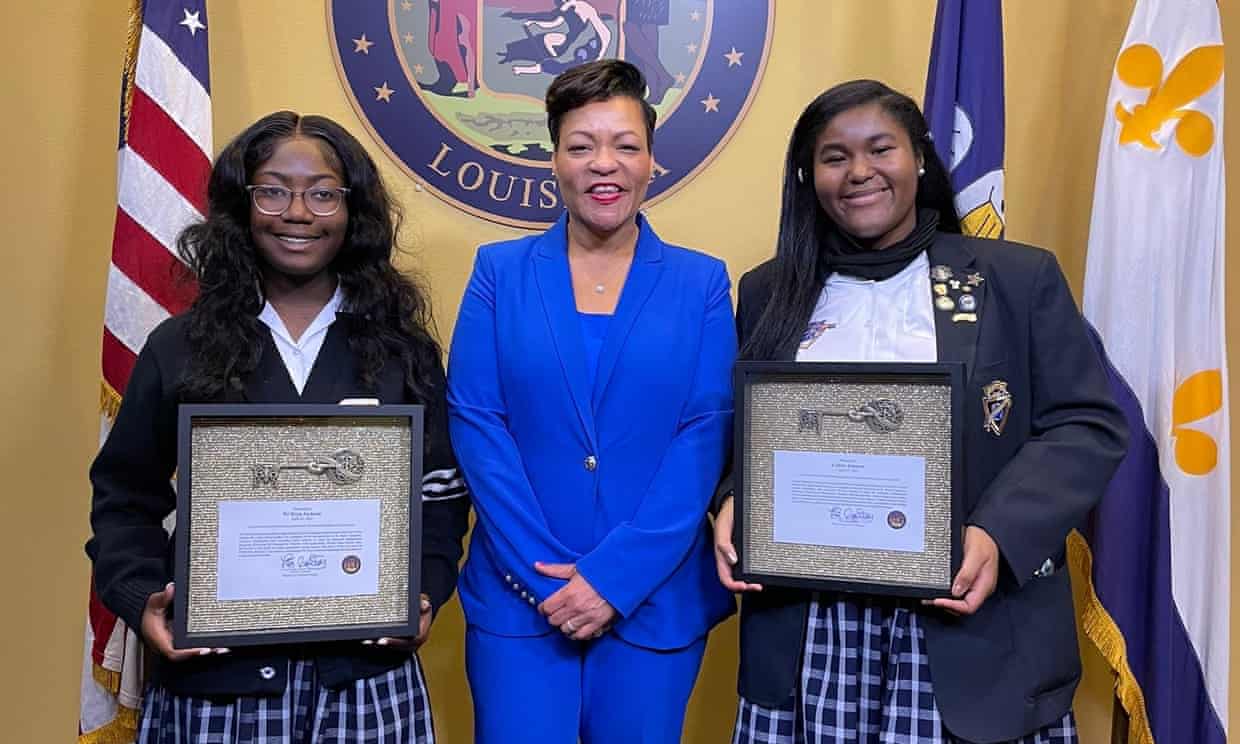
In March, two teenage girls from New Orleans, Calcea Johnson and Ne’Kiya Jackson, presented a new mathematical proof of the Pythagorean theorem using trigonometry at a regional meeting of the American Mathematical Society.
What’s so special about this? Well, in 1940, Elisha Loomis’s classic book The Pythagorean Proposition had a section entitled “Why No Trigonometric, Analytic Geometry Nor Calculus Proof Possible”. Hence, a2 + b2 = c2 can’t be proved using sin2(θ)+cos2(θ)=1.
This is because these two equations have a circular relationship. For example: If A is true if B is true and B is true if A is true, then how do we know that A and B are actually true?
Johnson and Jackson aren’t the first to derive a trigonometry proof for Pythagoras’s theorem. However, their “waffle cone” proof using the sine rule and infinite geometric series showed great creativity and mathematical agility. There are limitations to their approach – it is not valid when ∅=π/4 (45 degrees), for example. But that is fixable.
Last year, Katharine Birbalsingh, the former social mobility adviser to the UK government, was criticised for saying girls are less likely to choose physics A-level because it involves “hard maths”. Johnson and Jackson’s achievement spoke eloquently to the contrary. Nira Chamberlain
Nira Chamberlain OBE is president of the Mathematical Association and a visiting professor at Loughborough University
4. Insights on our earlier migration out of Africa
We are an African species. That broadly means that Homo sapiensemerged on the land that is now Africa, and most of our evolution occurred there in the past half a million years. The rest of the world was peopled when a few left that pan-African cradle within the past 100,000 years. Until recently, this was largely known from the old bones of the long dead. But recovering DNA from those old bones has become fruitful. In October, a study led by Sarah Tishkoff at the University of Pennsylvania showed that the small amount of Neanderthal DNA in living Africans today had entered the Homo sapiens lineage as early as 250,000 years ago somewhere in Eurasia, meaning that we had left Africa several times, and way earlier than thought.
How were these revelations uncovered? By doing something that has been paradoxically overlooked in our studies of our African origins: actually looking at the genomes of African people.
It may seem small, and incremental, but the more we look – especially among people and areas until now vastly under-represented – the more we are going to find about our own story. Adam Rutherford
Adam Rutherford is a writer, broadcaster and lecturer in genetics at University College London. His latest book is Control: The Dark History and Troubling Present of Eugenics
5. The hottest year on record
As the analogy goes, a frog thrown into hot water will save itself. The slow-boiled one doesn’t notice until the temperature reaches lethal levels. 2023 will be the hottest year on record. That record was previously set seven years ago, in 2016. As King Charles said at Cop28, we are becoming immune to what the records are telling us.
The impacts of the heat are mounting. Warmer seas and a warmer atmosphere contributed to events that brought death and destruction at an alarming rate. In Libya, more than 10,000 people died when a flood swept a city into the sea. Fires burned through Greek islands and Canadian forests. Tropical Cyclone Freddy battered communities in east Africa already pummelled by poverty. Drought and heat made some regions uninhabitable.
The good news is, the answers already exist. In the past year, the UK produced more green energy than ever before. AI forecasts began doing work a million human forecasters couldn’t manage, analysing weather and climate data at an unprecedented rate. The Nasa Swot satellite started measuring where all the water is on Earth, helping to prevent future disasters.
Humans think they are smarter than frogs, but we’ll only save ourselves if we realise that we are the frogs, the source of the heat, and the experimenting psychopaths. Hannah Cloke
HannahCloke OBE is a professor of hydrology at the University of Reading
6. New Crispr therapy for sickle cell disease and beta thalassaemia
In recent years, racialised inequities in healthcare have been much publicised. For some, this has reduced trust in health sciences and services, including preventive measures such as vaccines. So it is cause for celebration that the UK is trailblazing a biotechnology therapy for sickle cell disease and beta thalassaemia. These debilitating and sometimes deadly diseases are respectively more likely to afflict black populations and those with roots in the southern Mediterranean, Middle East, south Asia, and Africa. In a world-first, the UK medicines regulator has approved the Crispr–Cas9 genome-editing tool called Casgevy, for the treatment of disease. The therapy has been shown to relieve debilitating episodes of pain in sickle cell disease and to remove or reduce the need for red-blood cell transfusions in thalassaemia for at least a year.
While heartening, it remains to be seen how the potential risks play out. Will the positive outcomes continue in the long term? What of the safety implications? There is, for example, the possibility that Crispr–Cas9 can sometimes make unintended genetic modifications with unknown effect. Equally, this therapy may cost as much as $2m (£1.6m) per person. In setting budgets, will these diseases continue to be a focus?
Yet the approval gives cause for cautious optimism – not least because including groups frequently overlooked could mark a small, but important, shift towards making healthcare more equitable. Ann Phoenix
Ann Phoenix is a professor of psychosocial studies at the UCL Institute of Education
7. Eating our cakes and having our Wegovy
The world has a food problem: 650 million adults are obese, meaning they have a body mass index (BMI) of over 30 kg/m2 and consume more calories than their bodies can use. On the other hand, 735 million people worldwide are starving. However, more people die from being obese than from being undernourished. So the discovery of a group of drugs known as glucagon-like peptide-1 (GLP-1) receptor stimulants is welcome. These GLP-1 drugs were originally licensed to control diabetes and they have since been licensed as weight-loss medicines. Wegovy, the poster child of these medicines, works by reducing blood glucose and by making people feel full more quickly when eating. In a two-year, 304-person clinical trial, subjects on Wegovy lost 15% of their body weight, while control subjects lost only 3%. Excitingly, this year we have also learned, from a large, three-year study involving heart disease patients, that Wegovy also reduces the risk of strokes, heart attacks and death from heart disease. It may seem as if we can now eat as much as we wish and get an injection for that, but there are side-effects to taking Wegovy, such as nausea, vomiting, headaches, tiredness and a possible risk of developing some thyroid cancers. Additionally, we still need to find a way to feed the starving. Ijeoma F Uchegbu
Ijeoma F Uchegbu is a professor of pharmaceutical nanoscience at University College London
8. A superconductor claim meets resistance
For decades, scientists have been on the quest for the “holy grail” of a room-temperature superconductor. A superconductor is a material that carries electric current without resistance, but this remarkable property is only observed more than 100C below room temperature.
In July came the extraordinary claim from a South Korean team led by Sukbae Lee and Ji-Hoon Kim of the first room-temperature superconductor at normal pressure with a lead-based compound named LK-99. Such a breakthrough could enable loss-free power cables and smaller MRI scanners.
Lee, Kim and colleagues uploaded twopapers to the arXiv website, where studies are sometimes posted before peer review. This led to a buzz of excitement and scepticism as labs worldwide rushed to try to replicate the findings, with LK-99 even trending on Twitter (now known as X).
By late August, leading labs had failed to replicate the results. The current consensus is that there is not enough evidence of the crucial signatures of room temperature superconductivity.
What does this story teach us? It shows that careful materials characterisation is essential before rushing to hyped conclusions, and that scientific peer review can be constructive and thrilling. Even if LK-99 isn’t the holy grail, it shouldn’t deter the search for a real room-temperature superconductor, and may open up unexpected pathways for exciting new research. Saiful Islam
Saiful Islam is a professor of materials science at Oxford University
9. Bird decline linked to herbicides and pesticides
This has been a record-breaking year – and not in a good way, when it comes to the environment. Alongside global heating, yet another environmental disaster is unfolding: the rapid loss of wildlife.
Over the past four decades, the number of birds across Europe dropped by a staggering 550 million. Thus far it was believed that the main reasons were habitat loss and pollution. But a research team led by Stanislas Rigal investigated data on 170 bird species across 20,000 sites in 28 countries – including records collected by citizen scientists – and concluded that the principal bird killer is agricultural intensification. More precisely, it is an increased use of pesticides and fertilisers, which not only deprive birds of food, but also directly affect their health.
Such large-scale studies are crucial for influencing decision-making and policy priorities. Let’s hope that 2024 brings a positive change in those departments. Joanna Bagniewska
Joanna Bagniewska is a science communicator and senior lecturer in environmental sciences at Brunel University
10. Hope for stem cell-based embryo models
There was a flurry of papers and preprint articles in June describing how it was possible to begin with cultures of pluripotent stem cells and, entirely in a culture dish, end up with structures that resemble early post-implantation human embryos. These prompted considerable media coverage, including front-page stories in some newspapers. The science was certainly newsworthy – the experiments reveal a remarkable ability of the stem cells to differentiate into the relevant tissues that self-organise into the appropriate pattern. However, some rather robust competition between several of the groups involved may have also contributed to the media interest.
It is hoped that stem cell-based embryo models will provide a practical and “more ethical” alternative to working with normal embryos. Scientists may be able to learn much about how we develop and what goes wrong with congenital disease, miscarriage, and with assisted reproduction (IVF) that often fails – and perhaps to find solutions to these problems.
What is clear at the moment, however, is that even the best of the models are not equivalent to normal human embryos, and the most rigorous test – to ask if they could be implanted into a womb – is something that everyone agrees should not be attempted. At the moment the vast majority, perhaps 99%, of the aggregates that are put into culture fail to give anything that resembles a human embryo. The efficiency needs to be improved if these models are going to find a use. Robin Lovell-Badge
Robin Lovell-Badge is a senior group leader and head of the Laboratory of Stem Cell Biology and Developmental Genetics at the Francis Crick Institute
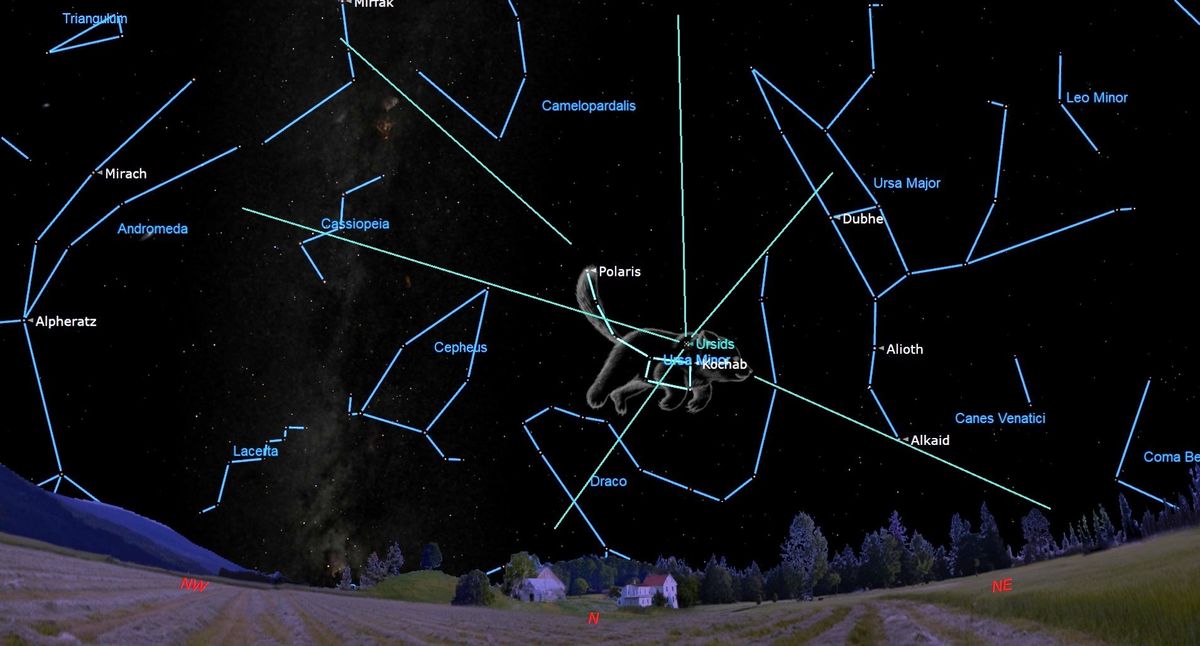
The annual December meteor shower, the Ursids, peaks on Saturday (Dec. 23), offering skywatchers willing to brave the cold the opportunity to see meteors in the form of bright streaks of light and the occasional fireball.
The Ursids is a relatively low-key meteor shower that is active between Dec. 17 and Dec. 26, meaning skywatchers will be able to view meteors from it through Christmas Eve and Christmas Day. The Ursids gets its name from the fact the majority of its meteors appear to stream in from the constellation of Ursa Minor, with astronomers calling this point of high activity the radiant of this meteor shower.
The Ursid meteor shower is most visible when its radiant is above the horizon, and because Ursa Minor is a circumpolar constellation, meaning it is always above the North Pole of Earth. So, for observers in New York City, the radiant is always above the horizon.
The Ursids will peak around 11:00 p.m. EST (0400 GMT), according to In the Sky, and at this time, it could produce around ten meteors per hour. This rate is calculated assuming perfectly dark skies, so in reality, skywatchers can expect to see fewer meteors than this. Unfortunately, the shower has to compete with a relatively bright waxing gibbous moon at 86% illumination, so visible meteors might be few this year.
Like all annual meteor showers, the Ursids are created at around the same time each year when Earth, making its 365.3-day orbit of the sun, passes through a cloud of debris left behind by an asteroid or comet.
These debris fragments enter Earth's atmosphere at high speeds and disintegrate at altitudes of between 45 and 65 miles (70 and 100 kilometers) over the planet’s surface. Occasionally, a larger pebble-sized piece of cometary debris will enter Earth's atmosphere, causing a bright flash or a fireball.
The Ursid meteor shower is created from debris left around the sun by comet 8P/Tuttle. 8P/Tuttle, or just "Tuttle," is classed as a midsized comet, but it still has a diameter of around 2.8 miles (4.5 kilometers), making it around the size of the island of Manhattan and larger than around 99% of known asteroids.
As Tuttle gets close to the sun on its 13.6 Earth-year-long orbit, radiation from our star heats material within it, causing it to turn from solid ice to gas, a process called sublimation. As this gas escapes the comet, it blasts away solid material from Tuttle's surface. This material settles around the sun into lanes of dust grains and larger fragments.
Tuttle’s last close approach to Earth and passage through the inner solar system was in January 2008, when it came to within around 23 million miles (37 million km) of our planet. The comet won’t come as close to our planet again until Dec. 28, 2048, when it will pass us at around 26 million miles (42 million km) of Earth.
The year 2130 will be a special one for Tuttle and the Ursids because around the time the shower peaks that year, their parent comet will pass by Earth on Christmas day at a relatively close distance of around 14 million miles (23 million km), over ten times closer to the Earth than our planet is to the sun.
If you are hoping to catch a look at the Ursids or any other night sky sight, our guides to the best telescopes and best binoculars are a great place to start.
Editor's Note: If you snap the Ursid meteor shower and would like to share it with Space.com’s readers, send your photo(s), comments, and your name and location to spacephotos@space.com.
A robotic cargo ship departed from the space station Friday (Dec. 22) on its way to a planned, destructive re-entry in Earth's atmosphere in early 2024.
Northrop Grumman's uncrewed Cygnus NG-19 spacecraft left the International Space Station (ISS) at 8:06 a.m. EST (1306 GMT) on Friday. The Canadarm2 robotic arm released the spacecraft over the north Atlantic ocean just one minute past the expected schedule, NASA official Rebecca Turkington said in a livestream on NASA Television.
"That was a beautiful release from up here," NASA Expedition 70 astronaut Loral O'Hara said on the livestream, about 10 minutes after the release. "Congratulations to everyone on the ground who supported this mission," O'Hara added from the ISS. "We still have a good view of Cygnus. It's beautiful."
Cygnus spent 4.5 months at the orbiting complex, following an Aug. 4 arrival that brought up 8,200 pounds (3,800 kilograms) of hardware, supplies, science, commercial products and other cargo, NASA officials said in a Wednesday (Dec. 20) release.
NG-19, the 19th commercial resupply mission from Northrop Grumman, launched from NASA's Wallops Flight Facility in Virginia on Aug. 1. It was named after Laurel Clark, a NASA astronaut who died (with six other astronauts) during the Columbia space shuttle disaster in 2003. NG-19 was also the last mission to launch on a version of Northrop Grumman's Antares rocket that used a first stage built in Ukraine.
The spacecraft was docked to the U.S. Unity module on the ISS' Earth-facing port. To detach it, flight controllers on the ground instructed the robotic Canadarm2 to conduct the procedure, and then moved the freighter for release. NASA astronaut Loral O'Hara "will monitor Cygnus' systems upon its departure from the space station," NASA officials wrote in the release, prior to the maneuver taking place.
RELATED STORIES:
Cygnus' exact date to return to Earth has not been released. The spacecraft will perform undisclosed "secondary payload operations" before it is commanded in early January to plunge into Earth's atmosphere, where it will burn up with trash on board.
On NASA Television, Turkington confirmed that Cygnus has the go-ahead to do a new SAFFIRE fire experiment in the coming weeks. SAFFIRE, the Spacecraft Fire Experiments, allows for study of how fire behaves in microgravity in a safe environment. Cygnus has run versions of this spacecraft several times.
"This is the sixth and last of this series," Turkington said, "building on previous results to test flammability at different oxygen levels, and to demonstrate fire detection and monitoring — as well as post-fire cleanup capabilities."
The other commercial cargo craft currently active for NASA, SpaceX's Dragon capsule, can bring science back to Earth, as it is designed to survive the fiery trip through our planet's atmosphere and splash down in the ocean.
Article From & Read More ( Cygnus cargo craft departs the ISS Dec. 22 for fiery re-entry in new year (video) - Space.com )
https://ift.tt/oTKPtGi
Science